
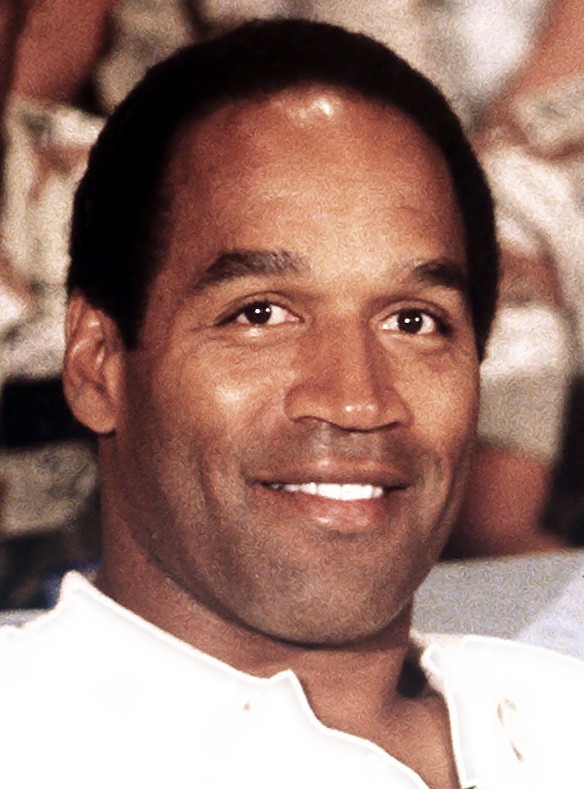
O. J. Simpson, born Orenthal James Simpson on July 9, 1947, in San Francisco, California, is a figure whose life has been marked by both extraordinary athletic achievements and notorious legal controversies. Known primarily as a football superstar in the 1960s and 1970s, Simpson later became infamous for his involvement in one of the most publicized criminal trials in American history. This article delves into the key aspects of his life, from his rise to fame in sports to his dramatic fall from grace, offering detailed insights and explanations into the nuances and historical context of his story.
Early Life and Athletic Career
O. J. Simpson’s early life was not easy. Growing up in the projects of San Francisco, he faced numerous challenges, including a battle with rickets, a condition that weakened his bones and required him to wear braces on his legs until he was five years old. Despite these early setbacks, Simpson discovered a talent for football during his high school years. His performance on the field earned him a scholarship to the University of Southern California (USC), where he became one of the most celebrated college football players of all time.
Simpson’s college football career reached its pinnacle in 1968 when he won the prestigious Heisman Trophy, awarded annually to the most outstanding player in NCAA football. That year, he set a record by rushing for 3,187 yards and scoring 21 touchdowns in 18 games. His athletic prowess and charismatic personality made him a household name, paving the way for his selection as the first overall pick in the 1969 NFL Draft by the Buffalo Bills.
NFL Stardom and Beyond
O. J. Simpson’s professional football career was nothing short of spectacular. As a running back for the Buffalo Bills, he quickly established himself as one of the most dominant players in the league. In 1972, he led the NFL in rushing yards and followed up with an even more remarkable season in 1973. That year, Simpson became the first player in NFL history to rush for over 2,000 yards in a single season, a record that stood for years. His ability to combine speed, power, and agility made him a force to be reckoned with on the field.
Simpson played for the Buffalo Bills for most of his career, before finishing his NFL journey with the San Francisco 49ers in 1979. Over the course of his career, he earned five Pro Bowl selections and was inducted into the Pro Football Hall of Fame in 1985. His nickname, “The Juice,” became synonymous with his electrifying runs and undeniable impact on the game.
Transition to Hollywood and Public Life
Beyond his accomplishments on the football field, O. J. Simpson also pursued a career in acting, a common path for athletes looking to transition into mainstream entertainment. Simpson’s Hollywood career began in the early 1970s, with roles in films like “The Klansman” (1974) and “The Towering Inferno” (1974), where he starred alongside major names like Steve McQueen and Paul Newman. His on-screen presence, coupled with his sports fame, helped him secure more roles, and he became a familiar face in action films and TV shows.
Some of his notable film appearances include “Capricorn One” (1978), “The Cassandra Crossing” (1976), and the “Naked Gun” series (1988-1994), where he played the comical character Detective Nordberg. Although his acting career never reached the heights of his football stardom, it contributed to his status as a pop culture icon in the 1980s and early 1990s.
Simpson’s personal life, however, was far more turbulent. In 1985, he married Nicole Brown, with whom he had two children. Their marriage was fraught with issues, including accusations of domestic violence. The couple divorced in 1992, but their tumultuous relationship would later become a central aspect of the most infamous chapter of Simpson’s life.
The Murder Trial: A Nation Divided
On June 13, 1994, the bodies of Nicole Brown Simpson and her friend Ronald Goldman were discovered outside Brown’s condominium in Brentwood, Los Angeles. Both had been brutally stabbed, and the nature of their injuries shocked the nation. Suspicion quickly fell on O. J. Simpson, who had a history of domestic abuse towards Brown.
What followed was one of the most sensational trials in American history. On June 17, 1994, Simpson led police on a low-speed chase through Los Angeles in a white Ford Bronco, an event watched live by over 100 million viewers. Simpson was eventually arrested and charged with the murders of Nicole Brown and Ronald Goldman.
The trial, dubbed the “Trial of the Century,” began in January 1995. The defense, led by Johnnie Cochran and supported by a high-profile legal team including Robert Kardashian, Alan Dershowitz, and F. Lee Bailey, argued that Simpson was a victim of systemic racism and that the evidence had been tampered with by the Los Angeles Police Department. The prosecution, led by Marcia Clark and Christopher Darden, focused on Simpson’s history of violence towards Nicole Brown and the physical evidence linking him to the crime scene, including a bloody glove found at his residence.
The trial captivated the nation, touching on themes of race, celebrity, domestic violence, and the criminal justice system. On October 3, 1995, after a highly publicized and contentious trial, the jury acquitted O. J. Simpson of all charges. The verdict shocked and divided the country, with many African Americans celebrating the outcome as a victory against a corrupt justice system, while others, particularly white Americans, viewed it as a grave miscarriage of justice.
Civil Trial and Financial Consequences
Although Simpson was acquitted in the criminal trial, he faced a civil trial brought by the families of Nicole Brown and Ronald Goldman. In 1997, the civil jury found Simpson liable for the wrongful deaths of Brown and Goldman and awarded their families $33.5 million in damages. This verdict, though it did not carry criminal penalties, had a significant financial impact on Simpson, whose assets were targeted to satisfy the judgment.
The civil trial further cemented Simpson’s fall from grace, stripping away much of the wealth and public goodwill he had accumulated over his career. It also marked the beginning of a long series of legal and financial troubles that would continue to plague him in the years to come.
Later Years and Legal Troubles
In the years following the civil trial, O. J. Simpson’s life continued to spiral downward. In 2007, he was involved in an incident at a Las Vegas hotel, where he and several accomplices attempted to retrieve sports memorabilia that Simpson claimed had been stolen from him. The situation escalated, resulting in charges of armed robbery, kidnapping, and other felonies against Simpson.
In 2008, Simpson was convicted on all charges and sentenced to 33 years in prison, with the possibility of parole after nine years. This conviction marked a dramatic fall for the once-revered athlete and actor, who now faced the reality of spending a significant portion of his life behind bars.
After serving nine years, Simpson was granted parole in 2017 and released from prison. Since his release, he has maintained a relatively low profile, although he remains a controversial figure in American society. His legacy is a complex and deeply divisive one, shaped by both his extraordinary achievements and his infamy.
Conclusion: A Legacy of Fame and Infamy
O. J. Simpson’s life story is one of remarkable highs and devastating lows. As a football player, he achieved the pinnacle of success, earning a place in the Pro Football Hall of Fame and becoming a cultural icon. His transition to Hollywood further solidified his status as a beloved public figure. However, the events of 1994 and the subsequent trial transformed Simpson into a symbol of the deep racial and social divisions in America.
Today, O. J. Simpson’s name is synonymous with both athletic excellence and legal controversy. His story continues to be studied and debated, serving as a cautionary tale of how fame and fortune can be undone by personal demons and public scandal. Whether remembered for his prowess on the football field or his role in one of the most infamous criminal cases in history, O. J. Simpson remains an indelible part of American cultural history.


