
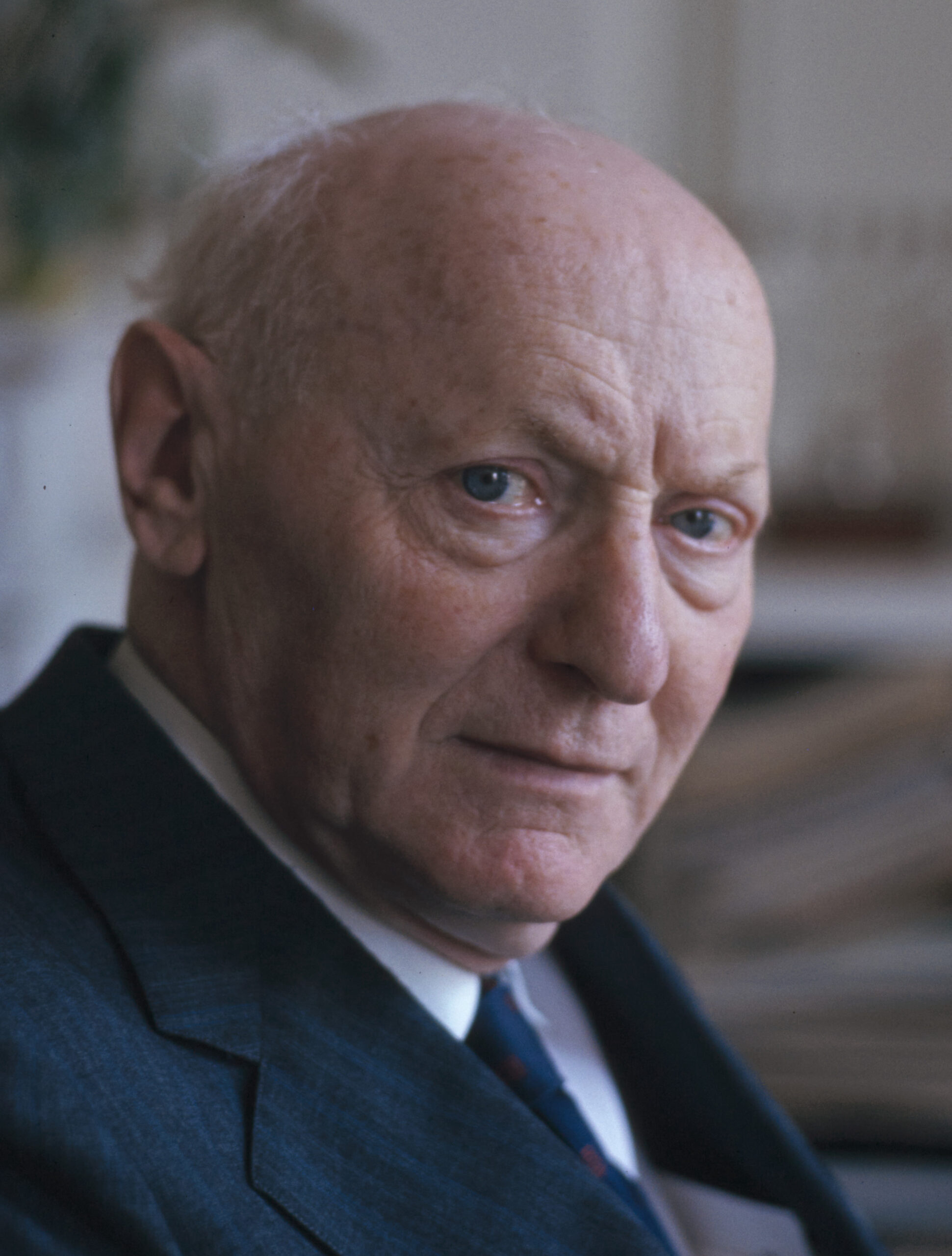
Early Life and Background
Isaac Bashevis Singer, born Icek-Hersz Zynger on November 11, 1903 (though some sources cite July 14, 1904), in the small village of Leoncin near Warsaw, then part of the Russian Empire, was a towering figure in 20th-century literature. His father was a Hasidic rabbi, and his early years were steeped in the traditions and mysticism of Eastern European Jewish life. When Singer was young, his family moved to Warsaw, where he grew up in a vibrant Jewish community.
The outbreak of World War I forced the family to relocate to Bilgoraj, a small town where his maternal grandfather served as a rabbi. This move was pivotal in shaping Singer’s worldview and literary voice. Bilgoraj, with its rich tapestry of Hasidic folklore, superstitions, and old-world traditions, would later become the backdrop for many of his stories.
Singer’s early education was intensely religious, focusing on Hebrew texts and Aramaic. However, as he grew older, he began to distance himself from the strict religious path expected of him. In 1920, he enrolled in the Tachkemoni Rabbinical Seminary in Warsaw, but his academic journey there was brief. Disillusioned with the prospect of becoming a rabbi, he returned to Bilgoraj, where he supported himself by giving Hebrew lessons and working as a proofreader for his brother Israel’s magazine, Literarische Bleter.
Early Career and Move to the United States
Isaac Bashevis Singer’s literary career began in earnest in the 1920s. He translated works by prominent authors like Thomas Mann, Gabriele D’Annunzio, and Erich Maria Remarque into Yiddish, which helped him hone his craft as a writer. During this period, he entered into a relationship with Runia Shapira, with whom he had a son, Israel.
Singer’s first significant work was the novel Satan in Goray, which he serialized between 1933 and 1935 in the Yiddish journal Globus, where he also served as co-editor. The novel, set in the aftermath of the 1648 Cossack rebellion led by Bohdan Khmelnytsky, explores the impact of Sabbatai Zevi’s false messianism on a small Jewish community. This work introduced themes that would recur throughout Singer’s career: the tension between faith and doubt, the power of superstition, and the struggles of the Jewish people.
The rise of antisemitism in Europe, particularly in Nazi Germany, created an increasingly hostile environment for Jewish writers. In 1935, facing the growing threat, Singer emigrated to the United States, leaving behind his wife and son, who later moved to Moscow. Settling in New York, Singer joined the staff of Forverts (The Jewish Daily Forward), a major Yiddish-language newspaper. He adopted the pen name Isaac Bashevis, a tribute to his mother, Bathsheba, and began writing prolifically for the publication.
Rise to Fame in America
In America, Singer’s career flourished. He wrote under various pseudonyms, and his early works published in the United States were serialized in Forverts. His first novel in America, The Family Moskat, which he began publishing in 1945, was a sweeping saga of Jewish life in Poland before the Holocaust. The novel garnered significant attention and marked the beginning of Singer’s rise to fame in the American literary scene.
In 1940, Singer married Alma Haimann, a German immigrant working in a clothing store. Around this time, his works began to be translated into English, significantly expanding his readership. By 1943, Singer had become a naturalized American citizen, and his literary output continued to grow, encompassing novels, short stories, and essays.
Singer’s breakthrough in the English-speaking world came with the publication of his short story collection Gimpel the Fool in 1957. The title story, translated by Saul Bellow, is one of Singer’s most famous works and exemplifies his narrative style—rich in folklore, mysticism, and a deep understanding of human nature. The story’s protagonist, Gimpel, is a simple man often mocked for his gullibility, but his unwavering faith and goodness ultimately make him a figure of profound wisdom. This story, like many of Singer’s works, reflects his deep engagement with the themes of faith, morality, and the complexity of the human condition.
Major Works and Themes
Singer’s oeuvre is vast, spanning novels, short stories, essays, and memoirs. His works often delve into the lives of Eastern European Jews, bringing to life the shtetls (small towns) of Poland and the complex, often tormented, inner lives of his characters. His writing is characterized by its exploration of the supernatural, the moral dilemmas of his characters, and the tension between tradition and modernity.
One of Singer’s most celebrated novels is The Magician of Lublin, published in 1960. The novel tells the story of Yasha Mazur, a magician and adventurer living in late 19th-century Poland. Yasha’s life is marked by his numerous affairs and his struggle with his conscience as he contemplates a major heist. The novel explores themes of temptation, sin, and redemption, culminating in Yasha’s self-imposed isolation as a form of penance.
Another significant work is The Slave, published in 1962. This novel is set in the aftermath of the Chmielnicki massacres in 17th-century Poland and tells the story of Jacob, a Jewish man who is enslaved by a Polish peasant. The novel explores Jacob’s deep spiritual struggles and his forbidden love for Wanda, the peasant’s daughter. The Slave is a powerful exploration of faith, love, and the enduring human spirit.
Singer was also known for his memoirs, such as In My Father’s Court (1956) and A Young Man in Search of Love (1978), which provide insight into his early life and the formative experiences that shaped his worldview and literary voice.
In addition to his literary achievements, Singer became a prominent advocate for vegetarianism, a lifestyle he adopted in the 1960s. He believed that compassion for animals was a moral duty and often explored themes of ethics and human responsibility towards animals in his work.
Nobel Prize and Later Years
Isaac Bashevis Singer’s contributions to literature were recognized globally, culminating in his receiving the Nobel Prize in Literature in 1978. The Nobel Committee praised him for his “impassioned narrative art which, with roots in a Polish-Jewish cultural tradition, brings universal human conditions to life.” This award solidified Singer’s place among the literary greats of the 20th century and brought renewed attention to Yiddish literature, a language and tradition he championed throughout his life.
During this period, Singer continued to produce important works. In 1972, he published Enemies, A Love Story, a novel that explores the psychological aftermath of the Holocaust through the story of a Jewish man living in New York who is torn between his wife, his mistress, and the unexpected return of his first wife, who survived the concentration camps. The novel was later adapted into a successful film in 1989.
In 1978, the same year he won the Nobel Prize, Singer published Shosha, a novel set in the Jewish neighborhoods of Warsaw in the 1930s. The story centers on Aaron Greidinger, a writer who reconnects with his childhood love, Shosha, as the world around them spirals toward destruction. The novel is a poignant exploration of love, memory, and the relentless march of history.
Singer’s later works include The Penitent (1983), a novel about a man who abandons his secular life to return to the strictures of Orthodox Judaism, and The King of the Fields (1988), which examines the tension between paganism and monotheism in ancient Poland. In 1983, he also published The Death of Methuselah and Other Stories, a collection of short stories that explore the themes of aging, mortality, and the search for meaning in life.
Death and Legacy
Isaac Bashevis Singer passed away on July 24, 1991, in Surfside, Florida, after a series of heart attacks. He was buried in Cedar Park Cemetery in Emerson, New Jersey. Singer’s death marked the end of an era for Yiddish literature, but his legacy endures through his vast body of work, which continues to be read and studied around the world.
Singer’s final novel, Lost Souls, was published posthumously in 1994. This work, like much of his later writing, reflects his preoccupation with themes of loss, exile, and the search for spiritual redemption.
Conclusion
Isaac Bashevis Singer’s life and work are a testament to the enduring power of storytelling. Through his vivid depictions of Jewish life in Eastern Europe, his exploration of the supernatural and the mystical, and his deep understanding of the human condition, Singer created a body of work that transcends time and place. His stories, rooted in the Yiddish tradition, speak to universal themes of love, faith, doubt, and the struggle for identity.
Singer’s contributions to literature were not just confined to his own work; he played a crucial role in preserving and promoting Yiddish as a literary language at a time when it was under threat. His Nobel Prize win brought international recognition to Yiddish literature and inspired a renewed interest in the language and culture of Eastern European Jews.
Today, Isaac Bashevis Singer remains a towering figure in world literature, celebrated not only for his literary genius but also for his moral vision and his commitment to the cultural heritage of his people. His works continue to be read and cherished by readers around the world, ensuring that his voice will resonate for generations to come.


