
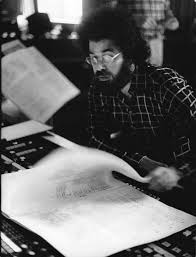
Early Life and Education
Giuseppe Sinopoli was born on November 2, 1946, in Venice, Italy, a city renowned for its rich cultural and artistic heritage. Sinopoli was the eldest of ten children, and his upbringing in a large family instilled in him a strong sense of responsibility and leadership from an early age. After spending a brief period in Messina, he attended high school at the prestigious Collegio Cavanis in Possagno. Sinopoli’s academic pursuits were diverse; he enrolled in the Faculty of Medicine and Surgery at the University of Padua, where he graduated in 1972 with a thesis titled “Deviance and Criminogenic Moments in the Phenomenological Mediation of the Work of Art.” This thesis highlighted his deep interest in the intersection of art, psychology, and human behavior.
Simultaneously, Sinopoli nurtured his passion for music by enrolling at the Venice Conservatory, where he was admitted directly to the fourth year of piano and composition. Despite his promising career in medicine, Sinopoli’s love for music prevailed. He abandoned his medical career to pursue composition under the tutelage of Franco Donatoni and Bruno Maderna, two of Italy’s most respected composers. His studies extended to the summer courses in Darmstadt, a hub for avant-garde music, where he further honed his skills.
Early Career and Compositions
Giuseppe Sinopoli’s first composition, Sintassi Teatrale, was created in 1968 and featured the soprano Katia Ricciarelli. Although he did not complete his diploma at the conservatory, Sinopoli’s talent was undeniable. By the age of 23, he was already traveling across Europe as both a composer and a lecturer. His work gained international recognition when he was commissioned to compose Archeology City Requiem for the inauguration of the Centre Pompidou in Paris. This composition was part of an installation curated by the architectural studio Haus-Rucker-Co, signaling Sinopoli’s early integration into the avant-garde art scene.
Throughout the 1970s, Sinopoli’s reputation as a composer grew, and his catalog of works, which includes 44 pieces published by Suvini Zerboni and Ricordi, reflected his deep intellectual and philosophical engagement with music. His works from this period are marked by their complexity and often explore themes of humanism and the human condition.
Transition to Conducting and International Acclaim
By the mid-1970s, Sinopoli’s focus shifted increasingly towards conducting, a move that would define the rest of his career. After studying conducting at the Vienna Academy of Music under Hans Swarowski, Sinopoli made his conducting debut at La Fenice in Venice in 1976 and 1977 with performances of Aida and Tosca. These early successes led to his debut at Santa Cecilia in 1978 and at the Deutsche Oper Berlin in 1980 with Macbeth, directed by the acclaimed Luca Ronconi.
Sinopoli’s conducting career quickly soared, and in 1981 he premiered his only opera, Lou Salomé, in Munich. Despite the success of this opera, he soon ceased composing, referring to this period as his “Hellenistic phase” of music writing. Instead, Sinopoli devoted himself entirely to conducting, where his rigorous, intellectual approach to music interpretation set him apart from his contemporaries.
In 1983, Sinopoli was appointed principal conductor of the Orchestra dell’Accademia Nazionale di Santa Cecilia and the New Philharmonia Orchestra in London. His contract with Deutsche Grammophon, which began in the early 1980s, resulted in over 100 recordings, including 116 CDs, 13 DVDs, and 27 LPs. His discography covers a vast repertoire, from Baroque to 20th-century music, highlighting his versatility and deep understanding of various musical styles.
International Success and Recognition
Giuseppe Sinopoli’s international reputation was solidified by his performances with some of the world’s leading orchestras and at prestigious venues. In 1983, his production of Manon Lescaut at the Royal Opera House in Covent Garden, featuring Kiri Te Kanawa and Plácido Domingo, was a resounding success. This was followed by critically acclaimed performances of Tosca at the Metropolitan Opera in 1985 and Tannhäuser at the Bayreuth Festival in the same year. At Bayreuth, Sinopoli became the fourth Italian conductor to lead the festival, following in the footsteps of legends like Arturo Toscanini.
Sinopoli’s association with the Bayreuth Festival continued, and in 2000, he became the first Italian conductor to lead the Ring Cycle (also known as the Tetralogy) at the festival. His interpretations were celebrated for their intellectual depth and emotional intensity, earning him a place among the greatest conductors of his time.
Throughout the 1990s, Sinopoli held several prominent positions, including principal conductor of the Deutsche Oper Berlin in 1990 and the Staatskapelle Dresden in 1992. His connection with the Dresden orchestra was particularly strong, and he remained closely associated with them throughout his career.
In 1994, Sinopoli made his debut at La Scala in Milan with Strauss’s Elektra. His performances at La Scala were highly anticipated events, and he returned in subsequent years to conduct Fanciulla del West, Wozzeck, Donna senz’ombra, and Ariadne auf Naxos. In 2001, he was scheduled to conduct Turandot, but tragically, his life was cut short before this could happen.
Literary Contributions and Academic Engagements
Giuseppe Sinopoli was not only a conductor and composer but also a prolific writer and thinker. In 1992, Marsilio Editore published his novel Parsifal a Venezia, dedicated to the composer Luigi Nono. This work, along with I racconti dell’isola, written at his home in Lipari, showcased Sinopoli’s deep intellectual engagement with the themes of mythology, psychology, and human consciousness.
His interest in archaeology, particularly of the Near East, was well-known, and his collection of artifacts was exhibited in a permanent display at the Parco della Musica in Rome under the title Aristaios – La collezione Giuseppe Sinopoli. His passion for archaeology and history was reflected in his approach to music, where he often sought to uncover the deeper, often hidden, meanings in the works he conducted.
Sinopoli’s academic contributions included lectures and writings on musicology and psychoanalysis. In 1997, the Sigmund Freud Society in Vienna invited him to give a lecture, which was later published under the title Individuazione e nascita della coscienza nelle trasformazioni simboliche del personaggio di Kundry nel Parsifal di Wagner. This lecture explored the symbolic transformations of the character Kundry in Wagner’s Parsifal, reflecting Sinopoli’s interdisciplinary approach to music and psychology.
Honors and Legacy
Giuseppe Sinopoli’s contributions to music and culture were recognized with numerous awards and honors. In 1998, he was awarded the Cavaliere di Gran Croce al Merito della Repubblica Italiana, the highest honor in Italy, for his services to music. In 1999, he received the Orden Francisco de Miranda, Venezuela’s highest state honor, from President Hugo Chavez.
In 2000, the Chinese government appointed Sinopoli as the “Musical Advisor” for the Youth Music Festival, further cementing his global influence in the world of classical music.
Tragically, Giuseppe Sinopoli passed away on April 20, 2001, while conducting the third act of Aida at the Deutsche Oper in Berlin. The performance was dedicated to the memory of the theater’s former superintendent, Gotz Friedrich, who had been a close friend of Sinopoli’s. His sudden death shocked the music world, and he was posthumously awarded an honorary degree in Near Eastern Archaeology by the University of Rome La Sapienza in 2002.
Conclusion
Giuseppe Sinopoli’s life was a testament to the power of intellectual curiosity and artistic passion. His work as a conductor, composer, writer, and scholar left an indelible mark on the world of classical music. His interpretations of opera and symphonic works were not only technically brilliant but also deeply philosophical, reflecting his belief in the profound connection between music, psychology, and the human experience.
Sinopoli’s legacy continues to inspire musicians, scholars, and audiences around the world. His recordings remain a vital part of the classical music repertoire, and his writings offer valuable insights into the mind of one of the 20th century’s most complex and fascinating cultural figures. The music world remembers Giuseppe Sinopoli not just for his extraordinary talent but also for his relentless pursuit of knowledge and his unwavering belief in the transformative power of art.


