
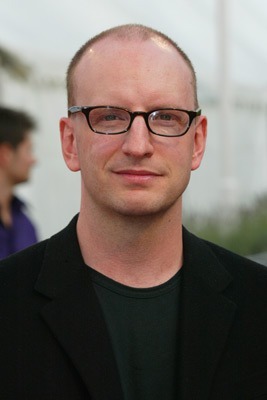
Steven Soderbergh is a name synonymous with innovation and creativity in the world of cinema. Born on January 14, 1963, in Atlanta, Georgia, Soderbergh’s journey to becoming one of the most influential filmmakers of his generation is marked by determination, experimentation, and an unyielding passion for storytelling.
Early Life and Inspirations
Soderbergh’s early life was characterized by frequent relocations, which exposed him to various cultures and environments. His family moved from Georgia to Texas, Pennsylvania, Virginia, and finally to Baton Rouge, Louisiana, where his father served as the dean of the College of Education at Louisiana State University. This diverse upbringing played a crucial role in shaping his worldview and artistic sensibilities.
From a young age, Soderbergh exhibited a keen interest in filmmaking. He began creating short films using makeshift equipment, often borrowing or renting gear from university students. This early experimentation laid the foundation for his future career, showcasing his ability to innovate with limited resources.
Breakthrough and Rise to Fame
Soderbergh’s first major break came when the progressive rock band Yes commissioned him to document one of their live performances. The resulting film, “9012 Live,” received critical acclaim and earned a Grammy Award nomination, marking Soderbergh’s entry into the professional world of filmmaking.
His breakthrough feature film, “Sex, Lies, and Videotape” (1989), was a low-budget independent film that took the Sundance Film Festival by storm. The film’s raw exploration of human relationships and voyeurism resonated with audiences and critics alike, earning Soderbergh the Palme d’Or at the Cannes Film Festival and an Academy Award nomination for Best Original Screenplay. At just 26 years old, Soderbergh was already making waves in the industry.
A Versatile Career
Following the success of “Sex, Lies, and Videotape,” Soderbergh’s career took off. He continued to explore a wide range of genres, from the neo-noir thriller “The Underneath” (1995) to the experimental “Schizopolis” (1996), a film in which he also starred alongside his ex-wife Betsy Brantley. While “Schizopolis” was a commercial failure, it demonstrated Soderbergh’s willingness to push boundaries and challenge conventional filmmaking techniques.
In 1998, Soderbergh directed “Out of Sight,” a crime comedy starring George Clooney and Jennifer Lopez. The film was a critical success and solidified Soderbergh’s reputation as a director capable of balancing artistic integrity with mainstream appeal. This film also marked the beginning of a long and fruitful collaboration with Clooney.
Awards and Accolades
The year 2000 was a defining moment in Soderbergh’s career. He directed two critically acclaimed films, “Erin Brockovich” and “Traffic,” both of which earned him Academy Award nominations for Best Director. “Erin Brockovich,” starring Julia Roberts, was based on the true story of a legal assistant who fought against a corporation polluting a small town’s water supply. Roberts’ performance won her the Academy Award for Best Actress, while “Traffic,” a complex narrative about the drug trade, won four Oscars, including Best Director for Soderbergh. This achievement made him one of the few directors in history to receive two Best Director nominations in the same year.
Mainstream Success and Iconic Films
Soderbergh’s commercial success continued with the release of “Ocean’s Eleven” (2001), a star-studded heist film featuring George Clooney, Brad Pitt, and Matt Damon. The film was a box office hit and spawned two sequels, “Ocean’s Twelve” (2004) and “Ocean’s Thirteen” (2007). These films demonstrated Soderbergh’s ability to craft entertaining, high-grossing movies while maintaining his distinct directorial style.
In addition to his work on the “Ocean’s” series, Soderbergh directed a diverse array of films throughout the 2000s, including the psychological thriller “Solaris” (2002), a remake of Andrei Tarkovsky’s 1972 film, and “The Informant!” (2009), a dark comedy starring Matt Damon. He also ventured into biographical filmmaking with the two-part epic “Che” (2008), which chronicled the life of revolutionary leader Che Guevara, played by Benicio Del Toro.
Experimentation and Independent Cinema
Soderbergh has always been known for his willingness to experiment with different filmmaking techniques and distribution methods. In 2005, he released “Bubble,” a low-budget film that was simultaneously released in theaters, on DVD, and on-demand, challenging the traditional model of film distribution. This move was part of Soderbergh’s broader effort to explore new ways of reaching audiences in the digital age.
His 2011 action-thriller “Haywire,” featuring Gina Carano and an ensemble cast including Michael Douglas, Antonio Banderas, and Ewan McGregor, showcased his versatility in genre filmmaking. The film’s success further cemented Soderbergh’s reputation as a director who could seamlessly transition between independent and mainstream cinema.
The Retirement That Wasn’t
In 2013, Soderbergh announced his retirement from filmmaking, citing frustration with the industry’s commercial pressures. However, his retirement was short-lived. He returned to the director’s chair with the 2017 heist comedy “Logan Lucky,” which was both a critical and commercial success. The film, featuring Channing Tatum and Daniel Craig, was a testament to Soderbergh’s enduring appeal and his ability to craft engaging narratives across different genres.
Soderbergh’s “retirement” also saw him venturing into television, directing the critically acclaimed series “The Knick” (2014-2015), a period drama set in a New York City hospital in the early 1900s. The series, starring Clive Owen, was praised for its innovative storytelling and Soderbergh’s distinct visual style.
Recent Works and Legacy
In recent years, Soderbergh has continued to experiment with new technologies and distribution methods. His 2018 psychological horror film “Unsane” was shot entirely on an iPhone, pushing the boundaries of what is possible in modern filmmaking. He followed this up with “High Flying Bird” (2019), a sports drama also shot on an iPhone, further solidifying his reputation as a pioneer of digital filmmaking.
Soderbergh’s 2019 film “The Laundromat,” a satirical drama about the Panama Papers scandal, featured an ensemble cast including Meryl Streep, Gary Oldman, and Antonio Banderas. The film was released on Netflix, reflecting Soderbergh’s continued interest in exploring new distribution platforms and reaching global audiences.
Age and Current Endeavors
As of 2024, Steven Soderbergh is 61 years old. Despite his earlier announcement of retirement, he remains an active and influential figure in the film industry. His willingness to embrace new technologies and his commitment to pushing the boundaries of cinematic storytelling ensure that he remains at the forefront of modern filmmaking.
Historical Context and Influence
Soderbergh’s career must be understood within the broader context of American cinema’s evolution. He emerged during a period of significant change in the industry, marked by the rise of independent cinema in the late 1980s and early 1990s. His success with “Sex, Lies, and Videotape” helped to catalyze the independent film movement, proving that low-budget films with strong narratives could achieve both critical and commercial success.
Moreover, Soderbergh’s work has had a lasting impact on the industry. His willingness to experiment with different genres, narrative structures, and distribution methods has inspired a new generation of filmmakers to take risks and challenge the status quo. His influence can be seen in the work of contemporary directors who prioritize storytelling and innovation over commercial considerations.
Final Thoughts
Steven Soderbergh’s career is a testament to the power of creativity, resilience, and a willingness to challenge conventions. From his early days as a young filmmaker experimenting with short films to his current status as a pioneering director, Soderbergh has consistently pushed the boundaries of what is possible in cinema. His contributions to the industry have not only entertained audiences but have also shaped the future of filmmaking in profound and lasting ways.
For anyone interested in the evolution of modern cinema, Soderbergh’s body of work offers a rich and varied exploration of the art of filmmaking. As he continues to innovate and inspire, there is no doubt that Steven Soderbergh’s legacy will endure for generations to come.


