
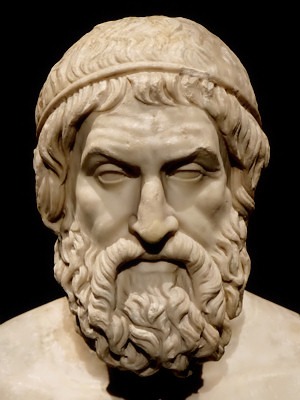
Sophocles, one of the most renowned and influential playwrights of ancient Greece, was born in 496 BC in the deme of Colonus Hippius, a suburb of Athens. His life spanned the Golden Age of Athens, a period marked by significant political, cultural, and intellectual achievements. As a dramatist, Sophocles is celebrated for his contributions to the genre of tragedy, with works such as Oedipus Rex, Antigone, and Electra standing as timeless masterpieces that continue to be studied and performed today.
Early Life and Education
Sophocles was born into a wealthy and influential family. His father, Sophilos, was a prosperous armorer and owned slaves, which afforded Sophocles a privileged upbringing. Growing up in an affluent environment, Sophocles received an excellent education, which was typical for a young man of his social standing. His education included instruction in music, poetry, and athletics—key components of a well-rounded Athenian education. Sophocles was particularly talented in music and was a disciple of Lampros, a renowned musician of the time.
At the age of 16, Sophocles was chosen to lead the paean, a choral chant in honor of the gods, celebrating the Greek victory at the Battle of Salamis in 480 BC. This early recognition of his talents foreshadowed his later success as a dramatist and public figure in Athens.
The Rise of a Playwright
Sophocles began his career as a playwright during a period of intense competition in the Athenian theater. The city hosted annual dramatic festivals, such as the Dionysia, where playwrights would present their works to be judged by their peers and the public. At the age of 27, in 468 BC, Sophocles won his first victory in one of these competitions, triumphing over Aeschylus, who was at that time the most prominent tragedian in Athens. This victory marked the beginning of Sophocles’ illustrious career in the Athenian theater.
Over the course of his life, Sophocles wrote approximately 123 plays, of which only seven have survived in complete form: Ajax, Antigone, Trachiniae, Oedipus Rex, Electra, Philoctetes, and Oedipus at Colonus. Despite the loss of most of his works, the surviving plays are considered masterpieces of the tragic genre, showcasing his skill in character development, plot construction, and thematic exploration.
Innovations in Greek Tragedy
Sophocles is credited with several significant innovations in the structure and presentation of Greek tragedy. One of his most notable contributions was the introduction of the third actor to the stage. Prior to Sophocles, tragedies typically featured only two actors, with the chorus playing a central role in the narrative. By adding a third actor, Sophocles expanded the potential for dramatic conflict and character interaction, allowing for more complex and nuanced storytelling.
Another key innovation attributed to Sophocles is the reduction of the chorus’s role in the narrative. While the chorus remained an integral part of his plays, Sophocles shifted the focus towards the individual characters and their personal struggles. This change allowed for deeper psychological exploration of the characters, particularly in their responses to the moral and existential dilemmas they faced.
Sophocles also made advancements in stagecraft and the use of scenery. He was among the first to utilize painted scenery, which enhanced the visual experience of the performances and helped to create a more immersive atmosphere for the audience. Additionally, he increased the size of the chorus from twelve to fifteen members, which added to the dramatic impact of choral performances and provided greater opportunities for choreographed movement.
Political and Military Involvement
In addition to his contributions to the theater, Sophocles was actively involved in the political and military life of Athens. His status as a respected citizen and dramatist led to several important public appointments. Around 443 BC, he was elected as one of the treasurers of the Delian League, a powerful alliance of Greek city-states led by Athens. In this role, Sophocles was responsible for managing the financial contributions of the league’s members, a position that required both integrity and acumen.
Sophocles also served as a general, or strategos, during the Samian War (441–439 BC), alongside Pericles, the leading statesman of Athens. The war was fought between Athens and the island of Samos, one of its allies, which had rebelled against Athenian control. Sophocles’ participation in this military campaign underscores his engagement with the civic affairs of Athens and his close association with some of the most influential figures of the time.
In 413 BC, following the disastrous Athenian expedition to Sicily, Sophocles was appointed as one of the ten probouloi, a special commission tasked with advising the government during a time of crisis. This position placed Sophocles in the midst of one of the most challenging periods in Athenian history, as the city faced political instability and the threat of defeat in the Peloponnesian War. Although Sophocles later expressed regret for his involvement in the oligarchic regime that briefly took power during this time, his service as a proboulos reflects his deep commitment to the welfare of Athens.
Major Works and Themes
Sophocles’ surviving plays are renowned for their exploration of complex moral and philosophical issues, particularly the tension between individual will and divine destiny. His most famous work, Oedipus Rex, is often considered the quintessential Greek tragedy, epitomizing the tragic hero’s struggle against an inexorable fate. The play’s exploration of blindness, both literal and metaphorical, as well as its examination of human pride (hubris) and the limitations of human knowledge, has made it a central text in the study of classical literature.
Antigone, another of Sophocles’ masterpieces, explores the conflict between the individual’s moral duty and the laws of the state. The play’s protagonist, Antigone, defies the edict of her uncle, King Creon, by burying her brother, Polyneices, who has been declared a traitor. Antigone’s act of civil disobedience and her unwavering commitment to family and religious duties raise enduring questions about the nature of justice, the role of the state, and the rights of the individual.
Electra and Philoctetes also delve into themes of revenge, justice, and the consequences of human actions. In Electra, the titular character grapples with the desire for vengeance against her mother, Clytemnestra, for the murder of her father, Agamemnon. The play examines the corrosive effects of hatred and the moral complexities of retribution. Similarly, Philoctetes focuses on the character of Philoctetes, who has been abandoned by his comrades on a deserted island due to a festering wound. The play explores themes of suffering, betrayal, and the ethics of leadership, as the Greek leaders attempt to persuade Philoctetes to rejoin their cause in the Trojan War.
Later Life and Legacy
Sophocles lived a long and productive life, continuing to write and produce plays well into his old age. He was married to an Athenian woman named Nicostrata, with whom he had a son, Iophon. He also had a son, Ariston, with his mistress Theoris of Sicyon. Ariston’s son, known as Sophocles the Younger, would later follow in his grandfather’s footsteps, becoming a playwright and producing several of his grandfather’s works posthumously.
In his later years, Sophocles was involved in the political upheaval of Athens, particularly during the establishment of the oligarchic government of the Four Hundred in 411 BC. Despite his previous political engagements, Sophocles was accused by his son Iophon of senility and incompetence, leading to a legal dispute over his estate. In a famous anecdote, Sophocles is said to have defended himself in court by reading from his play Oedipus at Colonus, demonstrating that he was still of sound mind and capable of producing profound literary work.
Sophocles died in 406 BC at the age of 90, reportedly either from choking on a grape or from the shock of a dramatic victory. His death marked the end of an era in Athenian drama, as he was the last of the great trio of tragic playwrights, following Aeschylus and Euripides. Oedipus at Colonus, his final play, was performed posthumously and serves as a fitting conclusion to his illustrious career. The play, set in the very deme where Sophocles was born, is a meditation on fate, redemption, and the end of life, reflecting the themes that had preoccupied him throughout his career.
Enduring Influence and Cultural Impact
Sophocles’ influence on literature, theater, and philosophy cannot be overstated. His works have been studied and performed continuously for over two millennia, inspiring countless adaptations and reinterpretations. His exploration of the human condition, the interplay between fate and free will, and the moral dilemmas faced by individuals in society has resonated with audiences across different cultures and historical periods.
Sophocles’ tragedies have also had a profound impact on the development of Western thought. Philosophers such as Aristotle, who considered Oedipus Rex the perfect tragedy, have drawn on Sophocles’ works to illustrate key concepts in ethics, metaphysics, and aesthetics. The themes and characters of Sophocles’ plays have continued to inspire writers, thinkers, and artists from the Renaissance to the modern era, cementing his legacy as one of the greatest dramatists in history.
In the contemporary world, Sophocles’ plays are frequently performed in theaters around the globe, demonstrating their timeless relevance. His exploration of complex moral issues, the consequences of human actions, and the tragic dimensions of life speaks to universal aspects of the human experience, ensuring that his works remain a vital part of the cultural and intellectual heritage of humanity.
Conclusion
Sophocles stands as a towering figure in the history of literature, whose contributions to drama and tragedy have left an indelible mark on Western culture. His innovations in theater, his exploration of profound philosophical questions, and his ability to portray the complexities of human nature have earned him a place among the greatest writers of all time. Through his enduring works, Sophocles continues to engage and challenge audiences, inviting them to reflect on the fundamental questions of existence and the nature of the human soul.
As we consider the life and legacy of Sophocles, it is clear that his influence extends far beyond the boundaries of ancient Greece. His plays remain essential reading for anyone interested in the history of literature, drama, and philosophy, offering insights that are as relevant today as they were over two thousand years ago.


