
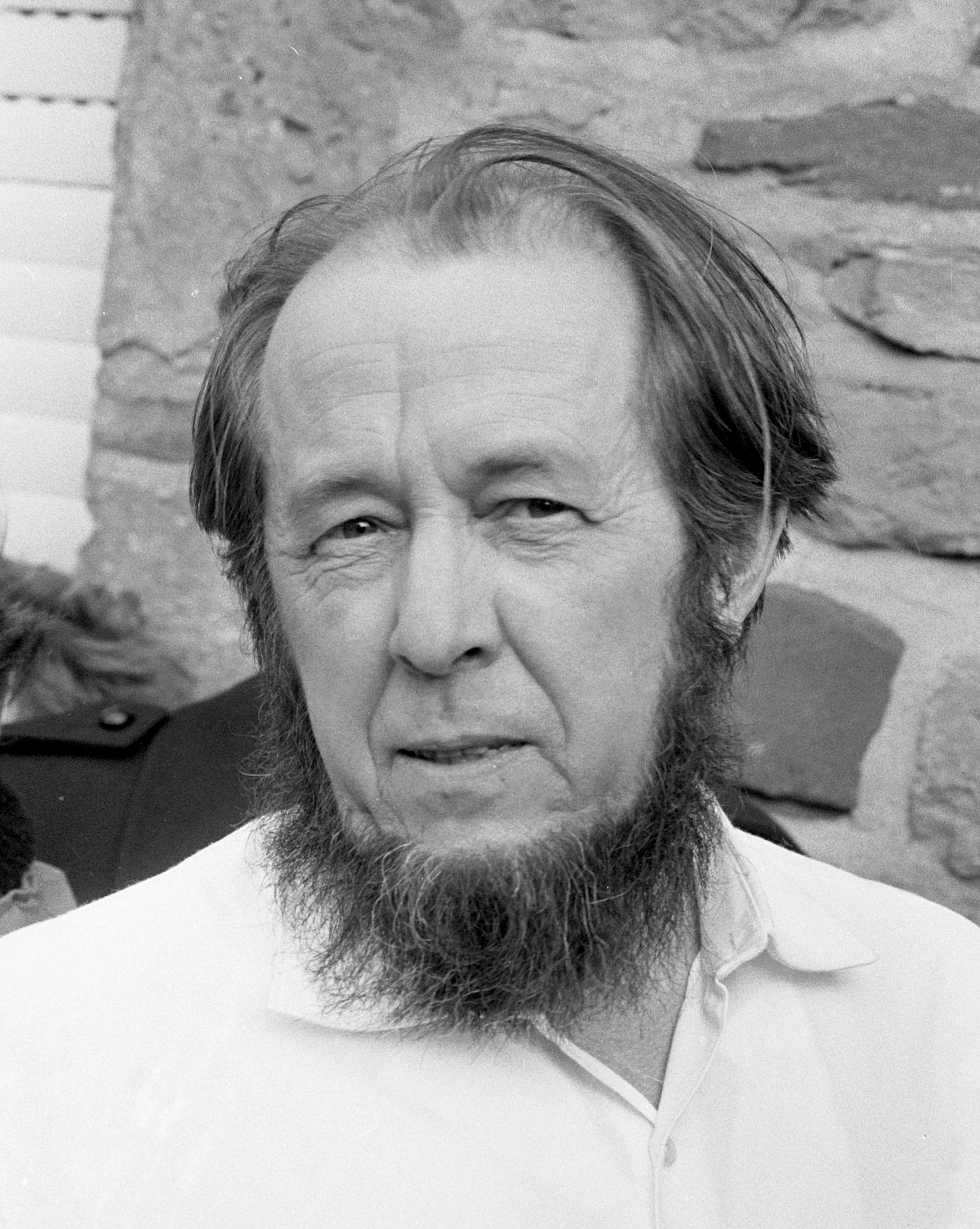
Aleksandr Solzhenitsyn, born on December 11, 1918, in Kislovodsk, Russia, is a towering figure in world literature and a symbol of resistance against totalitarian regimes. His life, marked by intense suffering and unyielding courage, reflects the turbulent history of the Soviet Union. Solzhenitsyn’s literary works, particularly his searing accounts of life in Soviet labor camps, have left an indelible mark on global consciousness. This article explores the life, fame, and legacy of Aleksandr Solzhenitsyn, delving into the nuances of his contributions to literature and human rights.
Early Life and Education
Aleksandr Isaevich Solzhenitsyn was born into a relatively well-off family, but his early life was marred by tragedy. His father, a Russian Imperial Army officer, died in a hunting accident just months before Solzhenitsyn was born. His mother, Taissia Zakharovna, was left to raise him alone in a country that was undergoing profound changes due to the Russian Revolution and the subsequent civil war.
Despite these hardships, Solzhenitsyn showed an early aptitude for learning. He grew up in Rostov-on-Don, where he pursued his education with determination. In 1941, he graduated with a degree in mathematics from Rostov State University. However, his academic ambitions were interrupted by the outbreak of World War II. Solzhenitsyn enlisted in the Red Army, where he served with distinction as an artillery officer on the front lines, earning several commendations for bravery.
The Arrest and Gulag Experience
Solzhenitsyn’s life took a dramatic turn in 1945 when he was arrested by Soviet authorities. The reason for his arrest was a letter he had written to a friend in which he criticized Joseph Stalin, referring to him as “the man with the mustache.” This seemingly trivial offense was enough to land Solzhenitsyn in the infamous Lubyanka prison in Moscow, a place known for its brutal interrogations.
He was sentenced to eight years in a labor camp, followed by permanent internal exile. His experience in the Gulag, the Soviet system of forced labor camps, would later become the central theme of his most famous works. Solzhenitsyn was shuffled between several labor camps, where he endured harsh conditions, malnutrition, and the constant threat of death. Despite these hardships, he began to write, documenting the horrors he witnessed and reflecting deeply on the human condition.
Literary Breakthrough: “One Day in the Life of Ivan Denisovich”
After his release from the labor camps in 1953, following Stalin’s death, Solzhenitsyn was sent into internal exile in the remote village of Kok-Terek in Kazakhstan. It was here, while working as a schoolteacher, that he began to write in earnest, using his experiences in the camps as the basis for his literary work.
His first major success came in 1962 with the publication of “One Day in the Life of Ivan Denisovich,” a novella that offers a stark, unflinching portrayal of a single day in the life of a Gulag prisoner. The protagonist, Ivan Denisovich Shukhov, embodies the resilience and endurance of the human spirit in the face of relentless oppression. The novella was published in the Soviet literary magazine Novy Mir and was an immediate sensation, marking the first time that such a candid account of the Soviet labor camps had been made public in the USSR.
The publication of “One Day in the Life of Ivan Denisovich” was a watershed moment in Soviet literature. It broke the long-standing taboo on discussing the atrocities committed under Stalin’s regime and opened the door for other writers to explore similar themes. However, this newfound openness was short-lived, as the Soviet government quickly began to crack down on dissent once again.
Continued Literary Success and Political Persecution
Following the success of his novella, Solzhenitsyn continued to write prolifically, though his relationship with the Soviet authorities became increasingly strained. His works, including “The First Circle” and “Cancer Ward,” offered scathing critiques of Soviet society and exposed the moral and ethical decay at the heart of the Communist regime.
In 1970, Solzhenitsyn was awarded the Nobel Prize in Literature, a recognition of his courage and literary prowess. However, the Soviet government refused to allow him to travel to Stockholm to accept the award, fearing that he would use the opportunity to denounce the regime on an international stage.
The situation reached a boiling point in 1973 with the publication of “The Gulag Archipelago,” a monumental work of historical and literary significance. This three-volume book is a meticulously researched and deeply personal account of the Soviet forced labor camp system, drawing on Solzhenitsyn’s own experiences as well as testimonies from hundreds of other survivors. “The Gulag Archipelago” is not just a historical document but also a powerful indictment of the entire Soviet system, from its ideological foundations to its brutal implementation.
The publication of “The Gulag Archipelago” made Solzhenitsyn an enemy of the state. In 1974, he was arrested, stripped of his Soviet citizenship, and forcibly exiled from the country. He eventually settled in the United States, where he continued to write and speak out against totalitarianism in all its forms.
Life in Exile and Return to Russia
Solzhenitsyn spent nearly two decades in exile, first in Switzerland and then in the United States. During this time, he became a prominent voice of the Russian emigre community and a vocal critic of both Soviet communism and Western materialism. His speeches and writings during this period often reflected a deep concern for the spiritual and moral decay he perceived in both the East and the West.
Despite his exile, Solzhenitsyn remained deeply connected to his homeland. In 1994, after the collapse of the Soviet Union, he returned to Russia, landing in Kolyma, a region synonymous with the horrors of the Gulag system. His return was a symbolic gesture, signaling his desire to reconnect with the Russian people and contribute to the rebuilding of the country after decades of totalitarian rule.
Upon his return, Solzhenitsyn continued to write and speak out on issues of national and global importance. However, his views on Russia’s future were not always well-received, particularly his support for traditional Russian values and his criticisms of the West. Despite this, he remained a respected figure in Russia and was awarded several honors, including a meeting with President Vladimir Putin, who praised Solzhenitsyn for his contributions to Russian culture and history.
Legacy and Impact on Literature and History
Aleksandr Solzhenitsyn’s legacy is profound and far-reaching. His works have been translated into dozens of languages and continue to be read and studied around the world. “The Gulag Archipelago” in particular has had a lasting impact, not only as a historical document but also as a philosophical exploration of the nature of evil and the capacity of the human spirit to resist oppression.
Solzhenitsyn’s contributions to literature are matched by his influence on world history. His writings played a crucial role in exposing the brutal realities of the Soviet system to the world, contributing to the eventual collapse of the Soviet Union. Many historians and political analysts credit Solzhenitsyn with helping to undermine the legitimacy of the Soviet regime, making him one of the most influential dissidents of the 20th century.
In addition to his literary achievements, Solzhenitsyn is remembered for his unwavering moral integrity and his commitment to speaking truth to power. He believed deeply in the power of literature to effect change and saw his work as part of a broader struggle for justice and human dignity.
Final Years and Death
In his later years, Solzhenitsyn continued to write and reflect on the state of the world. His later works, including “The Red Wheel,” a multi-volume historical epic, explored the causes and consequences of the Russian Revolution. These writings, though less well-known than his earlier works, offer a comprehensive and nuanced view of Russian history and culture.
Aleksandr Solzhenitsyn passed away on August 3, 2008, at the age of 89, due to heart failure. His death marked the end of a remarkable life, but his legacy lives on through his writings and the impact they have had on generations of readers and thinkers.
Conclusion: The Enduring Legacy of Aleksandr Solzhenitsyn
Aleksandr Solzhenitsyn’s life and work stand as a testament to the power of literature to challenge tyranny and inspire change. His fearless commitment to truth and justice, even in the face of immense personal suffering, has made him a symbol of resistance against oppression.
Solzhenitsyn’s writings, particularly “One Day in the Life of Ivan Denisovich” and “The Gulag Archipelago,” continue to resonate with readers around the world. They serve as a reminder of the horrors of totalitarianism and the resilience of the human spirit. As we reflect on Solzhenitsyn’s life and legacy, it is clear that his contributions to literature and human rights will continue to be felt for generations to come.


