
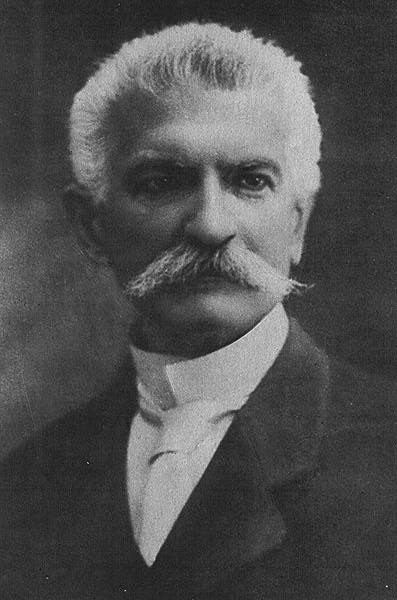
Sidney Sonnino, born on March 11, 1847, in Pisa, Italy, was a prominent Italian statesman, diplomat, and liberal reformer. His life and career spanned a critical period in Italian history, during which he played a key role in shaping the nation’s political landscape. Sonnino’s legacy is deeply intertwined with the development of modern Italy, particularly through his work on the Southern Question, his tenure as Prime Minister, and his significant influence on Italy’s foreign policy during World War I. This article delves into the life, achievements, and enduring impact of Sidney Sonnino, offering detailed insights into his contributions to Italian and European history.
Early Life and Family Background
Sidney Sonnino was born into a family of diverse cultural and religious backgrounds. His father, Isaac Sonnino, was of Jewish descent and an Anglican, while his mother, Georgina Sophia Arnaud Dudley, was Welsh. This multicultural and multilingual upbringing gave Sonnino a unique perspective on international affairs, which would later influence his career as a diplomat and statesman.
Raised in a liberal household, Sonnino was exposed to progressive ideas from a young age. His father, a successful businessman and banker, instilled in him a strong sense of duty and responsibility. These early influences shaped Sonnino’s worldview, particularly his commitment to liberalism, secularism, and the pursuit of social justice.
After completing his education, Sonnino pursued a career in law, becoming a qualified lawyer. However, his passion for politics and public service soon led him to enter the diplomatic corps. His early diplomatic assignments included postings in Madrid, Vienna, and Paris, where he gained valuable experience in international relations and honed his skills as a negotiator.
The Southern Question and Early Political Career
Upon returning to Italy, Sidney Sonnino shifted his focus to the pressing issues facing the newly unified nation, particularly the socio-economic disparities between the industrialized North and the agrarian South. The “Southern Question,” as it was known, concerned the widespread poverty, underdevelopment, and social unrest in Southern Italy, which had been exacerbated by the unification process.
In 1877, Sonnino, along with his close associate Baron Leopoldo Franchetti, embarked on a fact-finding mission to Sicily to study the conditions of the rural peasantry. The findings of their investigation were published in a two-volume report titled La Sicilia nel 1876 (“Sicily in 1876”), which provided a detailed account of the harsh realities faced by Sicilian farmers. The report highlighted the systemic exploitation of peasants by landowners, the inadequacies of the local administration, and the pervasive influence of the Mafia.
Sonnino’s work on the Southern Question established him as a leading advocate for agrarian reform and social justice. His proposals for addressing the region’s challenges included land redistribution, investment in infrastructure, and educational reforms. These ideas resonated with many in the political sphere and helped to raise awareness of the deep-rooted issues affecting Southern Italy.
In 1880, Sonnino entered the Italian Parliament as a deputy, representing the liberal faction. His early parliamentary career was marked by his efforts to bring attention to the plight of the Southern peasantry and to advocate for comprehensive reforms. He used his platform to push for policies that would address the economic and social inequalities in the South, making him a prominent figure in the liberal movement.
Rise to National Prominence: Ministerial Roles and Economic Reforms
Sidney Sonnino’s reputation as a reformer and his expertise in economic matters led to his appointment as Minister of Finance and later as Minister of the Treasury in the government of Francesco Crispi from 1893 to 1896. During this period, Italy was facing a severe financial crisis, with a significant budget deficit and instability in the banking sector.
As Minister of Finance, Sonnino implemented a series of stringent economic measures to stabilize the country’s finances. His reforms included increasing government control over the banking system, restructuring public debt, and introducing fiscal austerity measures. Sonnino also played a crucial role in the reorganization of the Bank of Italy, which helped restore confidence in the Italian economy.
One of Sonnino’s key achievements during this time was his success in balancing the state budget, a significant accomplishment given the challenging economic conditions. His fiscal policies were widely praised for their effectiveness, although they also attracted criticism for their impact on public spending and social services.
In addition to his work on economic policy, Sonnino was an outspoken critic of corruption and inefficiency in government. He believed that good governance was essential for Italy’s progress and consistently advocated for transparency and accountability in public administration. His commitment to these principles earned him the respect of his peers and the trust of the public.
Prime Ministerial Tenure and Opposition to Giolitti
Sidney Sonnino’s prominence in Italian politics culminated in his appointment as Prime Minister on two occasions. His first term, from February to May 1906, was brief and marked by his attempts to address the Southern Question through agrarian reforms. However, his efforts were hampered by political opposition and the complexities of the Italian political system.
Sonnino’s second term as Prime Minister, from December 1909 to March 1910, was similarly short-lived but more impactful. During this period, he focused on furthering his reform agenda, particularly in the areas of land ownership and rural development. He also sought to strengthen press freedom, recognizing the importance of a free and independent media in a democratic society.
Despite his efforts, Sonnino faced significant challenges in implementing his policies, largely due to the entrenched interests of the political elite and the resistance of powerful landowners. His tenure as Prime Minister was ultimately cut short by the political machinations of Giovanni Giolitti, one of Italy’s most influential politicians of the time.
Giolitti, who served multiple terms as Prime Minister, was a master of political compromise and manipulation. He effectively used his influence to undermine Sonnino’s government, leading to its downfall. Sonnino’s rivalry with Giolitti became one of the defining features of his political career, with the two men representing different visions for Italy’s future. While Sonnino championed reform and transparency, Giolitti was more pragmatic, often prioritizing political stability over sweeping changes.
Foreign Policy and World War I: Italy’s Path to War
Sidney Sonnino’s most significant contribution to Italian history came during his tenure as Minister of Foreign Affairs, a position he held from 1914 to 1919. This period coincided with World War I, a conflict that would have profound implications for Italy and the wider world.
At the outbreak of the war, Italy was part of the Triple Alliance with Germany and Austria-Hungary. However, Sonnino, recognizing the strategic importance of aligning with the Entente Powers (Britain, France, and Russia), initiated secret negotiations with both sides. His goal was to secure the best possible terms for Italy in the event of its entry into the war.
These negotiations culminated in the signing of the Treaty of London in April 1915, in which Italy agreed to join the war on the side of the Entente Powers in exchange for territorial gains in the Adriatic region and elsewhere. Sonnino’s decision to support the Entente was driven by a combination of strategic considerations and a desire to fulfill Italy’s nationalist ambitions, particularly the goal of acquiring territories that were home to ethnic Italians but under Austro-Hungarian control.
Sonnino’s role in these negotiations was critical, and his diplomatic skills were instrumental in securing Italy’s place at the negotiating table. However, the aftermath of the war and the subsequent peace negotiations at the Paris Peace Conference in 1919 were less favorable for Italy. Despite Sonnino’s efforts, Italy did not receive all the territorial concessions it had been promised in the Treaty of London, leading to widespread disillusionment and a sense of betrayal among the Italian public.
The “mutilated victory,” as it was called, fueled nationalist and irredentist sentiments in Italy and contributed to the rise of fascism in the years that followed. Sonnino, disheartened by the outcome of the peace negotiations and the political climate in Italy, gradually withdrew from public life.
Later Years and Legacy
Sidney Sonnino was appointed to the Italian Senate in 1920, a recognition of his long and distinguished career in public service. However, by this time, Italy was on the brink of significant political and social upheaval. The rise of Benito Mussolini and the fascist movement marked the beginning of a new and troubling chapter in Italian history.
Sonnino, who had spent his life advocating for liberal principles, the rule of law, and democratic governance, witnessed with concern the erosion of these values as Mussolini’s influence grew. In 1922, just months before his death, Mussolini’s March on Rome marked the fascist takeover of the Italian government.
Sidney Sonnino passed away on November 24, 1922, in Rome, at the age of 75. His death marked the end of an era in Italian politics, as the liberal order he had fought to preserve gave way to authoritarian rule. Despite the challenges and setbacks he faced during his career, Sonnino’s contributions to Italian politics and diplomacy left an indelible mark on the nation’s history.
Conclusion: A Statesman of Principle and Reform
Sidney Sonnino’s life and career were defined by his unwavering commitment to the principles of liberalism, social justice, and good governance. From his early work on the Southern Question to his leadership during World War I, Sonnino consistently sought to improve the lives of ordinary Italians and to position Italy as a respected and influential player on the global stage.
Sonnino’s legacy is complex and multifaceted. While his tenure as Prime Minister was marked by challenges and political rivalries, his impact on Italian foreign policy and his efforts to address the socio-economic disparities in Southern Italy remain significant achievements. His role in negotiating Italy’s entry into World War I, though controversial, demonstrated his strategic acumen and his ability to navigate the complex web of international diplomacy.
As a statesman, Sidney Sonnino exemplified the qualities of integrity, dedication, and a deep sense of responsibility to his country. His contributions to Italian politics, particularly his advocacy for transparency and reform, continue to resonate in the country’s political discourse. In an era marked by upheaval and change, Sonnino’s life serves as a reminder of the enduring importance of principled leadership and the pursuit of justice and equality for all.


