
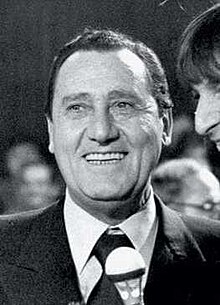
Alberto Sordi, affectionately known as “L’Albertone Nazionale,” is one of the most iconic figures in Italian cinema. Born on June 15, 1920, in the heart of Rome’s Trastevere district, Sordi’s life and career spanned over five decades, during which he starred in around 150 films. His unique ability to embody the quintessential Italian character made him a beloved figure not just in Italy but across the world. This article delves into the life of Alberto Sordi, exploring his early years, rise to fame, and the enduring legacy he left behind.
Early Life and Education
Alberto Sordi was born into a musical family. His father, Pietro Sordi, was a conductor and a musician at the Teatro dell’Opera di Roma, while his mother, Maria Righetti, was a schoolteacher. Growing up in such an environment, Sordi developed an early interest in the performing arts. His first foray into entertainment came as a young boy when he sang as a choirboy at the Sistine Chapel. This early exposure to the arts laid the foundation for his later career in film and theater.
Despite his early start in music, Sordi was more interested in acting and comedy. He attended acting classes at the prestigious Silvio d’Amico Academy of Dramatic Arts but was expelled for his strong Roman accent, which, ironically, would later become one of his most distinctive features.
Early Career: From Radio to Film
Alberto Sordi’s career began in earnest in the late 1930s when he found work as a voice actor. His first major break came when he won a contest held by MGM to dub the voice of Oliver Hardy, the rotund half of the American comedy duo Laurel and Hardy, for the Italian audience. Sordi’s dubbing work for “Ollio” was so successful that it became one of his early claims to fame, establishing his reputation as a talented voice artist.
In addition to his dubbing work, Sordi also made a name for himself on the radio. He created a series of popular characters for Italian radio, including the beloved “Signor Coso,” “Mario Pio,” and “Il Conte Claro.” These characters, often satirical and reflective of the quirks of Italian society, resonated with audiences and set the stage for Sordi’s transition to film.
Rise to Fame in Italian Cinema
Alberto Sordi’s film career took off in the 1940s, but it was not until the 1950s that he became a household name. His first major film role came in 1942 with “I tre aquilotti,” directed by Mario Mattoli. However, it was his collaboration with legendary director Federico Fellini that truly launched Sordi into stardom.
In 1952, Fellini cast Sordi in the lead role of “Lo sceicco bianco” (The White Sheik), a film that satirizes the popular culture surrounding Italian fotoromanzi (photo novels). Sordi’s portrayal of a naive and starstruck newlywed husband captivated audiences and critics alike, showcasing his talent for blending comedy with poignant social commentary.
The following year, Sordi starred in another Fellini classic, “I Vitelloni” (1953), where he played the role of Alberto, a lazy and self-centered young man who typified the aimless youth of post-war Italy. The film was a critical and commercial success, and Sordi’s performance earned him the Nastro d’Argento award for Best Supporting Actor.
The Iconic Italian Everyman
Throughout the 1950s and 1960s, Alberto Sordi became the face of Italian comedy, particularly the genre known as “commedia all’italiana.” His ability to portray the flaws, vices, and virtues of the average Italian made him a beloved figure across the nation. Sordi’s characters were often cynical, cowardly, and selfish, yet he portrayed them with such charm and humor that audiences couldn’t help but love them.
One of his most famous roles was that of Nando Moriconi in “Un americano a Roma” (1954), directed by Steno. In this film, Sordi plays a young Roman man obsessed with American culture, to the point of adopting a faux American accent and lifestyle. The film became an instant classic, and Moriconi’s catchphrase “Maccarone, m’hai provocato e io ti distruggo!” became part of the Italian cultural lexicon.
Sordi’s ability to embody the contradictions and idiosyncrasies of Italian society was further showcased in films like “Il Vedovo” (1959), where he played a scheming husband plotting to murder his wife, and “La Grande Guerra” (1959), directed by Mario Monicelli, where Sordi gave a nuanced performance as a cowardly soldier during World War I. His role in “La Grande Guerra” earned him another Nastro d’Argento and cemented his status as one of Italy’s greatest actors.
Transition to Directing and Continued Success
In the 1960s, Sordi began to expand his repertoire by stepping behind the camera as a director. His directorial debut came in 1966 with “Fumo di Londra,” a film that explored the culture clash between Italy and England. The film was well-received and earned Sordi the David di Donatello award for Best Director.
Over the next few decades, Sordi continued to direct and star in a variety of films, many of which tackled serious social issues through the lens of comedy. Films like “Il Medico della Mutua” (1968) and “Detenuto in Attesa di Giudizio” (1971) offered biting critiques of the Italian healthcare and judicial systems, respectively, while still maintaining the humor that audiences had come to expect from Sordi.
One of Sordi’s most acclaimed performances came in the 1977 film “Un Borghese Piccolo Piccolo,” directed by Mario Monicelli. In this dark comedy-drama, Sordi plays a government clerk who takes drastic measures after a personal tragedy. The film’s exploration of the dehumanizing effects of bureaucracy and the lengths to which people will go for their families struck a chord with audiences and critics alike, and Sordi’s performance was lauded as one of the finest of his career.
A Cultural Icon and National Treasure
By the 1980s and 1990s, Alberto Sordi had become more than just a film star; he was a national treasure. His films were not just entertainment but also a mirror reflecting the social, political, and cultural changes occurring in Italy. Sordi’s ability to adapt to the times while maintaining his unique comedic style ensured that he remained relevant throughout his career.
In 1995, Sordi was awarded the Golden Lion for Lifetime Achievement at the Venice Film Festival, a fitting recognition of his immense contribution to Italian cinema. That same year, he directed and starred in “Nestore, l’ultima corsa,” a poignant film about aging and the bond between humans and animals. The film was used by the Italian Ministry of Education to raise awareness about the issues facing the elderly and animal rights, further demonstrating Sordi’s impact beyond the world of entertainment.
As Sordi approached his 80th birthday in 2000, the city of Rome paid tribute to him by giving him the symbolic “keys to the city” for a day, highlighting his status as a beloved figure in the capital. Sordi’s connection to Rome, his birthplace and lifelong home, was profound, and the city’s tribute was a testament to the deep affection that the Roman people held for him.
Legacy and Influence
Alberto Sordi passed away on February 24, 2003, at the age of 82, in his villa in Rome. His death marked the end of an era for Italian cinema, but his legacy lives on through his extensive body of work. Sordi’s films continue to be celebrated and studied, not just for their comedic brilliance but also for their insightful commentary on Italian society.
Sordi’s influence extends beyond Italy. His work has inspired countless actors, directors, and comedians around the world. His ability to capture the essence of the human experience—its joys, sorrows, and absurdities—resonates across cultures, making him a truly universal figure in cinema.
Moreover, Sordi’s characters have become archetypes within Italian culture. The figures he portrayed—the opportunistic schemer, the cowardly soldier, the delusional dreamer—are now part of Italy’s collective memory, serving as both a reflection and a critique of the national character.
In recognition of his contributions, numerous awards and honors have been bestowed upon Sordi posthumously. Streets, squares, and theaters in Italy have been named after him, ensuring that his name and legacy will be remembered for generations to come.
Conclusion: The Enduring Appeal of Alberto Sordi
Alberto Sordi’s life and career are a testament to the power of cinema to both entertain and reflect society. His ability to portray a wide range of characters, each with their unique flaws and virtues, made him a beloved figure not just in Italy but around the world. Sordi’s films offer a window into the Italian soul, capturing the essence of what it means to be Italian through humor, satire, and deep humanity.
As we look back on Sordi’s remarkable career, it’s clear that his influence on cinema and culture will endure. His films continue to be a source of joy, reflection, and inspiration, reminding us of the timeless power of storytelling and the enduring appeal of a true cinematic legend.


