
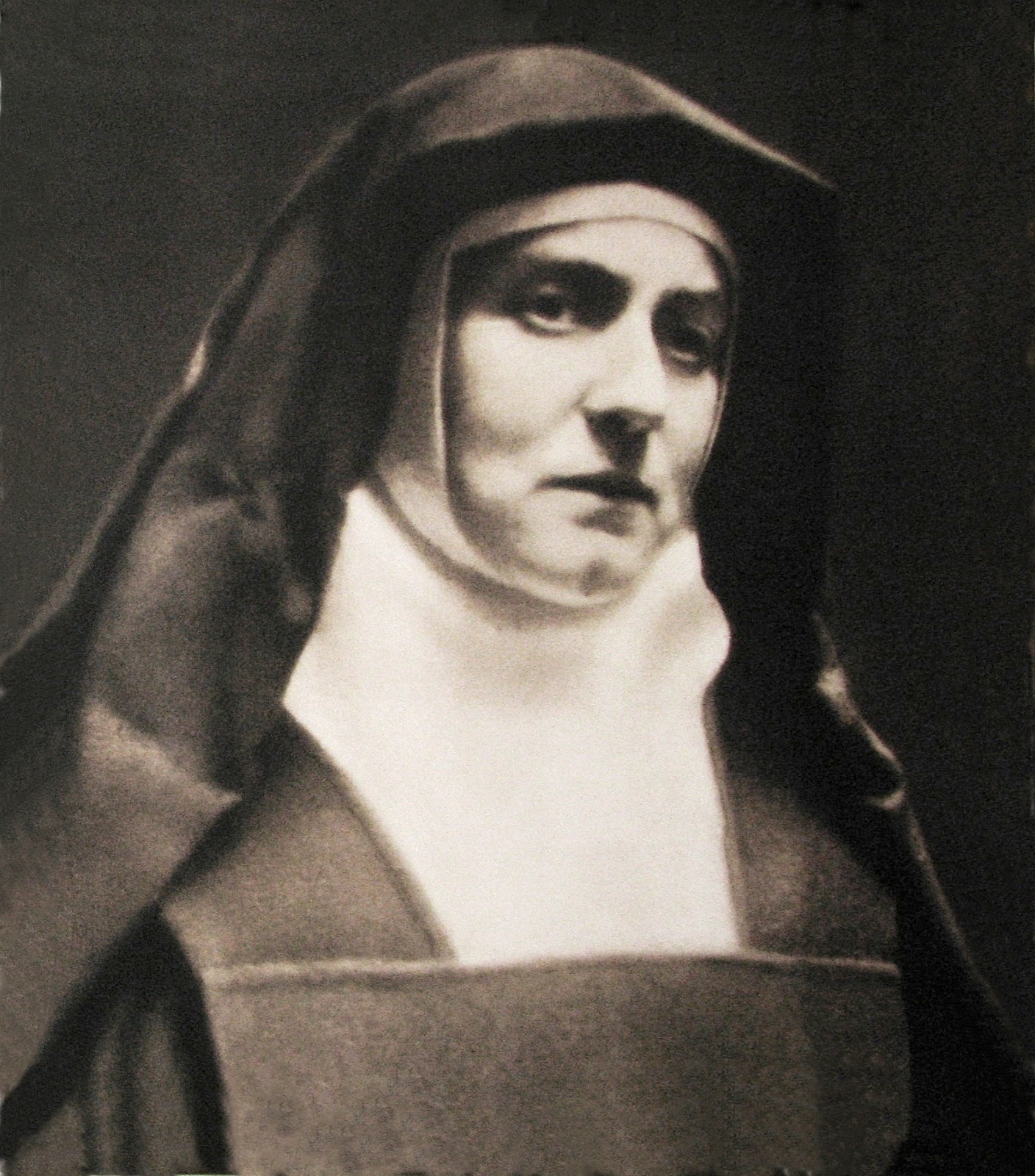
Edith Stein, also known as Saint Teresa Benedicta of the Cross, stands as a profound figure in the annals of history, recognized not only for her intellectual contributions but also for her spiritual journey that culminated in her martyrdom during one of humanity’s darkest periods. Her life, marked by an unwavering pursuit of truth and an unyielding commitment to her faith, has made her an enduring symbol of courage, intellect, and sanctity.
Early Life: Roots and Education
Edith Stein was born on October 12, 1891, in Breslau, which is now Wroclaw, Poland, into a large Orthodox Jewish family. She was the youngest of eleven children, and her early years were profoundly shaped by her mother, Augusta Stein, who became the head of the family following the premature death of Edith’s father. Augusta Stein’s resilience and dedication to her family left a lasting impression on Edith, instilling in her a deep respect for perseverance and sacrifice.
From a young age, Edith displayed exceptional intellectual abilities and a sensitive nature. These qualities would later define her academic and philosophical pursuits. Despite her family’s strong Jewish faith, Edith’s journey toward atheism began in her adolescence. By the time she was in her teens, Edith had consciously chosen to abandon religious practices, identifying herself as an atheist, a decision that reflected her deep-seated need to question and understand the world around her.
Academic Pursuits and Intellectual Growth
Edith’s thirst for knowledge led her to enroll in prestigious universities across Europe. She began her studies at the University of Breslau before moving to the University of Göttingen, where she studied under the renowned philosopher Edmund Husserl. It was under Husserl’s mentorship that Edith developed a keen interest in phenomenology, a branch of philosophy that would shape much of her intellectual work. Her academic journey was marked by rigorous studies in German language, history, and psychology, disciplines that enriched her understanding of human nature and existence.
The outbreak of World War I in 1914 interrupted Edith’s academic pursuits, but it also opened a new chapter in her life. Driven by a sense of duty, she trained as a nurse and volunteered to serve on the front lines, caring for soldiers wounded in the war. Although her plans were temporarily halted due to a severe influenza infection, Edith’s commitment to serving others never wavered. In 1915, she returned to her studies and completed her doctorate in philosophy with highest honors, under Husserl’s guidance, in 1916.
Conversion to Catholicism: A Turning Point
The intellectual rigor that defined Edith’s early life eventually led her to a spiritual awakening. Her study of philosophy and her encounter with the autobiography of Saint Teresa of Ávila marked a profound turning point in her life. The writings of Saint Teresa resonated deeply with Edith, leading her to explore the Catholic faith more earnestly. This exploration culminated in her conversion to Catholicism in 1922, a decision that would shape the rest of her life.
Edith’s conversion was not merely an intellectual assent but a total transformation of her being. She adopted the name Teresa Benedicta of the Cross, symbolizing her commitment to her newfound faith and her willingness to share in the suffering of Christ. Despite her conversion, Edith never renounced her Jewish heritage, which she viewed as an integral part of her identity.
Teaching, Writing, and Philosophical Contributions
After her conversion, Edith Stein’s life took on new dimensions as she sought to reconcile her academic pursuits with her spiritual beliefs. She taught at a Dominican school for girls in Speyer, Germany, where she dedicated herself to both teaching and writing. During this period, she translated Thomas Aquinas’ De Veritate into German, deepening her understanding of Scholastic philosophy and contributing to her intellectual growth.
Her writings during this time reflect a synthesis of her philosophical background and her Catholic faith. Edith sought to bridge the gap between phenomenology, as taught by Husserl, and the theological teachings of the Catholic Church. One of her most significant works, “Finite and Eternal Being,” explores the relationship between God and creation, drawing on both Thomistic and phenomenological perspectives. Her intellectual contributions during this period were significant, but they were also deeply influenced by the growing political unrest in Germany.
The Rise of Nazism and Edith’s Final Years
As the 1930s progressed, the rise of Adolf Hitler and the Nazi regime brought increasing persecution against Jews in Germany. Despite her conversion to Catholicism, Edith Stein was not immune to the growing anti-Semitic sentiment. In 1933, with Hitler’s ascent to power, Edith was forced to resign from her teaching position due to her Jewish origins. This marked the beginning of a period of deep personal and spiritual reflection.
In response to the mounting dangers, Edith sought refuge in the Carmelite convent in Cologne, where she entered the order and took the name Sister Teresa Benedicta of the Cross. Her time in the convent was marked by intense spiritual practice and writing. She authored several important works, including “The Science of the Cross,” in which she explored the spiritual significance of suffering and the cross in Christian life.
However, even the walls of the convent could not shield her from the horrors of the Holocaust. In 1938, Edith was transferred to the Carmelite convent in Echt, Netherlands, in an attempt to escape the increasing Nazi persecution. Unfortunately, the Nazi regime extended its reach into the Netherlands, and in July 1942, following a public condemnation of Nazi racism by the Dutch bishops, Edith and her sister Rosa were arrested by the Gestapo.
Martyrdom and Canonization
Edith Stein’s arrest marked the beginning of her final journey. Along with other Catholic Jews, she was deported to the Auschwitz concentration camp. On August 9, 1942, Edith Stein, along with her sister and countless others, was murdered in the gas chambers of Auschwitz. Her death was a tragic end to a life that had been dedicated to the pursuit of truth, justice, and faith.
Edith Stein’s martyrdom did not go unnoticed. Her life and death became a powerful testimony to the intersection of faith, philosophy, and the horrific realities of the 20th century. In 1987, Pope John Paul II beatified Edith Stein, recognizing her as a martyr who had given her life for the faith. In 1998, she was canonized as Saint Teresa Benedicta of the Cross, and in 1999, she was declared one of the patron saints of Europe. Her canonization was a recognition of her life’s work, her intellectual contributions, and her ultimate sacrifice.
Historical Context and Legacy
To fully appreciate Edith Stein’s life, it is essential to understand the historical context in which she lived. The early 20th century was a period of immense social, political, and intellectual upheaval. The aftermath of World War I, the rise of totalitarian regimes, and the Holocaust all profoundly influenced the trajectory of her life.
Edith Stein’s story is not just one of personal faith but also of the broader Jewish experience in Europe during a time of escalating anti-Semitism. Her decision to convert to Catholicism did not sever her connection to her Jewish roots; instead, it deepened her understanding of the shared suffering of both Jews and Christians. Her writings on this subject provide a unique perspective on the relationship between Judaism and Christianity, particularly in the context of the Holocaust.
Moreover, Edith Stein’s intellectual legacy continues to resonate in both philosophical and theological circles. Her work bridged the gap between phenomenology and Scholasticism, offering a unique synthesis that has influenced contemporary philosophy of religion. Her writings on the nature of being, the role of women in society, and the meaning of the cross continue to inspire scholars and believers alike.
Edith Stein’s Enduring Impact
Edith Stein’s life is a testament to the power of faith, the pursuit of truth, and the human capacity for resilience in the face of unimaginable suffering. Her intellectual contributions, coupled with her unwavering commitment to her faith, have made her a symbol of hope and courage for people of all backgrounds.
Today, Edith Stein is remembered not only as a saint and martyr but also as a brilliant philosopher and a compassionate teacher. Her legacy endures in the many institutions and initiatives dedicated to her memory, including the Edith Stein Society, which promotes her writings and teachings, and numerous educational centers and memorials across Europe.
As we reflect on Edith Stein’s life, we are reminded of the profound impact that one individual can have on the world. Her journey from a young Jewish girl in Breslau to a Catholic martyr at Auschwitz is a story of transformation, sacrifice, and ultimately, redemption. Edith Stein’s life challenges us to seek the truth, to stand up against injustice, and to live with integrity, no matter the cost.
Her story, enshrined in the history of the 20th century, continues to inspire generations to pursue truth, justice, and faith with the same fervor and dedication that defined her life.


