
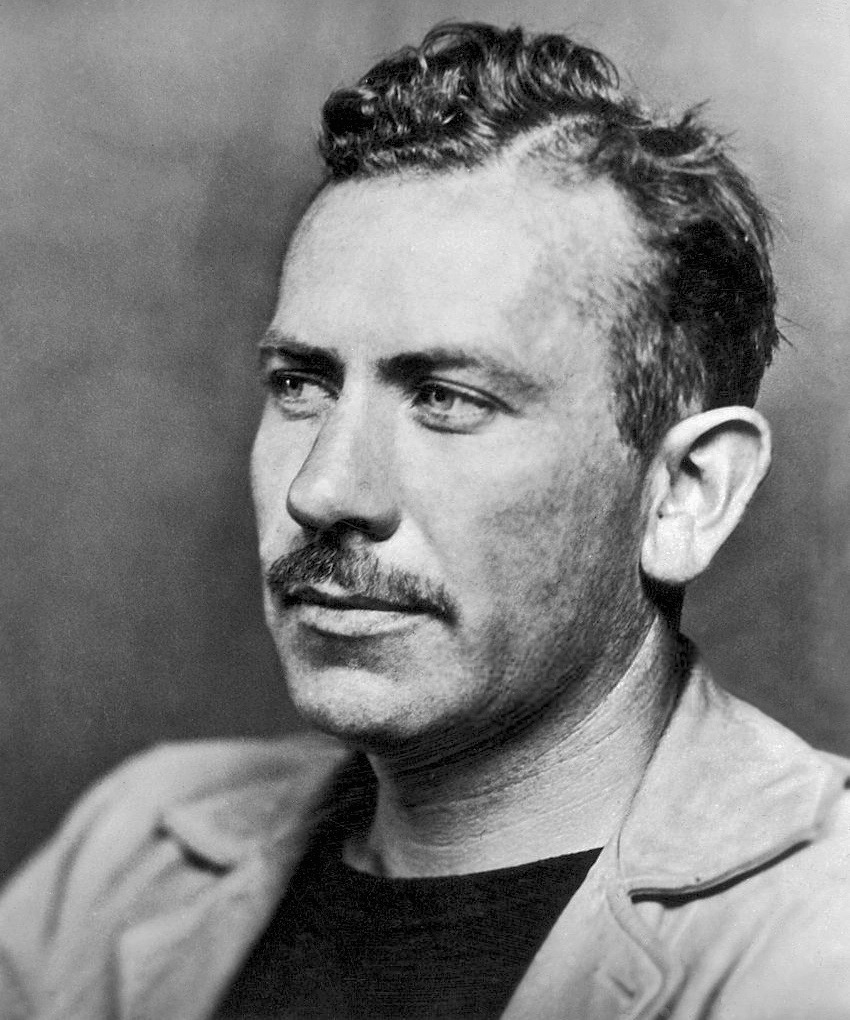
John Steinbeck stands as one of the most influential American writers of the 20th century, whose works have left an indelible mark on both American literature and global culture. His literary contributions, particularly during the tumultuous years of the Great Depression, continue to resonate with readers today. In this article, we will delve into the life, fame, and key highlights of John Steinbeck’s life, providing detailed insights and historical context to better understand the man behind the literary masterpieces.
Early Life and Formative Years
John Ernst Steinbeck was born on February 27, 1902, in Salinas, California, a rural town nestled in the heart of the state. The son of John Ernst Steinbeck Sr., the treasurer of Monterey County, and Olive Hamilton Steinbeck, a schoolteacher, John was raised in a household that valued education and hard work. He grew up with three sisters: Mary, Elizabeth, and Esther. From an early age, Steinbeck exhibited a deep interest in writing, composing poetry and short stories during his adolescence. By the age of fourteen, he had already decided that he would pursue a career as a writer, a determination that would shape the rest of his life.
In 1919, Steinbeck began attending Stanford University, where he took courses in creative writing and English literature. However, his academic journey was marked by frequent interruptions as he took on various temporary jobs to support himself. These experiences not only provided him with material for his future writings but also ingrained in him a deep understanding of the working-class struggles that would become a recurring theme in his work. Despite his passion for literature, Steinbeck left Stanford without obtaining a degree, choosing instead to pursue his literary ambitions more directly.
The Struggles and Triumphs of a Young Writer
After leaving Stanford, Steinbeck faced significant challenges in establishing himself as a writer. In 1925, he moved to New York City, the cultural and intellectual hub of the United States at the time. However, his attempt to break into the literary scene in the Big Apple was met with little success. After working briefly as a journalist for the “New York American,” he returned to California, disillusioned but undeterred. It was during this period that Steinbeck found employment as a caretaker of a summer estate, a job that afforded him ample time to write.
In 1929, just weeks before the infamous Black Thursday that would trigger the Great Depression, Steinbeck published his first novel, “Cup of Gold.” Although the book did not achieve commercial success, it marked the beginning of Steinbeck’s literary career. His subsequent works, however, would soon earn him critical acclaim and a loyal readership.
A Literary Voice for the Disenfranchised
The 1930s were a transformative decade for John Steinbeck. In 1930, he married Carol Henning and moved with her to Pacific Grove, California. Around this time, he met Edward Ricketts, a marine biologist and philosopher who would become a close friend and significant influence on Steinbeck’s thinking. Ricketts’ scientific perspective and philosophical ideas would later inform some of Steinbeck’s most famous works.
Steinbeck’s early novels, such as “The Pastures of Heaven” (1932) and “To a God Unknown” (1933), received modest attention but did not achieve widespread success. However, his fortunes changed with the publication of “Tortilla Flat” in 1935. The novel, a satirical take on the respectability of the bourgeoisie, was well-received and quickly became a bestseller. The rights to “Tortilla Flat” were purchased by Hollywood for $4,000, providing Steinbeck with financial stability and cementing his reputation as a rising literary star.
Following this success, Steinbeck continued to explore themes of social justice, poverty, and the human condition in his work. His 1936 novel, “In Dubious Battle,” dealt with the plight of migrant workers and the harsh realities of labor strikes in California. This theme was further developed in his 1937 novella, “Of Mice and Men,” which examined the struggles of displaced ranch workers during the Great Depression. The novella’s success led to a stage adaptation that premiered in New York City later that year, further solidifying Steinbeck’s reputation as a powerful storyteller with a keen social conscience.
The Grapes of Wrath and Unprecedented Fame
In 1939, Steinbeck published what is arguably his most famous work, “The Grapes of Wrath.” This epic novel tells the story of the Joad family, tenant farmers driven from their Oklahoma home by the Dust Bowl and economic hardship, as they journey to California in search of a better life. “The Grapes of Wrath” was an immediate success, both commercially and critically. It won the Pulitzer Prize for Fiction in 1940 and was later adapted into a film directed by John Ford, starring Henry Fonda.
However, the novel also sparked controversy due to its stark portrayal of the struggles between landowners and migrant workers, as well as its perceived political bias. Critics on the political right accused Steinbeck of promoting socialist ideas, while others condemned the book for its explicit language and bleak depiction of American life. Despite these criticisms, “The Grapes of Wrath” remains a cornerstone of American literature and a powerful commentary on the social and economic injustices of the time.
War, Love, and Continued Success
The onset of World War II marked another significant period in Steinbeck’s life. In 1941, he separated from Carol Henning and left California for New York City, where he began a relationship with singer Gwyndolyn Conger. The two married in 1943 and had two sons, Thom and John IV. During the war, Steinbeck worked as a war correspondent for the “New York Herald Tribune,” reporting from various European battlefronts. His wartime experiences were later compiled in the book “Once There Was a War” (1958).
In addition to his journalistic work, Steinbeck continued to write fiction during this period. His 1942 novel, “The Moon is Down,” focused on the Nazi occupation of Norway and was widely praised for its portrayal of resistance and courage. Following the war, Steinbeck traveled extensively, documenting his experiences in works such as “A Russian Journal” (1948), which he co-authored with photographer Robert Capa.
Later Years and the Nobel Prize
The post-war years saw Steinbeck’s return to literary prominence with the publication of “East of Eden” in 1952. This sprawling novel, which Steinbeck considered his magnum opus, explores the moral complexities of human nature through the intertwined lives of two families in California’s Salinas Valley. “East of Eden” was a commercial success and was adapted into a film by director Elia Kazan, featuring a breakout performance by James Dean.
Steinbeck’s literary achievements were recognized on the global stage in 1962 when he was awarded the Nobel Prize in Literature. The Nobel Committee praised him for his “realistic and imaginative writings, combining as they do sympathetic humor and keen social perception.” The award was the culmination of decades of work that had captured the struggles, dreams, and resilience of the American people.
Final Years and Legacy
In his later years, Steinbeck continued to travel and write, producing works such as “Travels with Charley” (1962), a travelogue documenting his journey across the United States with his poodle, Charley. The book offered a reflective and often humorous look at the changing landscape of America in the early 1960s.
Despite declining health, Steinbeck remained active and engaged until his death on December 20, 1968, in New York City. His ashes were interred in his hometown of Salinas, California, at the Garden of Memories Cemetery.
John Steinbeck’s legacy endures through his extensive body of work, which continues to be studied, adapted, and celebrated around the world. His novels, with their deep empathy for the underprivileged and their unflinching exploration of social issues, have secured his place as one of the greatest American writers of all time.


