
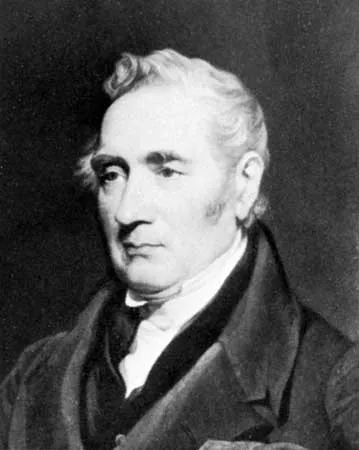
George Stephenson, often hailed as the “Father of Railways,” was a pioneering engineer whose innovations in steam locomotive technology and railway design laid the foundation for the modern railway system. Born on June 9, 1781, in Wylam, Northumberland, England, Stephenson’s journey from humble beginnings to becoming one of the most influential engineers in history is a testament to his determination, ingenuity, and forward-thinking mindset.
Early Life and Education
George Stephenson was born into a working-class family. His parents, Robert and Mabel Stephenson, were illiterate, but they understood the value of education, a sentiment that deeply influenced George. Despite the family’s financial constraints, George was determined to educate himself. At the age of 18, he began attending night school, where he learned to read, write, and master arithmetic. This foundation of basic education would later become crucial in his engineering career.
Stephenson’s early work experience was rooted in the coal mining industry, where he initially worked as a cowherd and then at the Black Callerton Colliery, where his father was employed. His technical aptitude soon became evident as he started working as a maintenance man, repairing machinery in the mines. This early exposure to machinery and the workings of the steam engine fueled his interest in engineering.
Entry into Engineering and the Birth of the Locomotive
By 1812, George Stephenson had become proficient in steam engines, a technology still in its infancy. He began experimenting with steam-powered engines, dismantling them to understand their mechanics. His fascination with steam power led him to build his first locomotive in 1814, which he named “Blucher.” This locomotive was groundbreaking because it was the first to utilize flanged wheels, a design that allowed the wheels to grip the rails better and prevent slipping—a crucial advancement for the efficiency and safety of locomotives.
The “Blucher” was capable of hauling 30 tons of coal uphill at a speed of 4 miles per hour, a significant achievement at the time. This invention marked the beginning of Stephenson’s long and illustrious career in railway engineering, earning him the title of the “Father of the British Steam Railway.”
Innovations and Contributions
Stephenson’s contributions to the development of the railway system were not limited to locomotive design. In 1815, he developed a safety lamp for miners, known as the “Georgie Lamp,” which reduced the risk of explosions in coal mines—a common hazard at the time. This invention further solidified his reputation as a forward-thinking engineer concerned with safety and innovation.
One of Stephenson’s most significant contributions to the railway industry was the standardization of the railway gauge. The gauge, or the distance between the rails, was a critical factor in the efficiency and safety of the railways. Stephenson’s gauge of 4 feet 8.5 inches became the standard gauge, known as “Stephenson Gauge,” and is still used in most of the world’s railways today.
Stephenson’s expertise and fame grew, and by the 1820s, he was entrusted with the design of several major railway projects. One of his most notable achievements was the construction of the Stockton and Darlington Railway, which opened in 1825. This railway was the world’s first public railway to use steam locomotives, and Stephenson’s locomotive, originally named “Active” but later renamed “Locomotion,” was used to pull the train on its inaugural run. The success of this railway project was a significant milestone in the history of transportation, demonstrating the viability of steam-powered railways for commercial and passenger use.
The Liverpool and Manchester Railway
The success of the Stockton and Darlington Railway brought Stephenson widespread acclaim and led to his involvement in the construction of the Liverpool and Manchester Railway, one of the most important railway projects of the 19th century. The construction of this railway was fraught with challenges, including opposition from landowners and technical difficulties, such as the crossing of the Chat Moss bog.
Stephenson’s innovative solutions to these challenges, including the construction of the first inter-city railway line and the use of stone viaducts and trenches, demonstrated his engineering prowess. The Liverpool and Manchester Railway opened in 1830, with Stephenson’s famous locomotive, the “Rocket,” winning a competition to determine the best locomotive design. The “Rocket” could reach speeds of up to 30 miles per hour, a remarkable feat at the time, and it set the standard for future locomotive designs.
The opening of the Liverpool and Manchester Railway was a momentous event, marking the beginning of the railway age. However, the day was marred by tragedy when William Huskisson, a prominent politician, was accidentally struck and killed by the “Rocket,” making it the first recorded railway fatality. Despite this incident, the railway’s success was undeniable, and it paved the way for the rapid expansion of the railway network across Britain and the world.
Later Years and Legacy
George Stephenson’s success continued throughout the 1830s and 1840s as he worked on numerous railway projects across Britain. His collaboration with his son, Robert Stephenson, who followed in his father’s footsteps and became a renowned engineer in his own right, led to further advancements in railway technology.
In 1847, George Stephenson was elected the first president of the newly formed Institution of Mechanical Engineers, a testament to his contributions to the field of engineering. Despite his fame and wealth, Stephenson remained a humble man, continuing to work on practical engineering projects and investing in coal mines.
George Stephenson’s personal life was marked by tragedy and resilience. His first wife, Frances Henderson, died of tuberculosis, leaving him a widower with a young son, Robert. He later remarried twice, first to Betty Hindmarsh, and after her death, to Ellen Gregory. Stephenson’s third marriage occurred just a year before his death on August 12, 1848, at the age of 67. He passed away from pleurisy and was buried in the Holy Trinity Church in Chesterfield, alongside his second wife, Betty.
Historical Context and Impact
George Stephenson’s life and work must be understood within the broader historical context of the Industrial Revolution. The period from the late 18th century to the mid-19th century was a time of rapid industrialization and technological advancement in Britain. The steam engine, which had been developed earlier by engineers like James Watt, was one of the key drivers of this transformation. However, it was Stephenson’s application of steam technology to rail transport that revolutionized the movement of goods and people, making it faster, more efficient, and more reliable.
The development of the railway network had far-reaching social, economic, and cultural impacts. It facilitated the growth of industries by providing a reliable means of transporting raw materials and finished goods. It also enabled the expansion of urban areas as people could travel more easily for work and leisure. The railways played a crucial role in the integration of national markets, leading to the rise of a consumer economy and the spread of ideas and culture.
Stephenson’s work laid the groundwork for the global railway boom of the 19th century. His standard gauge became the de facto standard for most of the world’s railways, and his innovations in locomotive design influenced generations of engineers. The railway age that Stephenson helped to usher in transformed societies and economies, setting the stage for the modern world.
Conclusion
George Stephenson’s legacy as the “Father of Railways” is well-deserved. His contributions to the development of the steam locomotive and the railway system revolutionized transportation and had a profound impact on the Industrial Revolution. His innovations in railway engineering, from the design of locomotives to the standardization of the railway gauge, have left an indelible mark on history. Stephenson’s life story is one of perseverance, ingenuity, and a relentless pursuit of progress—a true embodiment of the spirit of the Industrial Revolution.
His work not only transformed the way people and goods moved but also laid the foundation for the modern world, where railways remain a critical part of global infrastructure. George Stephenson’s name will forever be synonymous with the birth of the railway industry, a testament to his enduring influence and the far-reaching impact of his life’s work.


