
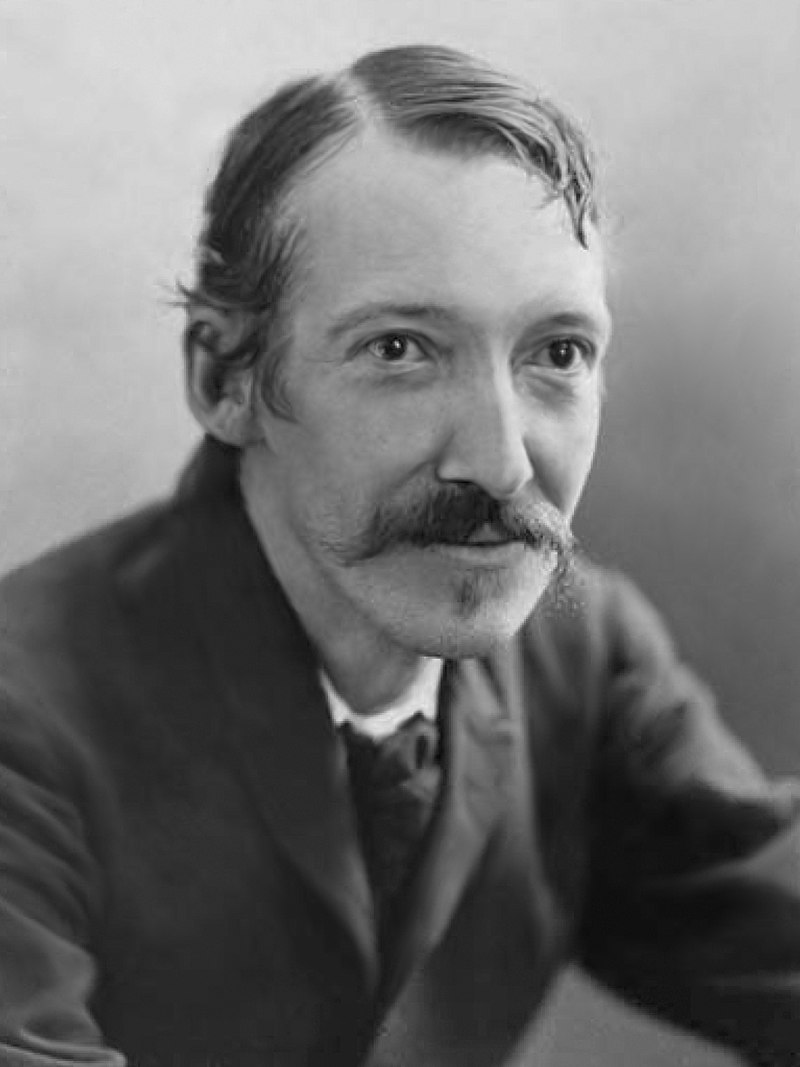
Robert Louis Stevenson, born on November 13, 1850, in Edinburgh, Scotland, was a literary giant whose works have captivated generations of readers. Best known for his adventure novels Treasure Island and The Strange Case of Dr. Jekyll and Mr. Hyde, Stevenson’s life and career were as rich and varied as his literary output. His contributions to literature are significant, influencing not only his contemporaries but also countless writers who followed. This article delves into the life, fame, and major highlights of Robert Louis Stevenson, offering detailed insights into the man behind some of the most enduring works in English literature.
Early Life and Family Background
Robert Louis Stevenson was born into a well-established family in Edinburgh. His father, Thomas Stevenson, was a prominent lighthouse engineer, a profession that carried both prestige and responsibility. The Stevenson family had a strong tradition in engineering, particularly in the design and construction of lighthouses along the Scottish coast. However, young Robert showed little interest in following in his father’s footsteps, preferring instead to immerse himself in literature and storytelling.
Stevenson’s early life was marked by frequent illness. He suffered from chronic respiratory problems, likely tuberculosis, which plagued him throughout his life. This frail health kept him bedridden for much of his childhood, a situation that might have limited other children but seemed to fuel Stevenson’s imagination. It was during these long periods of confinement that he began to create the vivid stories and characters that would later populate his novels.
Despite his health issues, Stevenson was determined to receive an education. He attended Edinburgh University, where he initially studied engineering to please his father. However, his true passion lay in writing, and he eventually switched to law. Although he completed his law degree, Stevenson never practiced as an attorney, choosing instead to pursue a career in writing—a decision that would lead to both personal and professional fulfillment.
Literary Beginnings and Early Works
Stevenson’s literary career began in earnest in the 1870s, during which he published his first essays and short stories. His early works were heavily influenced by his travels in France, where he spent time recuperating from his health problems. These experiences abroad inspired some of his first published pieces, including An Inland Voyage (1878) and Travels with a Donkey in the Cévennes (1879). These works were travelogues that combined vivid descriptions of the landscapes with reflections on the people he encountered and the adventures he experienced.
It was during this period that Stevenson met Fanny Osbourne, an American woman who would become his wife. Their relationship began while Fanny was still married, which caused scandal and disapproval among their peers. Despite the controversy, Stevenson followed Fanny to California, where they married in 1880. This union was pivotal in his life, providing him with emotional stability and inspiration for his writing.
Stevenson’s early works, while not commercially successful, established him as a writer of considerable talent. His essays, collected in volumes such as Virginibus Puerisque (1881), showcased his wit, keen observational skills, and his ability to engage with philosophical and literary topics. These early publications helped him build a reputation as a serious writer, setting the stage for his later successes.
Breakthrough with Treasure Island
The publication of Treasure Island in 1883 marked a turning point in Stevenson’s career. Originally serialized in the children’s magazine Young Folks under the title The Sea-Cook, or Treasure Island, the novel was a resounding success, quickly establishing Stevenson as a major literary figure.
Treasure Island is a quintessential adventure novel, filled with pirates, buried treasure, and unforgettable characters like Long John Silver. The novel’s blend of action, mystery, and moral complexity appealed to readers of all ages, and it remains one of the most popular adventure stories ever written. The book also introduced many of the tropes associated with pirate lore, including the iconic treasure map marked with an “X,” one-legged pirates, and the parrot squawking “pieces of eight.”
The success of Treasure Island had a profound impact on Stevenson’s life. It brought him financial stability and allowed him to pursue writing full-time. More importantly, it cemented his reputation as a master storyteller capable of creating narratives that were both entertaining and thought-provoking. The novel’s success also led to a wave of similar adventure stories, solidifying Stevenson’s place in the pantheon of great English writers.
The Strange Case of Dr. Jekyll and Mr. Hyde and Literary Fame
In 1886, Stevenson published what would become another of his most famous works, The Strange Case of Dr. Jekyll and Mr. Hyde. This novella explores the duality of human nature through the story of Dr. Henry Jekyll, a respectable scientist who creates a potion that transforms him into the malevolent Mr. Hyde. The story is a profound exploration of the struggle between good and evil within the human soul, and it resonated deeply with readers and critics alike.
Dr. Jekyll and Mr. Hyde was a commercial and critical success, further elevating Stevenson’s status as one of the leading writers of his time. The novella’s exploration of psychological and moral themes has made it a touchstone in discussions of human nature and ethics. Its influence extends beyond literature, having been adapted into numerous films, plays, and other media.
The success of Dr. Jekyll and Mr. Hyde also had a significant impact on Stevenson’s health and work habits. The story goes that he wrote the novella in a feverish burst of creativity, allegedly completing the first draft in just a few days. This intense period of work took a toll on his already fragile health, leading to further complications that would affect him for the rest of his life.
Later Works and Continued Success
Following the success of Treasure Island and Dr. Jekyll and Mr. Hyde, Stevenson continued to produce a steady stream of literary works. In 1886, he published Kidnapped, a historical novel set in Scotland during the 18th century. The novel follows the adventures of young David Balfour as he is kidnapped and thrust into a world of political intrigue and danger. Kidnapped was well-received and is still regarded as one of Stevenson’s finest works.
In 1888, Stevenson published The Black Arrow, a novel set during the Wars of the Roses. The book is another example of Stevenson’s ability to craft engaging historical narratives filled with adventure and moral dilemmas. Although not as famous as his earlier works, The Black Arrow has its place in the canon of Stevenson’s adventure novels and has been appreciated for its vivid depiction of medieval England.
Stevenson’s The Master of Ballantrae (1889) is often considered one of his most complex and mature works. The novel explores the dark themes of sibling rivalry and the corrupting power of ambition. Set against the backdrop of the Jacobite uprising, the story is a gripping tale of betrayal and revenge. The Master of Ballantrae was praised for its psychological depth and intricate plotting, further demonstrating Stevenson’s growth as a writer.
Health Struggles and the Search for a Healthier Climate
Throughout his life, Stevenson’s health remained a constant challenge. His chronic respiratory issues, likely exacerbated by tuberculosis, required him to seek out milder climates in an attempt to alleviate his symptoms. This quest for health led him to travel extensively, often with his wife Fanny and her children, in search of a place where he could live and write without the debilitating effects of his illness.
In 1888, Stevenson embarked on a journey to the South Pacific, a region that had long fascinated him. He eventually settled in Samoa in 1891, where he purchased a large estate and built a home named Vailima. The tropical climate and the relatively peaceful environment provided some relief from his health issues, allowing him to continue writing. The move to Samoa also marked a new phase in Stevenson’s life, one characterized by a deep connection to the local culture and people.
Life in Samoa and Final Years
Stevenson’s time in Samoa was among the most productive periods of his life. Despite his ongoing health problems, he continued to write prolifically, producing works that reflected his experiences in the South Pacific. His travel memoir In the South Seas (1896) offers a vivid account of his travels through the islands and his observations of the native cultures.
In Samoa, Stevenson became deeply involved in local affairs, earning the respect and admiration of the Samoan people. He was known as “Tusitala,” meaning “Teller of Tales,” and was celebrated for his efforts to protect the rights of the Samoan people against colonial powers. His advocacy for the Samoans and his efforts to understand and respect their culture made him a beloved figure in the islands.
Stevenson’s health, however, continued to decline. Despite his weakened state, he worked tirelessly on his writing, producing novels, essays, and short stories until his death. On December 3, 1894, Stevenson suffered a cerebral hemorrhage and died at the age of 44. He was buried on Mount Vaea, overlooking the sea, in a spot he had chosen himself. His grave bears the inscription of his famous Requiem poem, a fitting epitaph for a man whose life was marked by a constant search for adventure, peace, and artistic expression.
Legacy and Cultural Impact
Robert Louis Stevenson’s legacy is vast and enduring. His works, particularly Treasure Island and Dr. Jekyll and Mr. Hyde, have become integral parts of the Western literary canon. Stevenson’s ability to blend adventure, psychological depth, and moral inquiry in his writing has influenced countless authors, from his contemporaries to modern-day writers.
Stevenson’s exploration of duality in Dr. Jekyll and Mr. Hyde has had a profound impact on how we think about the human psyche, inspiring not only literary scholars but also psychologists and philosophers. The story’s themes of good versus evil, the duality of human nature, and the dangers of unchecked ambition remain relevant today, as they continue to resonate with readers and audiences around the world.
In addition to his literary contributions, Stevenson’s life in the South Pacific and his advocacy for the Samoan people left a lasting mark on the region. His respect for and integration into Samoan culture was ahead of its time, and his efforts to defend the rights of the indigenous population against colonial oppression are remembered with gratitude by the Samoan people.
Stevenson’s versatility as a writer is another key aspect of his legacy. He wrote across multiple genres, from adventure and historical fiction to essays, poetry, and travel writing. His ability to engage with such a wide range of topics and styles speaks to his intellectual curiosity and his desire to explore the world through his writing.
Conclusion
Robert Louis Stevenson was a literary pioneer whose works have stood the test of time. His life was a journey marked by both physical challenges and creative triumphs. From the shores of Scotland to the islands of the South Pacific, Stevenson’s search for adventure, health, and artistic fulfillment drove him to create some of the most enduring stories in the English language. His legacy as a master storyteller, a compassionate human being, and a cultural bridge between East and West continues to inspire and captivate readers and scholars alike.


