
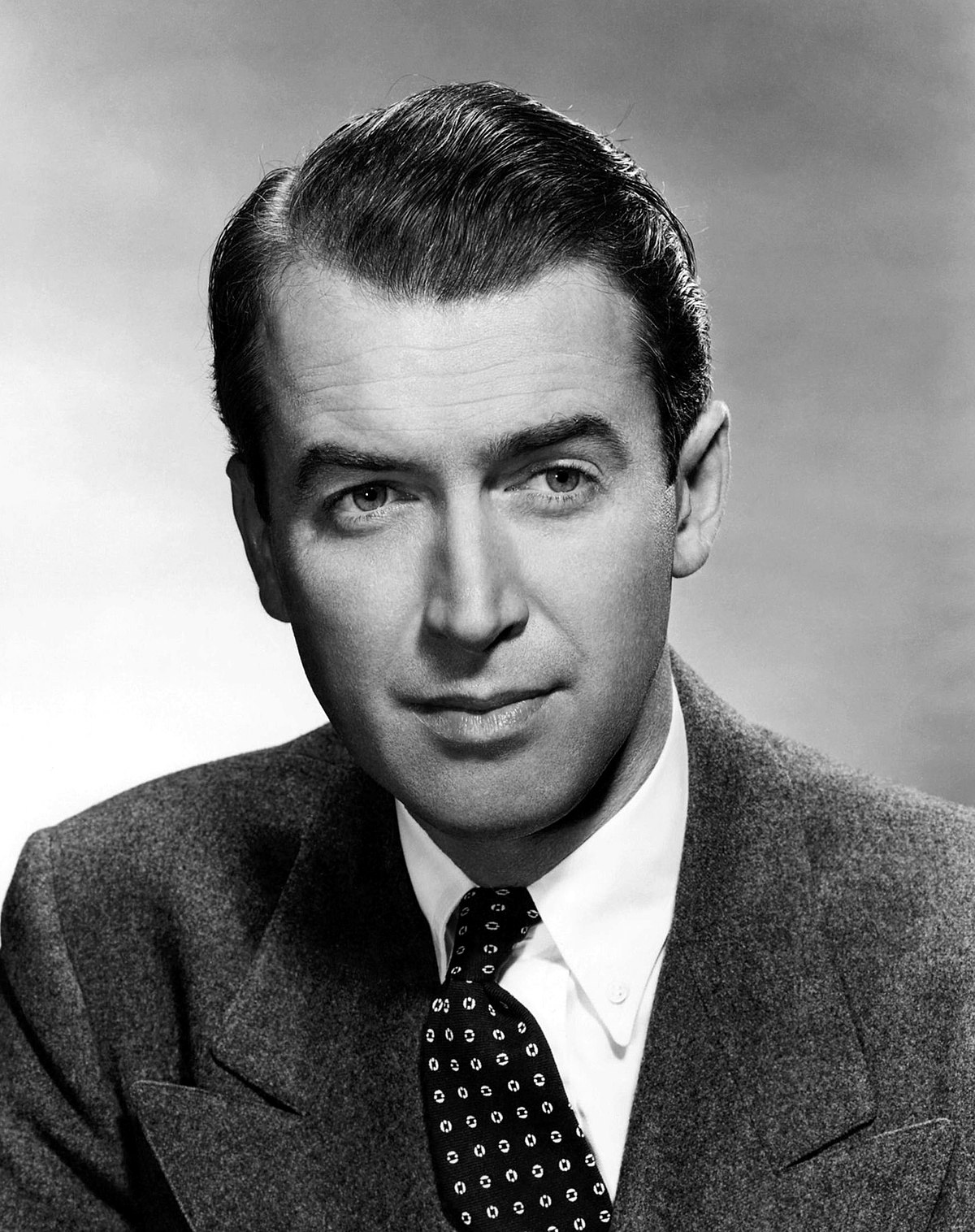
James Stewart, born James Maitland Stewart on May 20, 1908, in Indiana, Pennsylvania, is one of the most iconic figures in Hollywood history. Known for his distinctive voice, everyman persona, and a career that spanned over five decades, Stewart became a symbol of American decency and moral integrity both on and off the screen. His journey from a small-town boy to a celebrated Hollywood star and a decorated war hero is a testament to his remarkable talent, work ethic, and the values he upheld throughout his life.
Early Life and Education
James Stewart was born into a well-to-do family in Indiana, Pennsylvania. His father, Alexander Maitland Stewart, owned a successful hardware store, which had been in the family for three generations. Stewart’s upbringing was steeped in traditional American values, with a strong emphasis on hard work, integrity, and responsibility.
Stewart initially aspired to become a pilot, a dream inspired by Charles Lindbergh’s historic solo flight across the Atlantic in 1927. However, his parents insisted on a more conventional path, leading him to enroll at Princeton University. Stewart graduated in 1932 with a degree in architecture, but during his time at Princeton, he became increasingly involved in the university’s drama and music societies. His participation in these activities ignited a passion for acting that would ultimately shape his future.
The Move to Hollywood
After graduating from Princeton, Stewart joined the University Players, a summer stock theater company where he met future Hollywood stars such as Henry Fonda and Margaret Sullavan. His friendship with Fonda would become one of the most significant relationships of his life, both personally and professionally. The two would later become roommates when they moved to New York to pursue acting careers.
Stewart’s early years in New York were marked by struggle and uncertainty. He took on small roles in Broadway productions, but success did not come easily. It wasn’t until he was spotted by an MGM talent scout that his fortunes began to change. Stewart was offered a contract with MGM, prompting his move to Hollywood in 1935.
Early Hollywood Career
James Stewart’s early career in Hollywood was slow to take off. His lanky frame, shy demeanor, and unique voice made him stand out, but not always in ways that immediately appealed to casting directors. His first few roles were minor, and it took time for him to find his footing in the competitive world of Hollywood.
Stewart’s breakthrough came in 1938 with the film You Can’t Take It With You, directed by Frank Capra. The film won the Academy Award for Best Picture, and Stewart’s performance as a young, idealistic man won him widespread recognition. This marked the beginning of a fruitful collaboration between Stewart and Capra, which would define much of his early career.
In 1939, Stewart starred in Capra’s Mr. Smith Goes to Washington, a film that solidified his status as a leading man. Playing the role of Jefferson Smith, an earnest and idealistic senator fighting corruption in Washington, Stewart struck a chord with audiences. His portrayal of the everyman standing up against powerful forces resonated deeply during a time when the world was on the brink of World War II. Stewart’s performance earned him his first Academy Award nomination for Best Actor.
World War II Service
As World War II loomed, James Stewart felt a strong sense of duty to serve his country. Despite his burgeoning Hollywood career, he became the first major American movie star to enlist in the military. In 1941, Stewart joined the United States Army Air Corps, even though he was initially rejected for being underweight. Determined to serve, he worked to gain weight and was eventually accepted.
Stewart’s military service was nothing short of heroic. He rose through the ranks to become a colonel and flew 20 combat missions over Nazi-occupied Europe as a command pilot. His bravery and leadership earned him several military honors, including the Distinguished Flying Cross and the Air Medal. By the end of the war, Stewart had become one of the most decorated American pilots.
Stewart’s service during the war had a profound impact on him. It not only interrupted his Hollywood career but also influenced the types of roles he chose afterward. He returned to Hollywood in 1945 as a seasoned war hero, with a new depth and maturity that would be reflected in his post-war film choices.
Post-War Hollywood: A New Chapter
Upon returning to Hollywood, Stewart resumed his acting career, but the war had changed him. His roles became more complex and introspective, reflecting the weight of his wartime experiences. In 1946, Stewart reunited with Frank Capra to star in It’s a Wonderful Life, one of the most beloved films in cinema history. Stewart played George Bailey, a man who contemplates suicide on Christmas Eve, only to be shown by an angel what the world would have been like without him.
It’s a Wonderful Life was not a box office success at the time, but it has since become a holiday classic and a staple of American culture. Stewart’s performance is widely regarded as one of the best of his career, showcasing his ability to convey both vulnerability and moral strength.
Stewart’s post-war career was marked by a series of successful films that explored darker and more complex themes. He collaborated with director Anthony Mann on several Westerns, including Winchester ’73 (1950) and The Naked Spur (1953), which helped to redefine the genre. Stewart’s characters in these films were often flawed, haunted by their pasts, and struggling with inner demons, a stark contrast to the wholesome, all-American roles he had played before the war.
Collaborations with Alfred Hitchcock
One of the most significant partnerships of Stewart’s career was with director Alfred Hitchcock. The two collaborated on four films, each of which has become a classic in the suspense genre. Their first collaboration was Rope (1948), a film that was notable for its experimental use of long takes.
In 1954, Stewart starred in Rear Window, one of Hitchcock’s most acclaimed films. Stewart played L.B. “Jeff” Jefferies, a photographer confined to a wheelchair who becomes obsessed with watching his neighbors from his apartment window. The film is a masterclass in suspense, and Stewart’s performance as a man slowly unraveling as he uncovers a possible murder is both gripping and nuanced.
Stewart and Hitchcock’s partnership continued with The Man Who Knew Too Much (1956) and Vertigo (1958). Vertigo is often regarded as one of Hitchcock’s greatest films and one of the best films ever made. In it, Stewart plays John “Scottie” Ferguson, a retired police detective suffering from acrophobia who becomes obsessed with a woman he is hired to follow. The film’s exploration of obsession, identity, and guilt, along with Stewart’s haunting performance, has cemented its place in cinematic history.
Later Career and Legacy
As Stewart entered the later stages of his career, he continued to take on roles that challenged him as an actor. In 1959, he starred in Anatomy of a Murder, directed by Otto Preminger. The film, which dealt with complex issues of justice and morality, earned Stewart another Academy Award nomination for Best Actor.
In the 1960s, Stewart worked with director John Ford on several Westerns, including The Man Who Shot Liberty Valance (1962), in which he starred alongside John Wayne. These films reinforced Stewart’s reputation as a versatile actor who could navigate both the moral complexity of his characters and the ruggedness of the American frontier.
Stewart’s career spanned over 80 films, and he remained active in Hollywood well into the 1970s. His final on-screen appearance was in the 1991 animated film An American Tail: Fievel Goes West, where he provided the voice for the character Wylie Burp. This role was a fitting end to Stewart’s illustrious career, as it allowed him to leave his mark on a new generation of audiences.
Personal Life and Final Years
James Stewart’s personal life was as grounded and unassuming as his on-screen persona. In 1949, he married Gloria Hatrick McLean, a former model and actress. The couple had a happy marriage that lasted until Gloria’s death in 1994. They had four children together, two of whom were adopted from Gloria’s previous marriage.
Stewart was known for his deep commitment to his family and his love for flying, which he continued as a private pilot after the war. He also remained active in public service, supporting various charitable causes and serving as a brigadier general in the United States Air Force Reserve.
In his later years, Stewart faced several health challenges, including heart problems and hearing loss. He lived a relatively quiet life in Beverly Hills, California, until his death on July 2, 1997, at the age of 89. His passing marked the end of an era, as Stewart was one of the last surviving members of Hollywood’s Golden Age.
Conclusion
James Stewart’s legacy is one of unparalleled talent, unwavering integrity, and a deep connection to the values that defined mid-20th century America. His films continue to be celebrated for their moral complexity, emotional depth, and the everyman appeal that Stewart brought to each of his roles. Whether playing a small-town idealist, a troubled war veteran, or a man grappling with his own obsessions, Stewart’s performances resonated with audiences across generations.
Stewart’s influence on cinema and American culture is immeasurable. He was not just a movie star; he was a symbol of the American spirit, embodying the virtues of honesty, humility, and perseverance. As one of Hollywood’s most beloved actors, James Stewart’s contributions to the film industry will be remembered for as long as movies are made.


