
Introduction
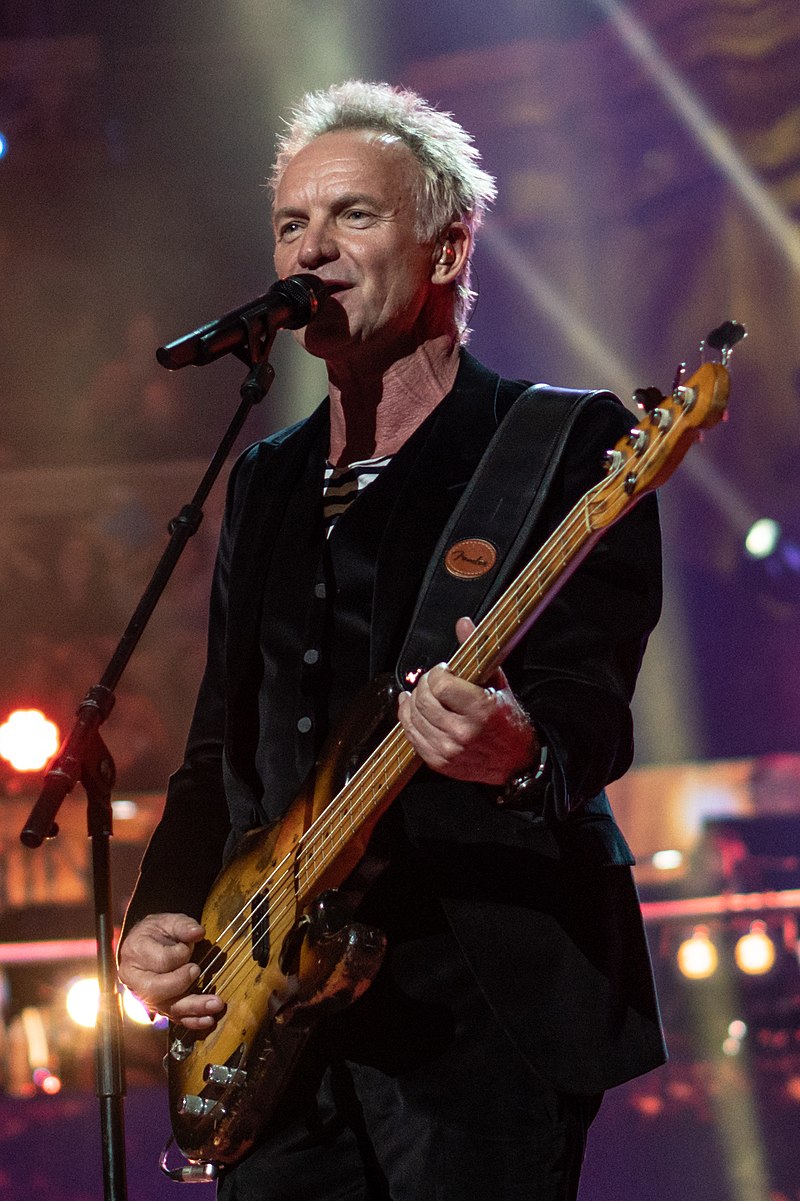
Sting, born Gordon Matthew Thomas Sumner on October 2, 1951, in Wallsend, Northumberland, England, is one of the most iconic musicians of his generation. Known for his distinctive voice, poetic lyrics, and musical versatility, Sting has enjoyed a career that spans decades, first as the frontman of the rock band The Police and later as a successful solo artist. His contributions to music, along with his activism and involvement in various social causes, have made him a cultural icon. This article delves into Sting’s life, his rise to fame, and the highlights of his remarkable career, providing detailed insights and exploring the nuances and historical context that have shaped his legacy.
Early Life and Background
Sting was born into a working-class family in the industrial town of Wallsend, near Newcastle. His father, Ernest Matthew Sumner, was an engineer and milkman, while his mother, Audrey Cowell, was a hairdresser. Sting was the eldest of four children in a Catholic family of Irish descent. Despite the family’s modest means, Sting’s parents placed a strong emphasis on education and the arts, which would have a lasting impact on him.
Growing up, Sting was an intelligent and ambitious child, with a deep love for music. His early exposure to the piano, thanks to his mother’s encouragement, and his fascination with the guitar, inspired by the music of The Beatles and The Rolling Stones, set the foundation for his future career. However, his path to becoming a musician was not straightforward. Sting held various jobs, including working in a milk factory and as a schoolteacher, before fully committing to a life in music.
The Birth of Sting and Early Musical Pursuits
Sting’s journey into the world of music began in earnest during his college years when he started playing in local jazz bands in Newcastle. He played the bass guitar, a choice that would become a defining element of his musical style. His early influences included jazz, rock, and folk music, which he seamlessly blended into his performances. It was during this time that he earned the nickname “Sting” due to his habit of wearing a black and yellow striped sweater that made him resemble a bee.
In 1972, Sting formed his first band, Last Exit, a jazz-fusion group that played in clubs around Newcastle. Although the band enjoyed moderate local success, Sting’s ambitions were much higher. He moved to London in the mid-1970s, seeking greater opportunities in the music industry. This move proved to be pivotal in his career.
The Police: Rise to Fame
Sting’s big break came in 1977 when he teamed up with drummer Stewart Copeland and guitarist Andy Summers to form The Police. The band quickly gained popularity with their unique blend of punk, reggae, and rock, characterized by Sting’s high-pitched vocals and distinctive bass lines. The Police’s music was innovative, combining catchy melodies with complex rhythms and socially conscious lyrics.
The Police released their debut album, Outlandos d’Amour, in 1978, which included hits like “Roxanne” and “Can’t Stand Losing You.” The album was a commercial success and established The Police as one of the leading bands of the new wave movement. Over the next few years, the band released a string of successful albums, including Reggatta de Blanc (1979), Zenyatta Mondatta (1980), and Ghost in the Machine (1981).
The Police’s popularity peaked with the release of their final studio album, Synchronicity (1983), which featured the global hit “Every Breath You Take.” The song became one of the best-selling singles of all time and earned The Police multiple awards, including a Grammy Award for Song of the Year. Despite their enormous success, tensions within the band, particularly between Sting and Copeland, led to The Police disbanding in 1986.
Solo Career and Musical Evolution
After The Police disbanded, Sting embarked on a solo career that would prove to be just as successful, if not more so, than his time with the band. His debut solo album, The Dream of the Blue Turtles (1985), marked a departure from the rock-oriented sound of The Police, incorporating elements of jazz, classical music, and world music. The album featured the hit singles “If You Love Somebody Set Them Free” and “Russians,” and it showcased Sting’s growth as a songwriter and musician.
Sting continued to explore diverse musical genres throughout his solo career. His second album, …Nothing Like the Sun (1987), included songs like “Englishman in New York” and “Fragile,” which became staples of his repertoire. The album was critically acclaimed for its sophisticated arrangements and introspective lyrics, solidifying Sting’s reputation as a serious artist.
In the early 1990s, Sting released The Soul Cages (1991), an album deeply influenced by the death of his father. The album’s themes of loss, grief, and redemption resonated with audiences and critics alike, earning Sting a Grammy Award for Best Rock Song for “All This Time.” His subsequent album, Ten Summoner’s Tales (1993), further expanded his musical palette, featuring hits like “If I Ever Lose My Faith in You” and “Fields of Gold.”
Sting’s ability to reinvent himself musically has been a key factor in his longevity as an artist. Over the years, he has experimented with various styles, including reggae, folk, jazz, and electronic music, while maintaining a distinctive sound that is unmistakably his own.
Activism and Humanitarian Work
In addition to his music, Sting is also known for his activism and commitment to social and environmental causes. Throughout his career, he has used his platform to raise awareness about issues such as human rights, environmental protection, and poverty alleviation.
In 1989, Sting and his wife, Trudie Styler, founded the Rainforest Foundation, an organization dedicated to protecting the world’s rainforests and the indigenous peoples who live in them. The foundation has funded numerous projects aimed at preserving these vital ecosystems and advocating for the rights of indigenous communities. Sting’s commitment to environmental activism has earned him widespread recognition and respect.
Sting has also been involved in various other humanitarian efforts, including participating in the Amnesty International Human Rights Now! tour in 1988, which brought attention to human rights abuses around the world. He has supported numerous charitable organizations and causes, ranging from disaster relief to education and healthcare initiatives.
Acting and Other Artistic Pursuits
Sting’s talents are not limited to music. He has also ventured into acting, appearing in several films and television shows. One of his most notable roles was in David Lynch’s 1984 film Dune, where he played the villainous Feyd-Rautha. Although the film received mixed reviews, Sting’s performance was widely praised.
In addition to acting, Sting has written and composed music for films, theater productions, and ballets. His contributions to the arts extend beyond his own performances, as he has collaborated with a wide range of artists across different genres, including Eric Clapton, Shaggy, and Luciano Pavarotti.
Sting’s creative output also includes his work as an author. In 2003, he published his memoir, Broken Music, which provides a candid look at his life, from his early years in Newcastle to his rise to fame with The Police and beyond. The book was well-received for its insightful and introspective tone, offering readers a deeper understanding of the man behind the music.
Legacy and Influence
Sting’s influence on music and popular culture is undeniable. As a member of The Police and as a solo artist, he has sold over 100 million records worldwide and has won numerous awards, including 17 Grammy Awards, a Golden Globe, and an Emmy. His ability to cross musical genres and appeal to diverse audiences has made him one of the most versatile and respected musicians of his time.
Sting’s songwriting has been praised for its lyrical depth, often addressing complex themes such as love, loss, social justice, and environmental issues. His music has inspired countless artists across different genres, and his impact on the music industry continues to be felt today.
Beyond his musical achievements, Sting’s commitment to social and environmental causes has made him a role model for artists who wish to use their influence for the greater good. His work with the Rainforest Foundation and other charitable organizations has demonstrated the power of celebrity to effect positive change in the world.
Personal Life
Sting’s personal life has often been the subject of media attention, particularly his relationship with Trudie Styler, whom he married in 1992. The couple has four children together and has been known for their commitment to health, wellness, and sustainability. Sting and Trudie have maintained a strong partnership, both personally and professionally, often collaborating on charitable projects and artistic endeavors.
Sting is also known for his interest in holistic health practices, including yoga and meditation. He has spoken openly about the benefits of these practices for maintaining physical and mental well-being, and they have become an integral part of his lifestyle.
Conclusion
Sting’s life and career are a testament to his enduring talent, creativity, and dedication to making a difference in the world. From his early days in Newcastle to his rise to global fame with The Police, and his successful solo career, Sting has consistently pushed the boundaries of music and art. His influence extends beyond the stage, as he has used his platform to advocate for important social and environmental causes.
As a musician, activist, actor, and author, Sting continues to inspire and captivate audiences around the world. His legacy is not only defined by his musical achievements but also by his commitment to using his influence to create a better world. As we look back on Sting’s remarkable career, it is clear that he is not just a rock star, but a true cultural icon whose impact will be felt for generations to come.


