
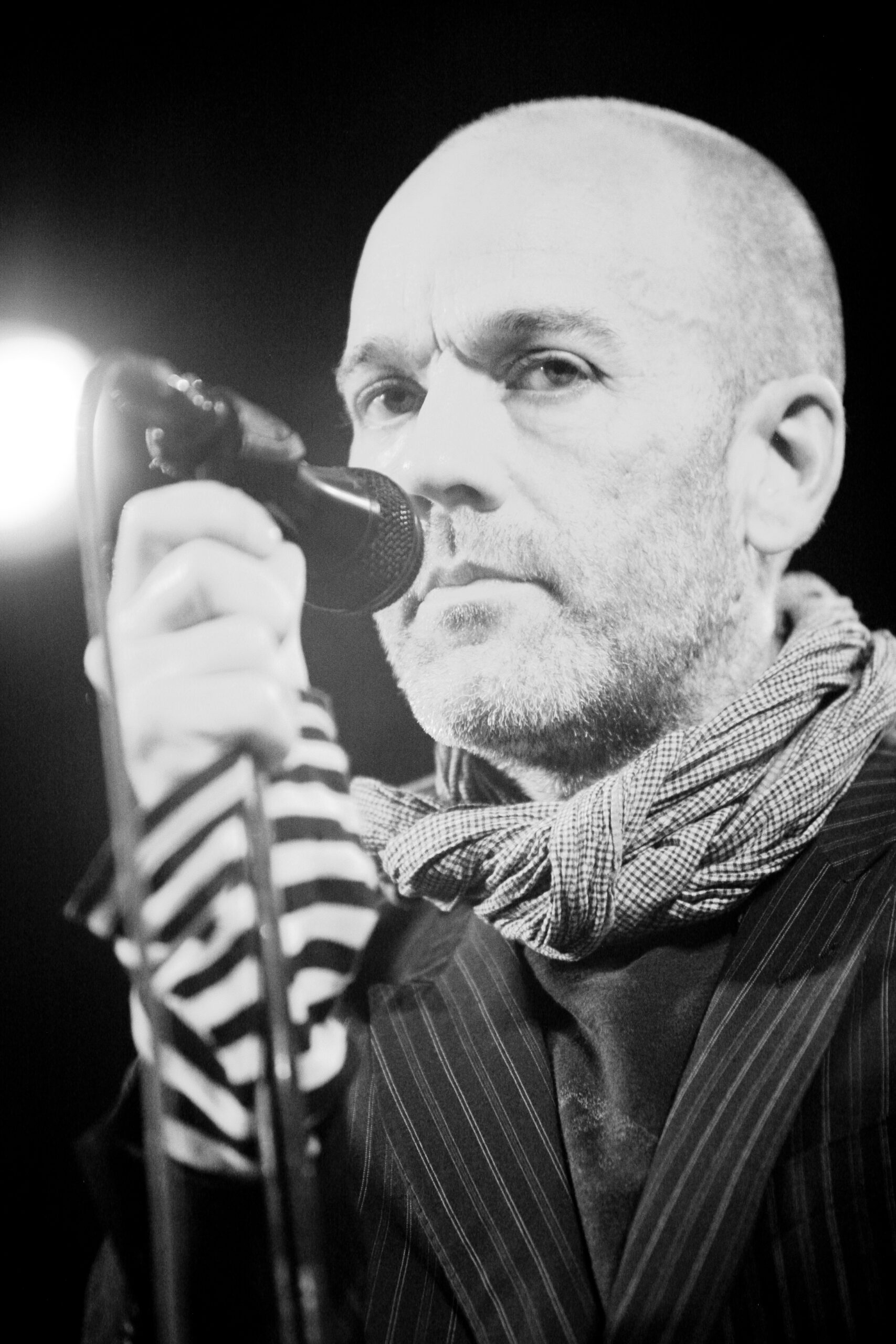
John Michael Stipe, born on January 4, 1960, in Decatur, Georgia, is an American singer, songwriter, and artist who is best known as the lead vocalist and lyricist of the alternative rock band R.E.M. Known for his distinctive voice and cryptic lyrics, Stipe helped shape the landscape of alternative rock in the 1980s and 1990s. He has also been recognized for his work in visual arts, film production, and social activism.
Early Life and Inspirations: The Making of an Icon
Michael Stipe’s journey into the world of music began in his teenage years. As a young man, he was deeply influenced by the punk rock scene and artists like Patti Smith. Smith’s album “Horses,” released in 1975, was a pivotal discovery for the young Stipe, opening his eyes to new musical possibilities. At just 15, Stipe found himself captivated by Smith’s raw energy and poetic lyrics, which would later inspire his own approach to songwriting and performance.
Growing up, Stipe was not only drawn to music but also developed a passion for visual arts. His artistic inclinations led him to study art at the University of Georgia in Athens, where he further immersed himself in the burgeoning music scene. It was during this time that he met Peter Buck, Mike Mills, and Bill Berry, forming what would become one of the most influential bands of the era: R.E.M.
Formation of R.E.M. and Early Success
R.E.M. was formed in 1980, and the band quickly became a fixture of the college rock scene, known for its energetic performances and unique sound. The band’s name, which refers to Rapid Eye Movement, the dream stage of sleep, was chosen for its mysterious and evocative qualities, much like the music they would go on to create.
R.E.M.’s early years were marked by a relentless touring schedule, which saw the band traveling across the United States in a beat-up Dodge van, playing wherever they could—clubs, bars, and even military bases. This grassroots approach helped them build a loyal following and honed their live performance skills, setting the stage for their eventual breakthrough.
Their debut EP, “Chronic Town” (1982), and subsequent album “Murmur” (1983), showcased their jangly guitar sound, cryptic lyrics, and Stipe’s haunting voice. “Murmur” was critically acclaimed and was named Rolling Stone’s album of the year, beating out high-profile releases from artists like Michael Jackson and The Police. This unexpected success catapulted R.E.M. into the national spotlight and established them as pioneers of the alternative rock movement.
The Rise to Fame: Defining a Generation
Throughout the 1980s, R.E.M. released a string of successful albums that defined a generation. “Reckoning” (1984) and “Fables of the Reconstruction” (1985) saw the band refining their sound and expanding their lyrical themes. With “Lifes Rich Pageant” (1986), R.E.M. began to gain a broader audience, thanks to songs that touched on environmental and political themes, such as “Fall on Me” and “Cuyahoga.”
By the late 1980s, R.E.M. had transitioned from cult status to mainstream success with the release of “Document” (1987) and “Green” (1988). The latter album marked the band’s move to Warner Bros. Records and saw them experimenting with new sounds and instruments, further broadening their appeal. Songs like “Orange Crush” and “Stand” became hits, showcasing Stipe’s growing confidence as a frontman and his ability to address social and political issues through his music.
1990s: Global Fame and Artistic Exploration
The 1990s marked the peak of R.E.M.’s commercial success. The release of “Out of Time” (1991) was a game-changer, driven by the hit single “Losing My Religion.” The song, characterized by its mandolin riff and introspective lyrics, became a global phenomenon, topping charts around the world and earning the band multiple Grammy Awards. The album also featured “Shiny Happy People,” a pop-infused track featuring Kate Pierson of the B-52’s, which showcased a lighter, more playful side of the band.
Following this massive success, R.E.M. released “Automatic for the People” (1992), an album noted for its somber tone and introspective lyrics. Songs like “Everybody Hurts” and “Man on the Moon” addressed themes of loss, mortality, and nostalgia, resonating with a wide audience and solidifying the band’s reputation as one of the most important voices in rock music.
Despite their growing fame, R.E.M. maintained their commitment to artistic integrity and social activism. Stipe, in particular, became more vocal about his political and environmental beliefs, using his platform to advocate for various causes. The band’s 1994 release, “Monster,” marked a return to a harder rock sound and was heavily influenced by the grunge movement of the time. This era also saw the band embarking on massive world tours, further cementing their status as global rock icons.
Challenges and Changes: The Later Years of R.E.M.
The late 1990s and early 2000s were a period of transition and challenge for R.E.M. In 1997, drummer Bill Berry left the band following a health scare, marking the end of an era. Despite his departure, the remaining members chose to continue as a trio, releasing several albums including “Up” (1998), “Reveal” (2001), and “Around the Sun” (2004). These albums received mixed reviews and were less commercially successful, leading some to speculate about the band’s future.
Despite these challenges, R.E.M. continued to innovate and experiment with their sound. “Accelerate” (2008) was a return to their roots, featuring a more stripped-down, rock-oriented sound that was well-received by both fans and critics. Their final album, “Collapse into Now” (2011), showcased the band’s range and versatility, blending elements of their early sound with new influences.
In September 2011, R.E.M. announced their amicable breakup, ending a 31-year career that had seen them evolve from underground heroes to global superstars. The decision to disband was met with both sadness and respect, as fans and critics alike recognized the band’s significant contributions to music.
Beyond R.E.M.: Michael Stipe’s Solo Ventures and Artistic Pursuits
Following the breakup of R.E.M., Michael Stipe continued to explore his artistic passions. He has always been deeply involved in visual arts, having designed many of R.E.M.’s album covers and stage sets. Stipe also expanded his work in film production, producing several films including “Velvet Goldmine” (1998) and “Being John Malkovich” (1999), which were critically acclaimed for their innovative storytelling and direction.
Stipe’s interest in photography also flourished during this period. He held several exhibitions showcasing his work, which often explores themes of identity, memory, and the passage of time. His photography is noted for its candid, intimate style, reflecting his personal philosophy of capturing life’s fleeting moments.
In addition to his visual arts pursuits, Stipe remained active in music. He collaborated with various artists and released a few solo tracks, experimenting with different genres and styles. His post-R.E.M. work reflects a more introspective and experimental approach, allowing him to explore his creative impulses without the constraints of being in a band.
Personal Life and Activism: A Commitment to Social Causes
Michael Stipe has always been open about his personal life and beliefs. He publicly came out as gay in the early 1990s, becoming a prominent advocate for LGBTQ+ rights and visibility. His openness about his sexuality has been an inspiration to many, and he continues to be an outspoken supporter of human rights.
In addition to his work in LGBTQ+ advocacy, Stipe has been heavily involved in environmental causes. His passion for the environment, which was evident in many of R.E.M.’s songs, has driven him to support various environmental organizations and campaigns. He has also been active in political causes, particularly in promoting voter awareness and participation.
Stipe’s commitment to activism extends to his personal life as well. He has been involved in numerous charitable endeavors and has used his platform to raise awareness about issues such as climate change, social justice, and public health. His dedication to these causes has made him not only a respected artist but also a trusted voice in social activism.
Legacy: Michael Stipe’s Enduring Impact on Music and Culture
Michael Stipe’s influence extends far beyond his work with R.E.M. As a pioneer of alternative rock, he helped shape the genre’s sound and ethos, influencing countless artists and bands. His unique vocal style, poetic lyrics, and commitment to authenticity have made him a lasting figure in music history.
Stipe’s contributions to the visual arts and film have also left a significant mark, showcasing his versatility and creativity across different mediums. His photography and film work continue to receive acclaim for their emotional depth and innovative approach.
Ultimately, Michael Stipe’s legacy is one of artistic exploration and social consciousness. He has remained true to his values throughout his career, using his art to challenge norms, inspire change, and provoke thought. As both an artist and an activist, Stipe has left an indelible mark on the cultural landscape, reminding us of the power of art to influence society and shape our understanding of the world.


