
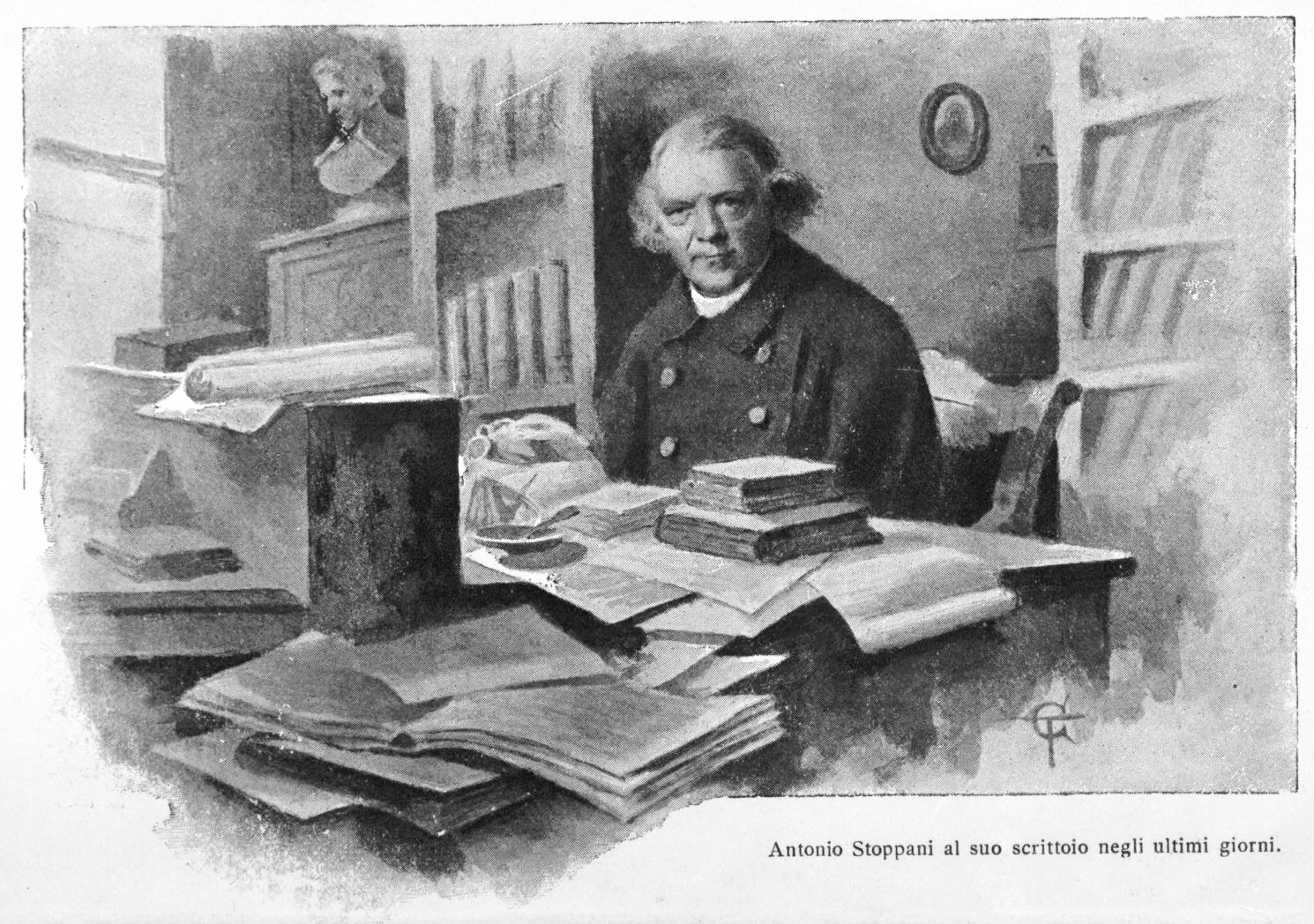
Antonio Stoppani, born on August 15, 1824, in Lecco, Italy, was a prominent figure in the realms of geology, paleontology, and literature. His life journey is a fascinating blend of scientific discovery, patriotism, and literary excellence, making him one of the most revered intellectuals of his time. This article delves into the life of Antonio Stoppani, exploring his age, fame, and key life highlights, while also providing a detailed historical context to better understand his contributions.
Early Life and Education
Antonio Stoppani was born into a period of significant political and social upheaval in Italy. Growing up in the early 19th century, Stoppani was influenced by the intellectual and cultural movements of the time, which were deeply rooted in the struggle for Italian unification. His early education took place in a seminary, where he developed a strong foundation in classical studies and theology. In 1848, at the age of 24, Stoppani was ordained as a priest, marking the beginning of his dual career as a clergyman and scholar.
The Revolutionary Spirit
Stoppani’s involvement in the revolutionary movements of 1848, particularly the Five Days of Milan, is a testament to his patriotic fervor. The Five Days of Milan was a crucial event in the broader Italian Wars of Independence, where Milanese citizens rose against Austrian rule. Stoppani participated actively as a volunteer with the Red Cross, an organization that was still in its nascent stages at the time. His contributions to the cause were recognized with a gold medal, highlighting his bravery and commitment to Italian independence.
Academic Pursuits and Contributions to Geology
Despite his clerical duties, Stoppani’s passion for the natural sciences never waned. His interest in geology and paleontology led him to pursue academic endeavors in these fields. In 1861, he was appointed as a professor of geology at the University of Pavia, a position that allowed him to influence a new generation of Italian scientists. Later, in 1867, he joined the Polytechnic University of Milan (formerly known as the Istituto Tecnico Superiore), where he continued to expand his research and teaching activities.
One of Stoppani’s most significant scientific contributions was his work on the “Paleontologie lombarde,” a comprehensive study of Lombardy’s fossil records. The first volume of this work was published in 1858 and marked a milestone in the study of paleontology in Italy. His dedication to the field also led to the publication of a three-volume “Corso di geologia” between 1871 and 1873, which was the first comprehensive Italian work on geology. These publications not only advanced the scientific community’s understanding of Italy’s geological history but also positioned Stoppani as a leading authority in the field.
The Literary Giant: “Il Bel Paese”
In addition to his scientific pursuits, Antonio Stoppani was also a prolific writer. His most famous literary work, “Il Bel Paese,” published in 1875, is a masterpiece that blends natural science with patriotic sentiment. The book, whose title translates to “The Beautiful Country,” is an ode to the natural beauty and cultural richness of Italy. Through vivid descriptions of landscapes, geological formations, and cultural landmarks, Stoppani sought to instill a sense of pride and national identity in his readers.
“Il Bel Paese” was more than just a book; it was a cultural phenomenon. At a time when Italy was still in the process of unification, Stoppani’s work played a crucial role in fostering a sense of national unity. The book’s success can be attributed to its accessibility and the way it resonated with the Italian public. By highlighting the natural and cultural treasures of Italy, Stoppani encouraged his readers to appreciate their heritage and recognize the importance of preserving it.
Later Years and Continued Influence
Stoppani’s contributions to science and literature did not go unnoticed. In 1883, he returned to Milan to assume the directorship of the city’s Natural History Museum, a position that allowed him to further influence the development of natural sciences in Italy. His expertise and reputation were further solidified in 1884 when he was elected as the president of the Italian Geological Society, an institution he had helped to establish just a few years earlier.
During the latter part of his life, Stoppani continued to write and publish works that explored the intersection of science, religion, and philosophy. His book “Il Dogma e le Scienze Positive,” published in 1884, is a notable example of this, as it attempted to reconcile religious dogma with scientific knowledge. This work, along with others such as “Gli Intransigenti” (1886) and “Sulla Cosmogonia Mosaica” (1887), showcased Stoppani’s intellectual depth and his ability to engage with complex and often controversial topics.
Death and Legacy
Antonio Stoppani passed away on January 2, 1891, at the age of 66. His death marked the end of a remarkable career that had a profound impact on Italian science, literature, and culture. Stoppani’s legacy, however, lives on through his works, which continue to be studied and admired to this day. His contributions to geology and paleontology laid the groundwork for future research in these fields, while his literary works remain a testament to his deep love for Italy and his desire to see it united and prosperous.
The Historical and Cultural Impact of Antonio Stoppani
Understanding the significance of Antonio Stoppani’s work requires a broader appreciation of the historical and cultural context in which he lived. The 19th century was a period of great change in Italy, marked by the Risorgimento—a movement that sought to unify the various states and territories of the Italian peninsula into a single nation. Intellectuals like Stoppani played a crucial role in this movement, not only through direct political action but also by shaping the cultural and intellectual climate of the time.
Stoppani’s “Il Bel Paese” can be seen as part of a larger literary tradition that aimed to create a sense of national identity among Italians. Similar to the works of Alessandro Manzoni and Edmondo De Amicis, Stoppani’s writing was infused with a sense of purpose and a desire to inspire his fellow countrymen. By celebrating the beauty and diversity of Italy’s landscapes, Stoppani provided a unifying vision of the country that transcended regional differences and appealed to a shared sense of heritage.
Moreover, Stoppani’s scientific work contributed to the broader European intellectual movement of the time, which sought to understand the natural world through observation and analysis. His meticulous study of fossils and geological formations helped to place Italy on the map as a significant site for paleontological research. This, in turn, attracted the attention of other European scientists and helped to establish Italy as a center of scientific inquiry.
Antonio Stoppani’s Influence on Modern Science and Culture
The influence of Antonio Stoppani extends beyond his own time, as his work continues to inspire modern scientists, writers, and cultural historians. In the field of geology, Stoppani is remembered as a pioneer who helped to lay the foundations for the study of the Earth’s history. His work on the fossil records of Lombardy, for example, is still referenced by contemporary paleontologists who study the region’s geological past.
In literature, “Il Bel Paese” remains a beloved classic, not only for its lyrical prose but also for its enduring message of national pride and unity. The book has been reprinted numerous times and continues to be read by Italians of all ages. Its impact on Italian culture is such that the phrase “il bel paese” has entered the common lexicon as a synonym for Italy itself—a testament to the lasting influence of Stoppani’s work.
In conclusion, Antonio Stoppani was a man of many talents whose contributions to science, literature, and national identity have left an indelible mark on Italian history. His life story is one of dedication, passion, and intellectual curiosity, and his works continue to resonate with audiences today. As Italy continues to navigate its place in the modern world, the legacy of figures like Stoppani serves as a reminder of the country’s rich cultural and intellectual heritage.


