
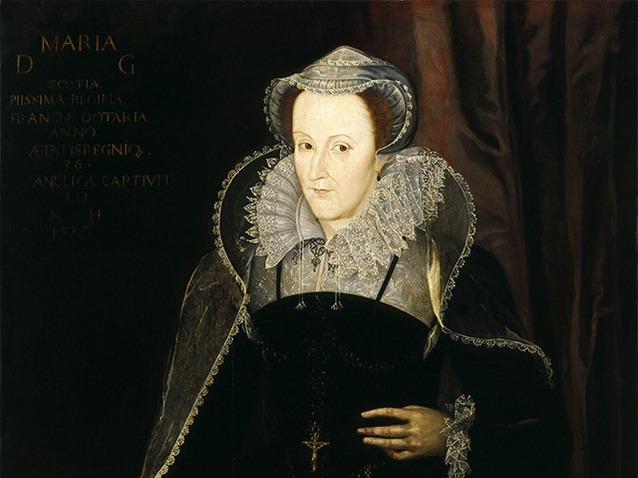
Maria Stuarda, also known by her anglicized name Mary Stuart, is one of history’s most fascinating and tragic figures. Born on December 8, 1542, in Linlithgow, Scotland, she became Queen of Scots at just six days old following the death of her father, King James V of Scotland. Maria Stuarda’s life was marked by political intrigue, religious conflict, and personal tragedy, leading to her eventual execution in 1587. This article delves into her life, exploring the complex circumstances that shaped her destiny, her rise to fame, and the lasting impact she left on history.
Early Life and Ascension to the Throne
Maria Stuarda was born into the House of Stuart, a royal family with a tumultuous history. Her father, King James V, died shortly after her birth, likely due to illness, leaving the infant Maria as the Queen of Scots. With her father’s death, the Scottish throne passed to Maria, making her the queen while she was still an infant. At just nine months old, she was crowned Queen of Scotland in a ceremony at Stirling Castle on September 9, 1543.
Her early years were marked by political instability, as various factions vied for control of the Scottish crown. James Hamilton, Earl of Arran, was appointed as her regent, but the political climate in Scotland was fraught with tension, particularly between those who supported a marriage alliance with England and those who favored a closer relationship with France. This period of Maria’s life set the stage for the series of conflicts and struggles that would define her reign.
The Proposed Marriage to Edward VI of England
In an attempt to secure peace between Scotland and England, the Treaties of Greenwich were signed in 1543, proposing a marriage between Maria Stuarda and Edward VI, the son of Henry VIII of England. This union was intended to unite the crowns of England and Scotland, but the plan faced significant opposition from both within Scotland and from Maria’s mother, Mary of Guise, a staunch supporter of French interests.
Mary of Guise, fearing that a marriage to an English prince would undermine Scottish independence and her Catholic faith, took steps to protect her daughter. Maria was moved to various secure locations, including Stirling Castle and later the priory of Inchmahome, to keep her away from English influence. Eventually, the treaties were annulled, leading to a breakdown in relations between Scotland and England and igniting what became known as the Rough Wooing—a series of military campaigns launched by Henry VIII to force the marriage.
Life in France and Marriage to Francis II
Amid the ongoing conflict with England, a new alliance was formed with France. In 1548, a marriage contract was arranged between Maria Stuarda and Francis, the Dauphin of France, son of King Henry II. At the age of five, Maria was sent to France to be raised at the French court, where she received an exceptional education. Fluent in several languages, including French, Italian, Latin, and Scots, Maria was well-prepared for her future role as queen.
Maria’s time in France was relatively peaceful compared to her tumultuous early years in Scotland. She was beloved at the French court, known for her beauty, intelligence, and charm. On April 24, 1558, at the age of 15, she married Francis in a grand ceremony at Notre-Dame Cathedral in Paris. When Henry II died in 1559, Francis ascended to the French throne as Francis II, making Maria the Queen Consort of France.
However, this period of stability was short-lived. Francis II died suddenly in December 1560, leaving Maria a widow at just 18 years old. With no political power in France and facing the prospect of a precarious future, Maria decided to return to Scotland to assume her role as Queen of Scots.
Return to Scotland and Reign as Queen
Maria Stuarda returned to Scotland in August 1561, arriving in a country deeply divided along religious lines. Scotland had undergone significant changes during her absence, with the Protestant Reformation sweeping through the country, leading to the establishment of a Protestant government. Maria, a devout Catholic, found herself in a challenging position, trying to navigate the religious and political landscape of her homeland.
Despite her Catholic faith, Maria initially sought to rule with tolerance, attempting to balance the interests of both her Protestant and Catholic subjects. She worked closely with Protestant leaders, including her half-brother James Stewart, Earl of Moray, who supported her efforts to maintain stability. However, the religious tensions in Scotland were never far from the surface, and Maria’s attempts to appease both sides only served to alienate many of her supporters.
In 1565, Maria made a controversial decision that would have far-reaching consequences for her reign: she married Henry Stuart, Lord Darnley, a Catholic nobleman and her cousin. The marriage was met with widespread disapproval, particularly from the Protestant nobles, who saw it as a threat to their power. Darnley himself proved to be a problematic husband—ambitious, reckless, and increasingly estranged from Maria.
The Murder of Darnley and Downfall of Maria Stuarda
The marriage between Maria and Darnley quickly deteriorated. Darnley’s erratic behavior and his demand to be crowned king consort strained their relationship. The situation reached a breaking point in 1566 when Darnley, along with a group of Protestant nobles, orchestrated the murder of Maria’s Italian secretary, David Rizzio, whom they suspected of being too close to the queen. Rizzio’s brutal murder in front of a pregnant Maria shocked the Scottish court and further destabilized her reign.
Following Rizzio’s murder, Maria reconciled with Darnley briefly, and in June 1566, she gave birth to their son, James, who would later become James VI of Scotland and James I of England. However, the marriage was beyond repair, and tensions continued to mount. In February 1567, Darnley was found dead under mysterious circumstances at Kirk o’ Field, near Edinburgh. The house where he was staying was destroyed by an explosion, but Darnley was found strangled in the garden, suggesting foul play.
The exact circumstances of Darnley’s death remain a mystery, but suspicion quickly fell on James Hepburn, Earl of Bothwell, a close ally of Maria who had become her confidant and possibly her lover. Just three months after Darnley’s death, Maria married Bothwell, further tarnishing her reputation and alienating many of her supporters.
Imprisonment and Abdication
The marriage to Bothwell was deeply unpopular, leading to widespread unrest among the Scottish nobility. Many nobles, already suspicious of Maria and Bothwell’s involvement in Darnley’s murder, rose in rebellion against the queen. In June 1567, Maria was forced to confront the rebel forces at Carberry Hill. Outnumbered and facing certain defeat, she surrendered to the nobles, who took her prisoner and forced her to abdicate in favor of her infant son, James VI.
Maria was imprisoned in Loch Leven Castle, where she suffered a miscarriage and was kept under close guard. In May 1568, after nearly a year of captivity, Maria managed to escape with the help of a group of loyal supporters. She fled to England, seeking protection from her cousin, Queen Elizabeth I. However, her arrival in England marked the beginning of a new chapter of captivity rather than freedom.
Captivity in England and the Babington Plot
Maria’s arrival in England placed Elizabeth I in a difficult position. As a Catholic claimant to the English throne, Maria posed a significant threat to Elizabeth’s rule, especially in the eyes of Catholic sympathizers both in England and abroad. Despite being a queen in her own right, Maria found herself a prisoner, confined to various castles and manors under close supervision.
Over the next 19 years, Maria became the focal point of numerous Catholic plots to overthrow Elizabeth and place Maria on the English throne. The most infamous of these was the Babington Plot of 1586, a plan orchestrated by Anthony Babington to assassinate Elizabeth and install Maria as queen. Although Maria’s direct involvement in the plot remains a matter of historical debate, her correspondence with the conspirators was intercepted by Elizabeth’s spymaster, Sir Francis Walsingham.
Trial and Execution
In October 1586, Maria was put on trial for her alleged involvement in the Babington Plot. The trial was highly controversial, as it involved the prosecution of a reigning monarch by another sovereign state. Despite Maria’s defense, she was found guilty of treason and sentenced to death. Elizabeth, though reluctant, eventually signed the death warrant.
On February 8, 1587, Maria Stuarda was executed at Fotheringhay Castle. Her execution was reportedly brutal; it took two blows of the axe to sever her head. The execution was witnessed by a large crowd, and it was said that Maria’s small dog emerged from under her skirts after her death, a poignant symbol of her solitary end.
Maria’s death did not immediately resolve the political and religious tensions between Scotland and England, but it did solidify her legacy as a martyr for the Catholic cause. Her son, James VI, would later ascend to the English throne as James I after Elizabeth’s death, uniting the crowns of England and Scotland and bringing an end to the long-standing rivalry between the two kingdoms.
Legacy and Historical Impact
Maria Stuarda’s life and death have left an indelible mark on history. Her tragic story has been the subject of countless books, plays, and films, and she remains a symbol of the tumultuous relationship between Scotland and England, as well as the religious conflicts that defined much of the 16th century.
Maria’s life was marked by her unwavering faith and her struggle to navigate the complex political landscape of her time. Despite her failures and the controversies that surrounded her, Maria Stuarda is remembered as a queen who faced her challenges with dignity and resolve. Her legacy lives on in the history of the United Kingdom, and her story continues to captivate and inspire audiences around the world.


