
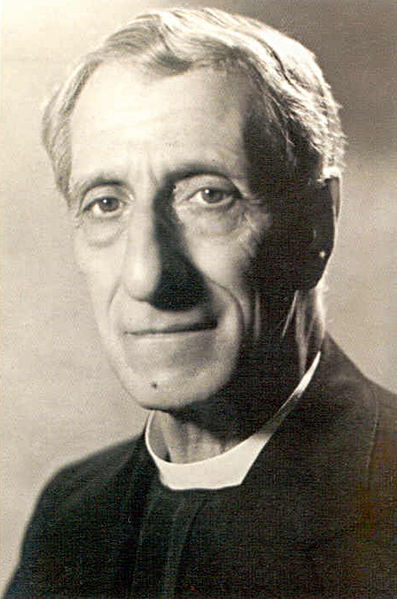
Luigi Sturzo, a towering figure in the Italian political landscape, was not just a clergyman but a visionary whose influence shaped the course of Italian politics in the early 20th century. His life was marked by a commitment to social justice, political reform, and a deep-seated belief in the power of the Catholic Church to influence public life. This article delves into the life of Luigi Sturzo, exploring his early years, his rise to prominence, and the significant milestones that defined his career.
Early Life and Education
Born on November 26, 1871, in Caltagirone, a town in the province of Catania, Sicily, Luigi Sturzo came from an aristocratic family with deep roots in the agrarian society of southern Italy. His early life was steeped in the traditions of the Catholic Church, a factor that would profoundly influence his later work. Sturzo’s education began in the local seminaries of Acireale and Noto, where he developed a keen interest in philosophy and theology.
Sturzo’s intellectual journey was deeply influenced by the social and political upheavals of his time. The publication of Pope Leo XIII’s encyclical Rerum Novarum in 1891, which addressed the conditions of the working class, and the peasant uprisings in Sicily (known as the Fasci Siciliani), pushed Sturzo to align his philosophical studies with social activism. These early influences set the stage for his lifelong commitment to social justice and political reform.
Theological and Social Engagement
In Rome, where Sturzo pursued further studies at the Pontifical Gregorian University, he became actively involved in the intellectual and cultural life of young Catholics. His views were shaped by the teachings of Pope Leo XIII, particularly the principles outlined in Rerum Novarum. However, Sturzo was also critical of the liberal state, its centralism, and its failure to address the needs of southern Italy.
Sturzo’s early career was marked by his efforts to address the social and economic challenges facing the rural poor in Sicily. In 1895, he founded the first parish committee and a workers’ section in the parish of San Giorgio in Caltagirone. He also established the first rural credit unions and cooperatives in the region, which were aimed at providing financial support to the impoverished agrarian communities.
Sturzo’s commitment to social justice was not limited to charity. He believed in the necessity of political organization and was an early advocate for the independent political participation of Italian Catholics. His views were ahead of his time, as the Catholic Church had, until then, discouraged political involvement through the non expedit policy, which advised Catholics against participating in the electoral process.
The Founding of the Italian People’s Party (Partito Popolare Italiano)
Sturzo’s vision for an organized political movement that could represent the interests of Catholics came to fruition in 1919 when he founded the Italian People’s Party (Partito Popolare Italiano – PPI). This party was a response to the growing political and social challenges in Italy, particularly the need for a political voice that could bridge the gap between the Church and the state.
The PPI quickly became a significant force in Italian politics, advocating for social justice, regional autonomy, and administrative decentralization. Sturzo’s leadership of the party was characterized by his commitment to these principles, and under his guidance, the PPI achieved considerable success in the post-World War I elections.
One of Sturzo’s key political beliefs was the importance of regional autonomy and the decentralization of administrative power. As a staunch advocate for the rights of southern Italy, he saw centralization as a significant barrier to the development of the region. His advocacy for decentralization was rooted in his broader vision of a more just and equitable society, where local communities had the power to govern themselves.
Opposition to Fascism and Exile
As the political landscape in Italy began to shift in the early 1920s, Sturzo found himself increasingly at odds with the rising tide of fascism. Benito Mussolini’s rise to power in 1922 marked the beginning of a dark period in Italian history, characterized by the suppression of political opposition and the erosion of democratic institutions. Sturzo, with his deep commitment to democracy and social justice, became a vocal critic of the fascist regime.
In 1924, facing increasing pressure from the fascist government, Sturzo was forced into exile. He first moved to London and later to the United States, where he continued his work as a political thinker and writer. During his years in exile, Sturzo wrote extensively on the dangers of totalitarianism, and his works were instrumental in popularizing the term in political discourse. His writings from this period remain significant contributions to the study of political theory and the critique of authoritarian regimes.
Sturzo’s exile did not diminish his influence. From abroad, he continued to engage with Italian politics, maintaining contact with the anti-fascist resistance and advocating for the restoration of democracy in Italy. His work during this period solidified his reputation as one of the most important Catholic intellectuals of the 20th century.
Return to Italy and Later Years
After World War II and the fall of Mussolini’s regime, Luigi Sturzo returned to Italy in 1946. His return marked a new chapter in his political career, as he sought to contribute to the rebuilding of Italian democracy. Although he was no longer involved in active politics, his influence was still felt, particularly in the Christian Democratic Party, which drew heavily on his ideas and principles.
In 1952, Sturzo was appointed a senator for life by the President of the Italian Republic, Luigi Einaudi, in recognition of his contributions to Italian politics and society. This appointment was a fitting tribute to a man whose life had been dedicated to the pursuit of social justice, political reform, and the integration of Catholic values into public life.
In his later years, Sturzo remained active in public life, continuing to write and speak on issues of social and political importance. He was a staunch defender of Christian values and a vocal opponent of communism, which he saw as a threat to both religion and democracy. His support for an alliance with the right-wing parties in the 1952 local elections, aimed at countering the influence of the left, sparked controversy and led to a rift with some elements of the Catholic Church and the Christian Democratic Party. Despite this, Sturzo’s influence remained strong, and his ideas continued to shape Italian politics for decades to come.
Legacy and Beatification
Luigi Sturzo passed away in Rome on August 8, 1959, at the age of 87. His death marked the end of an era, but his legacy lived on. Pope John XXIII described Sturzo as an “example of outstanding priestly virtues,” while Pope John Paul II, in a 1981 address to the Sicilian bishops, praised his life, teachings, and example as being in full fidelity to his priestly calling.
Sturzo’s impact on Italian society and politics was profound. He was a pioneer in the integration of Catholic values into public life and a champion of social justice and political reform. His work laid the foundations for the modern Christian Democratic movement in Italy and influenced political thought across Europe.
In recognition of his contributions, the process for Sturzo’s beatification was initiated. In 2017, 20 years after the process began, the diocesan phase of his beatification cause was concluded in Rome, bringing him one step closer to being declared a saint by the Catholic Church.
Conclusion
Luigi Sturzo’s life was a testament to the power of faith and intellect in shaping the world. From his early years in Sicily to his leadership of the Italian People’s Party and his opposition to fascism, Sturzo remained steadfast in his commitment to social justice, political reform, and the integration of Catholic values into public life. His legacy continues to inspire generations of politicians, scholars, and believers, and his contributions to Italian and global political thought remain as relevant today as they were in his time.


