
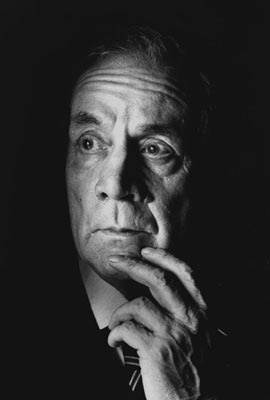
Alberto Sughi, born on October 5, 1928, in Cesena, Italy, was an influential Italian painter known for his deep engagement with the human condition through his art. Often regarded as a key figure in the development of social realism and existential realism in post-war Italy, Sughi’s works capture the nuances of solitude, society, and the individual’s place within it.
Early Life and Influences
Alberto Sughi grew up in a family that nurtured his artistic inclinations. He was exposed to art from a young age, primarily through his uncle, who was also a painter. Sughi’s passion for drawing began at the tender age of six, a passion that would persist throughout his life. Despite his early start in art, Sughi was largely self-taught, which allowed him to develop a unique style free from the constraints of formal artistic education.
Sughi’s formative years were influenced by the socio-political climate of Italy during and after World War II. His early works from the 1940s, though not yet fully developed, hinted at the themes that would dominate his later career—metropolitan life, the isolation of the individual, and a lucid, almost clinical depiction of reality.
The Evolution of Sughi’s Art
In 1946, Sughi made his public debut in a collective exhibition in his hometown of Cesena. This marked the beginning of his journey in the Italian art scene. The late 1940s were a period of exploration for Sughi. A significant moment in his artistic development came in 1948 when he visited the Venice Biennale and was deeply impressed by the works of Bernard Buffet and Jean Fautrier. This exposure to different styles and ideas helped shape Sughi’s own artistic voice.
By the early 1950s, Sughi had moved to Rome, where he became associated with the “Gruppo di Portonaccio,” a collective of artists who shared a common interest in depicting the stark realities of post-war Italy. This period was crucial for Sughi, as it solidified his transition from social realism to a more existential form of realism. His works began to reflect a profound sense of alienation and existential dread, characteristics that would become hallmarks of his later work.
Fame and Artistic Recognition
The 1960s and 1970s were pivotal decades for Sughi, as he gained widespread recognition both in Italy and internationally. His work was often compared to that of Edward Hopper, another master of depicting urban loneliness and the human condition. However, while Hopper’s work is often seen as more detached and observational, Sughi’s paintings are imbued with a sense of personal involvement and emotional depth.
One of Sughi’s most significant works from this period is the series known as “La Cena” (The Dinner), created in the early 1970s. This series is a metaphorical exploration of bourgeois society, depicting characters frozen in time, isolated within their own thoughts despite the social setting. The series was lauded for its haunting atmosphere, reminiscent of the German Expressionists like George Grosz and Otto Dix, yet it carried a distinctly Italian flavor, reflecting the moral and social complexities of Italy during the economic boom.
Sughi’s work during this time also attracted the attention of filmmakers, with directors like Ettore Scola and Mario Monicelli drawing inspiration from his paintings for their films. Scola even chose one of Sughi’s works as the poster for his film “La terrazza” (The Terrace).
Later Life and Legacy
In the 1980s, Sughi continued to explore themes of society and the individual’s place within it. His large-scale work “Teatro d’Italia” (Theater of Italy), completed between 1983 and 1984, is a social allegory that presents the characters of Italy’s “commedia” without offering judgments, allowing viewers to reflect on the state of society and their own existence.
Sughi’s contributions to art were recognized at the highest levels. In 1993, he was appointed as the President of the Ente Autonomo Esposizione Nazionale Quadriennale d’Arte di Roma, one of the most prestigious art exhibitions in Italy. However, true to his rebellious and independent spirit, Sughi resigned from the position in 1994, unable to reconcile his vision with the bureaucratic constraints of the role.
The 1990s saw Sughi returning to themes of urban solitude, a subject he had explored throughout his career. His cycle “Indizi e frammenti” (Clues and Fragments), created in 1996, is a poignant exploration of public loneliness, anticipating his final series, “Notturno” (Nocturne), which would close the century.
Historical Context and Artistic Significance
To fully appreciate Alberto Sughi’s work, one must consider the historical context in which he was creating. Post-war Italy was a country in flux, grappling with the scars of war, the challenges of reconstruction, and the social upheaval brought about by rapid economic change. Sughi’s work does not just depict these changes; it interrogates them, offering a commentary on the alienation and isolation that often accompanied Italy’s transition from a rural to an industrial society.
Sughi’s art is often categorized under social realism, but his work transcends this label. His paintings are not merely representations of social conditions; they are explorations of the human psyche, delving into the fears, anxieties, and existential questions that define the human experience. In this sense, Sughi can be seen as a bridge between the social realism of the early 20th century and the more introspective, psychological art of the post-war era.
Final Years and Posthumous Recognition
Alberto Sughi passed away on March 31, 2012, in Bologna, Italy, at the age of 83. However, his legacy endures. Sughi’s work continues to be studied and exhibited, both in Italy and abroad, as a vital part of the narrative of 20th-century art. His ability to capture the essence of solitude, his unflinching portrayal of society’s underbelly, and his masterful use of color and composition have ensured his place in the pantheon of great Italian artists.
Today, Sughi’s paintings are held in high regard not just for their technical brilliance, but for their profound commentary on the human condition. In a world that continues to grapple with issues of isolation, identity, and societal change, Sughi’s work remains as relevant as ever.
Conclusion
Alberto Sughi was more than just a painter; he was a chronicler of his time, a keen observer of society, and a master of capturing the complexities of the human experience. His work offers a window into the soul of post-war Italy, reflecting both the triumphs and the tragedies of a nation in transition. As we continue to explore and interpret his work, Sughi’s legacy as one of Italy’s most important artists is assured.


