
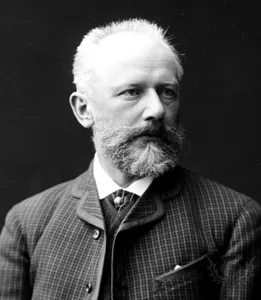
Pyotr Ilyich Tchaikovsky, born on May 7, 1840, in Votkinsk, Russia, is one of the most celebrated composers in classical music history. His life and work have left an indelible mark on the world of music, making him a central figure in both Russian and global cultural history. This article explores the life, fame, and key highlights of Tchaikovsky’s journey, providing detailed insights into his contributions, struggles, and enduring legacy.
Early Life and Education
Born into a middle-class family, Tchaikovsky’s father was a manager of a local metal works, while his mother hailed from French nobility. Despite this relatively privileged background, Tchaikovsky’s early life was marked by personal tragedy and a profound sensitivity that would later influence his music. At the age of 14, he lost his beloved mother to cholera, an event that deeply affected him and echoed through his compositions.
Tchaikovsky’s musical talents were evident from a young age, but he initially pursued a different path. Following the expectations of his social class, he attended the School of Jurisprudence in St. Petersburg, intending to embark on a legal career. However, his passion for music could not be suppressed. After completing his studies, Tchaikovsky enrolled at the St. Petersburg Conservatory, where he received formal music education under the guidance of Anton Rubinstein. This decision marked the beginning of his transformation into one of Russia’s greatest composers.
The Rise to Fame
Tchaikovsky’s early compositions received mixed reviews, but his unique ability to blend Western European influences with Russian folk melodies gradually gained recognition. His first significant success came with the composition of the Symphony No. 1 in G minor, Op. 13, titled “Winter Dreams.” Although this work underwent multiple revisions, it showcased Tchaikovsky’s early mastery of orchestration and thematic development.
In 1866, at the age of 26, Tchaikovsky accepted a position as a music theory professor at the Moscow Conservatory. This role provided him with financial stability and the opportunity to immerse himself in composition. His works during this period, such as the opera “Voevoda” and the ballet “The Swan Lake,” began to solidify his reputation as a composer of profound emotional depth and technical brilliance.
Personal Struggles and Artistic Triumphs
Tchaikovsky’s life was marked by intense personal struggles, particularly regarding his sexual orientation. Living in a society that condemned homosexuality, he was forced to conceal his true self, leading to deep inner conflict and bouts of depression. In 1877, Tchaikovsky entered into a disastrous marriage with Antonina Milyukova, a woman who had professed her love for him through a series of passionate letters. The marriage, which Tchaikovsky saw as a possible solution to his struggles, ended in misery. This period of personal turmoil inspired some of his most poignant works, including the opera “Eugene Onegin,” where the character of Tatyana reflects the complexities of Tchaikovsky’s emotions.
Despite his personal challenges, Tchaikovsky’s creative output during this time was remarkable. Between 1874 and 1875, he composed the “Piano Concerto No. 1 in B-flat minor, Op. 23,” which remains one of the most popular piano concertos in the classical repertoire. This work, like many of his others, was revised multiple times, reflecting Tchaikovsky’s relentless pursuit of perfection.
The Ballets and Global Recognition
Tchaikovsky’s contribution to the world of ballet is perhaps his most enduring legacy. In the late 1870s, he turned his attention to composing music for ballets, a genre that was not highly regarded at the time. His first major success in this field was “Swan Lake,” which premiered in 1877 at the Bolshoi Theatre in Moscow. Although the initial reception was lukewarm, the ballet eventually became one of the most beloved works in the classical ballet repertoire.
Tchaikovsky’s fame continued to grow with the success of his other ballets, including “The Sleeping Beauty” (1890) and “The Nutcracker” (1892). These works are celebrated not only for their beautiful melodies but also for their sophisticated orchestration and ability to convey deep emotions through music. Tchaikovsky’s ballets are now performed worldwide, a testament to their universal appeal and timelessness.
Later Years and International Acclaim
In the final years of his life, Tchaikovsky achieved international acclaim, becoming one of the few Russian composers to gain widespread recognition outside of his homeland. In 1891, he embarked on a tour of the United States, where he conducted performances in several major cities, including the inaugural concert at Carnegie Hall in New York City. This tour marked a significant milestone in Tchaikovsky’s career, solidifying his status as a global cultural icon.
Despite his success, Tchaikovsky remained a deeply troubled individual, often plagued by self-doubt and emotional turmoil. His relationship with Nadezhda von Meck, a wealthy widow who became his patroness, was one of the few sources of stability in his life. Although they never met in person, their extensive correspondence provided Tchaikovsky with both financial support and emotional solace.
The Mystery of His Death
Tchaikovsky’s death on November 6, 1893, at the age of 53, remains shrouded in mystery. The official cause of death was cholera, allegedly contracted from drinking unboiled water during a cholera epidemic in St. Petersburg. However, speculation persists that Tchaikovsky may have taken his own life, driven by the fear of exposure due to his homosexuality. The exact circumstances of his death remain a subject of debate among scholars and biographers, adding a layer of intrigue to the legacy of this great composer.
Legacy and Influence
Tchaikovsky’s influence on the world of music cannot be overstated. His ability to convey deep emotions through his compositions, coupled with his innovative orchestration techniques, has inspired generations of musicians and composers. His works are a staple of the classical music canon, performed regularly by orchestras and ballet companies around the globe.
Beyond his musical achievements, Tchaikovsky’s life story resonates with many as a tale of personal struggle, resilience, and the pursuit of artistic excellence in the face of adversity. His music, rich in emotion and complexity, continues to touch the hearts of listeners, making him one of the most beloved composers in history.
Conclusion
Pyotr Ilyich Tchaikovsky’s life was a complex interplay of personal turmoil and artistic triumph. From his early struggles with his identity to his rise as a global cultural icon, Tchaikovsky’s journey is a testament to the power of music to transcend personal suffering and achieve universal beauty. His legacy lives on in the timeless works he left behind, which continue to inspire and move audiences around the world. As we listen to his symphonies, ballets, and operas, we are reminded of the profound humanity that lies at the heart of his music—a humanity that speaks to us across the centuries, inviting us to explore the depths of emotion that Tchaikovsky so masterfully expressed.


