
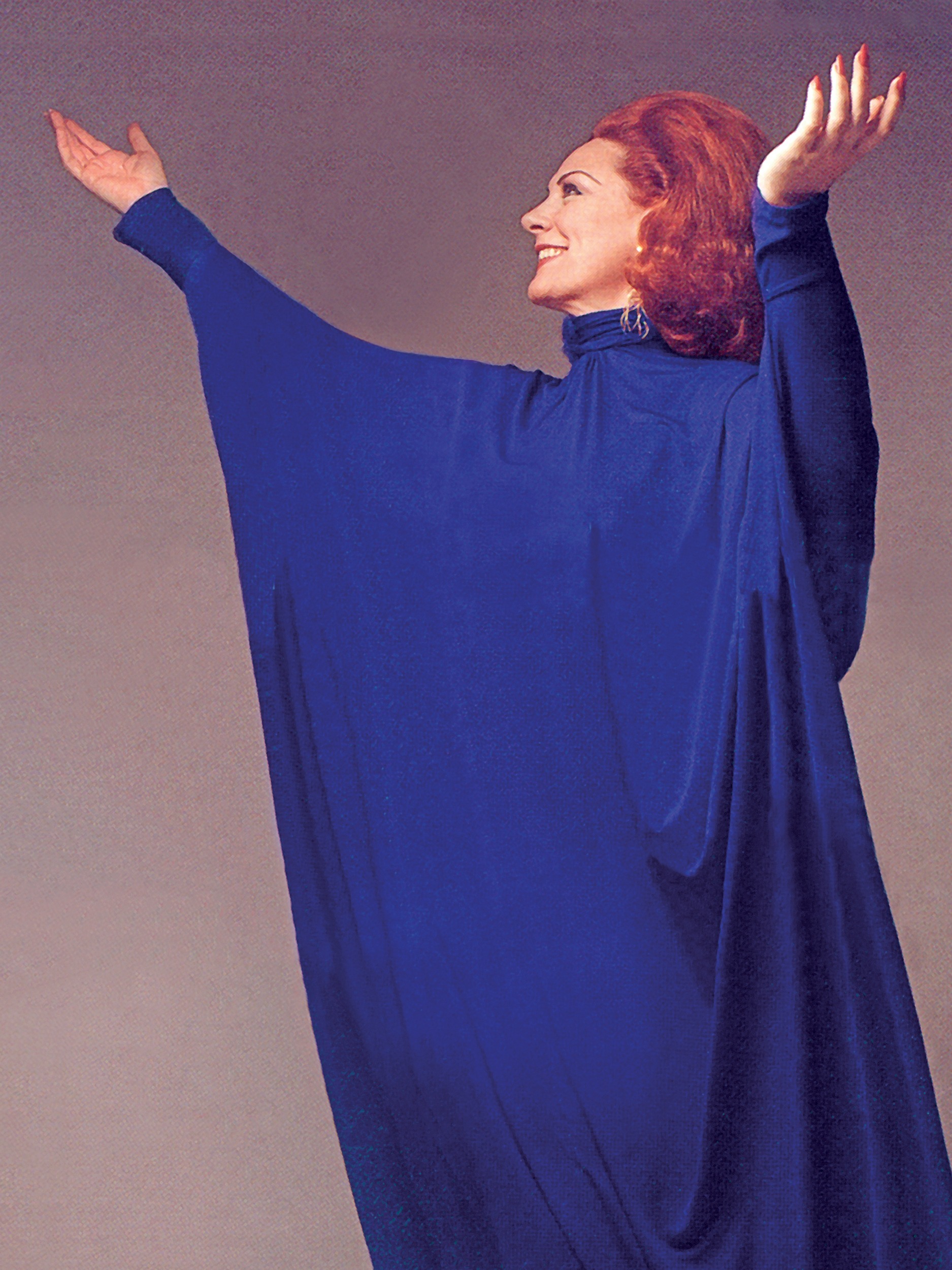
Renata Tebaldi, often referred to as the “voice of an angel,” is one of the most celebrated sopranos of the 20th century. Her career, spanning over three decades, left an indelible mark on the world of opera, and she is remembered not only for her powerful and pristine voice but also for her profound impact on the global music scene. This article delves into the life, fame, and achievements of Renata Tebaldi, exploring the nuances of her career and the historical context that shaped her legacy.
Early Life and Challenges
Renata Ersilia Clotilde Tebaldi was born on February 1, 1922, in Pesaro, Italy. From a young age, she exhibited a remarkable musical talent, which would later blossom into one of the most revered voices in opera history. However, Tebaldi’s early life was not without challenges. At the tender age of three, she was stricken with polio, a disease that left her physically weakened. Despite the debilitating effects of the illness, Tebaldi’s resilience shone through, and she made a full recovery after years of dedicated care. This early struggle with polio not only shaped her character but also instilled in her a profound determination that would fuel her future successes.
The Beginning of a Legendary Career
Tebaldi’s journey into the world of opera began with her studies at the conservatory in Parma, where she trained under the guidance of maestros Brancucci and Campogalliani. Her talent quickly became evident, and she continued her studies at the prestigious Liceo Rossini in Pesaro, under the tutelage of Carmen Melis. In 1944, at the age of 22, Tebaldi made her operatic debut in Rovigo, playing the role of Elena in Arrigo Boito’s Mefistofele. This marked the beginning of what would become a stellar career.
The post-World War II era was a time of renewal and resurgence for many art forms, including opera. In 1946, Tebaldi’s career took a significant leap when she performed at the reopening concert of La Scala in Milan, under the direction of the legendary maestro Arturo Toscanini. It was during this performance that Toscanini famously dubbed her the “voice of an angel,” a title that would follow her throughout her life. This moment was pivotal, as it established Tebaldi as a major force in the world of opera.
Rise to International Fame
Following her breakthrough at La Scala, Tebaldi’s career rapidly ascended. In 1948, she made her debut at the Opera di Roma and the Arena di Verona, two of Italy’s most prestigious opera venues. These performances solidified her reputation as a leading soprano, and she began to receive invitations to perform at major opera houses around the world.
From 1951 onwards, Tebaldi became a regular performer at the Metropolitan Opera in New York, one of the most prestigious opera houses globally. Her association with the Met spanned over two decades, from 1954 to 1972, during which she delivered numerous memorable performances. Tebaldi’s fame was not confined to the United States; she also performed in Paris, Buenos Aires, Rio de Janeiro, Barcelona, Chicago, San Francisco, and Los Angeles, making her a truly global star.
The Tebaldi vs. Callas Rivalry
One of the most famous aspects of Tebaldi’s career was her rivalry with another opera legend, Maria Callas. This rivalry, often sensationalized by the media, was rooted in the stark contrast between their singing styles and personalities. While Tebaldi was known for her purity of tone and expressive phrasing, Callas was celebrated for her dramatic intensity and unique vocal timbre. The rivalry was often portrayed as a battle between two different schools of thought in opera, with Tebaldi representing the traditional, melodic approach, and Callas embodying the more modern, dramatic interpretation.
This competition reached its peak in the 1950s and 1960s, with fans and critics alike taking sides. The media dubbed Tebaldi the “anti-Callas,” a label that she gracefully accepted. Despite the rivalry, both sopranos maintained a mutual respect for each other’s talents. In interviews, Tebaldi often downplayed the rivalry, stating that there was enough room in the opera world for both of them.
The Pinnacle of Her Career
Throughout the 1950s and 1960s, Tebaldi’s career reached its zenith. She performed in some of the most demanding roles in the operatic repertoire, including Aida, Tosca, La Traviata, and La Forza del Destino. Her performances were characterized by a remarkable combination of vocal power, emotional depth, and technical precision. Tebaldi’s voice was renowned for its richness and clarity, and she was particularly praised for her ability to convey deep emotion through her singing.
In 1958, Tebaldi made her debut at the Vienna Staatsoper, one of the most esteemed opera houses in Europe. This performance was another significant milestone in her career, further cementing her status as one of the leading sopranos of her time. Her success in Vienna was followed by numerous international tours, including a highly successful tour of the Soviet Union during the 1975-76 season.
Collaboration with Renowned Conductors
Renata Tebaldi’s illustrious career was marked by collaborations with some of the most distinguished conductors of the 20th century. She worked with over 70 conductors, including musical giants like Arturo Toscanini, Herbert von Karajan, Carlo Maria Giulini, and Georg Solti. These collaborations resulted in some of the most memorable performances and recordings in opera history.
Tebaldi’s ability to work seamlessly with such a diverse range of conductors was a testament to her versatility as an artist. Each conductor brought out different facets of her voice and interpretative skills, resulting in a rich and varied body of work. Her recordings, many of which are still considered definitive interpretations of the operas she performed, continue to be celebrated by opera enthusiasts and critics alike.
The End of an Era
After a career spanning over three decades, Renata Tebaldi decided to retire from the stage in 1976. Her final performance was a charity concert at La Scala, held to raise funds for the victims of the Friuli earthquake. This event was a fitting end to a career that had been characterized by both artistic excellence and a deep commitment to using her talents for the greater good.
Tebaldi’s retirement marked the end of an era in opera. She was one of the last great sopranos of her generation, and her departure from the stage left a void that has never truly been filled. Even in retirement, Tebaldi remained an influential figure in the world of opera, often serving as a mentor to younger singers and participating in various cultural initiatives.
Legacy and Influence
Renata Tebaldi passed away on December 19, 2004, at the age of 82, in her home in San Marino. Her death was mourned by the global opera community, and she was remembered as one of the greatest sopranos of all time. Tebaldi’s legacy lives on through her recordings, many of which are considered benchmarks for the operatic repertoire.
Tebaldi’s influence on the world of opera cannot be overstated. She was a true pioneer, paving the way for future generations of sopranos and setting a standard of excellence that continues to inspire. Her voice, often described as having a “golden” quality, remains one of the most recognizable and beloved in the history of opera.
Moreover, Tebaldi’s approach to singing, characterized by a deep respect for the music and a commitment to conveying the emotional truth of each role, has had a lasting impact on how opera is performed and appreciated today. Her legacy is also preserved in the numerous awards and honors she received throughout her career, including Italy’s highest civilian honor, the Knight of the Grand Cross.
Conclusion
Renata Tebaldi’s life and career are a testament to the power of talent, determination, and passion. From her early struggles with polio to her rise as one of the most celebrated sopranos of the 20th century, Tebaldi’s journey is one of perseverance and triumph. Her voice, once described as the “voice of an angel,” continues to resonate with audiences around the world, and her influence on the world of opera remains profound.
As we look back on Tebaldi’s life, we are reminded of the timeless beauty of her music and the enduring legacy of a true opera legend. Renata Tebaldi was not just a singer; she was an artist who brought the world of opera to life in a way that few others have. Her story is one of inspiration, and her contributions to the arts will be cherished for generations to come.


