
Introduction
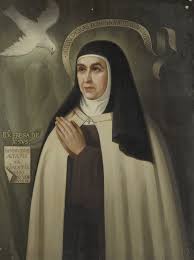
Teresa Sánchez de Cepeda y Ahumada, historically known as Saint Teresa of Ávila, was born on March 28, 1515, in the small town of Gotarrendura near Ávila, Spain. A figure of immense spiritual significance, Teresa d’Avila was a Carmelite nun, mystic, and reformer whose life and works left an indelible mark on Christian spirituality. Known for her deep mystical experiences, her role in the reform of the Carmelite Order, and her writings on prayer and spiritual growth, Teresa’s influence extends far beyond the religious sphere. This article explores her life, the circumstances that shaped her, and the legacy she left behind, providing detailed insights and historical context to her remarkable journey.
Early Life and Religious Calling
Born into a family of noble lineage, Teresa was one of ten children. Her father, Alonso Sánchez de Cepeda, was a successful merchant and her mother, Beatriz de Ahumada y Cuevas, was a devout Christian who instilled in Teresa a strong religious foundation. Teresa’s early years were marked by a love of reading, particularly the lives of saints and chivalric tales, which fueled her imagination and spiritual aspirations.
The death of her mother when Teresa was just 14 deeply affected her, leading her to seek solace in the Virgin Mary as a maternal figure. At the age of 16, Teresa was sent to a convent school run by the Augustinian nuns in Ávila. It was here that she began to seriously consider a religious vocation, though she also struggled with the decision due to her father’s disapproval.
In 1535, against her father’s wishes, Teresa entered the Carmelite Convent of the Incarnation in Ávila. This decision marked the beginning of her religious life, but it was far from smooth. Teresa soon faced serious health issues, including a severe case of brucellosis that left her bedridden and in a coma for several days. This illness, coupled with the spiritual struggles she experienced, set the stage for her later mystical experiences and deepened her commitment to the religious life.
Mystical Experiences and Spiritual Awakening
Teresa’s life took a dramatic turn between 1554 and 1555, a period that she described as a time of conversion. While recovering from her illness, Teresa had a profound spiritual experience that changed the course of her life. She was struck by an image of the suffering Christ, which triggered a deep inner transformation. This moment marked the beginning of her intense mystical experiences, which included visions, raptures, and what she described as the “spiritual marriage” with God.
One of the pivotal moments in her spiritual journey was her reading of The Confessions of Saint Augustine. Teresa identified strongly with Augustine’s struggles and his ultimate conversion, which inspired her to deepen her own commitment to prayer and the contemplative life. These experiences led Teresa to develop a highly personal and intimate relationship with God, which she would later articulate in her writings.
Despite her growing spirituality, Teresa faced significant opposition. Her intense mystical experiences led some to suspect that she was under demonic influence. This was not uncommon in the 16th century, a time when the Church was highly suspicious of unorthodox religious experiences, especially those reported by women. However, Teresa’s experiences were eventually validated by prominent figures such as the Franciscan friar Peter of Alcántara, who became one of her spiritual advisors.
Reforming the Carmelite Order
Teresa’s spiritual awakening fueled her desire to reform the Carmelite Order, which she felt had strayed from its original mission of contemplative prayer. The Carmelite convents of her time were often marked by laxity, with nuns living relatively comfortable lives and engaging in worldly activities that distracted from their spiritual duties. Teresa believed that a return to the original, more austere rule of the Carmelites was necessary to foster a deeper spiritual life.
In 1562, Teresa established the Convent of Saint Joseph in Ávila, the first of many convents that would follow the reformed Carmelite practices. This new convent, which became the foundation of the Discalced Carmelites (so named because they went barefoot or wore simple sandals as a symbol of their return to poverty), was characterized by strict adherence to poverty, solitude, and continuous prayer.
The establishment of the Discalced Carmelites was met with considerable resistance, both from within the Carmelite Order and from the broader ecclesiastical community. Many viewed Teresa’s reforms as too radical and disruptive. In fact, Teresa was called before a monastic tribunal to defend her actions. Despite the opposition, she was able to gain the support of key figures, including King Philip II of Spain and the Dominican theologian Pedro Ibáñez.
Over the next two decades, Teresa traveled across Spain, founding 17 convents and two monasteries for men, often under challenging circumstances. Her efforts culminated in the formal recognition of the Discalced Carmelites as a separate province within the Carmelite Order by Pope Gregory XIII in 1580.
Literary Contributions and Theological Legacy
Teresa of Ávila was not only a reformer but also a prolific writer whose works have had a lasting impact on Christian spirituality. Her most famous work, The Interior Castle (or The Mansions), is a classic of Christian mysticism. Written in 1577, the book outlines Teresa’s vision of the soul’s journey toward union with God, using the metaphor of a castle with seven mansions, each representing a different stage of spiritual growth.
In The Interior Castle, Teresa describes the various challenges and temptations that one might face on the path to spiritual perfection, as well as the profound experiences of divine union that await those who persevere. The book is not only a guide to prayer but also a deep exploration of the nature of the soul and its relationship with God.
Another significant work by Teresa is The Way of Perfection, written as a practical guide for her nuns on how to live a life of prayer and devotion. In this book, Teresa emphasizes the importance of humility, detachment from worldly things, and love for others as essential components of the spiritual life.
Teresa’s autobiography, The Life of Teresa of Jesus, is also a crucial text for understanding her spiritual journey and the development of her mystical theology. In it, she recounts her experiences, struggles, and the divine interventions that shaped her life. The autobiography was written under obedience to her confessors and provides a detailed account of her inner life, as well as the external challenges she faced.
The Challenges of Reform and Ecclesiastical Politics
Teresa’s reform efforts were not without significant challenges. The division between the “Calced” (shod) and “Discalced” (barefoot) Carmelites led to tensions and conflicts within the order. The Discalced Carmelites, who adhered to Teresa’s stricter interpretation of the Carmelite Rule, faced opposition from those who were content with the more relaxed practices of the existing convents.
The conflict reached a peak in the late 1570s when Teresa was ordered to cease her reform activities. However, with the support of key allies, including King Philip II and influential members of the Church, Teresa continued her work. The intervention of Pope Gregory XIII in 1580, which officially recognized the Discalced Carmelites as a separate province, was a significant victory for Teresa and her reform movement.
Despite these challenges, Teresa’s reforms had a profound impact on the Carmelite Order and the wider Church. Her emphasis on a return to the contemplative life and her focus on personal spiritual growth resonated with many who were seeking a deeper, more authentic expression of their faith during a time of significant religious upheaval in Europe.
Final Years and Canonization
As she aged, Teresa’s health continued to deteriorate, but her commitment to her mission never wavered. She spent her final years traveling extensively, overseeing the establishment of new convents and providing spiritual guidance to her followers. Despite her frailty, Teresa remained a dynamic and influential figure until her death.
Teresa of Ávila passed away on October 4, 1582, in Alba de Tormes, Spain. Interestingly, due to the adoption of the Gregorian calendar, her death is sometimes recorded as occurring on October 15, which is the date of her feast day in the Roman Catholic Church.
Teresa’s influence did not end with her death. She was canonized by Pope Gregory XV in 1622, alongside other great saints such as Ignatius of Loyola and Francis Xavier. In 1970, Pope Paul VI declared Teresa a Doctor of the Church, making her the first woman to receive this honor. This title is reserved for saints whose writings have made a significant contribution to theology and the understanding of the faith.
Cultural and Religious Impact
Teresa of Ávila’s legacy extends far beyond her immediate contributions to the Carmelite Order. Her writings, particularly The Interior Castle and The Way of Perfection, continue to be widely read and studied by those interested in Christian mysticism and spirituality. Her emphasis on personal prayer, inner transformation, and the direct experience of God has influenced countless spiritual seekers, both within and outside the Catholic tradition.
In addition to her theological contributions, Teresa’s life and work have inspired numerous artistic and cultural works. Perhaps the most famous of these is Gian Lorenzo Bernini’s sculpture The Ecstasy of Saint Teresa, located in the Cornaro Chapel of the Church of Santa Maria della Vittoria in Rome. This masterpiece of Baroque art captures the intense mystical experiences described by Teresa in her writings and has become an iconic representation of Christian mysticism.
Teresa’s impact on the Church and Christian spirituality is profound and enduring. Her reforms revitalized the Carmelite Order and inspired other religious communities to seek a deeper, more authentic expression of their faith. Her writings continue to provide guidance and inspiration for those seeking a closer relationship with God.
Conclusion
Teresa of Ávila’s life is a testament to the power of faith, perseverance, and spiritual vision. From her early struggles with illness and doubt to her profound mystical experiences and tireless efforts to reform the Carmelite Order, Teresa’s journey was one of extraordinary spiritual depth and courage. Her writings offer timeless wisdom on the nature of the soul’s relationship with God, and her reforms continue to influence the spiritual practices of countless individuals and religious communities.
Today, Teresa of Ávila is remembered not only as a saint and mystic but also as a powerful advocate for spiritual renewal and personal transformation. Her life and legacy serve as a reminder that true spiritual growth requires both inner devotion and a willingness to challenge the status quo in the pursuit of a deeper, more authentic faith.


