
Introduction
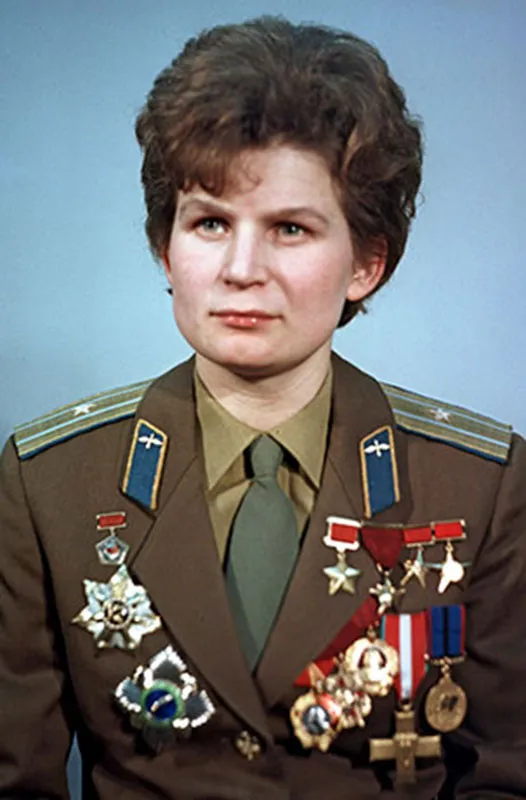
Valentina Vladimirovna Tereshkova, born on March 6, 1937, in Maslennikovo, a village near the Volga River in Russia, holds the historic distinction of being the first woman to journey into space. Her achievements during the height of the Cold War symbolized Soviet prowess and opened doors for future generations of women in the space program. Tereshkova’s life is a remarkable story of determination, courage, and groundbreaking accomplishments. This article delves into her journey from a small village in Russia to the vast expanse of space, examining her career, personal life, and the legacy she has left behind.
Early Life and Background
Valentina Tereshkova was born into a humble family. Her father, Vladimir Tereshkov, was a tractor driver who tragically died during World War II, leaving her mother to raise Valentina and her siblings in challenging circumstances. The hardships of her early life instilled in Tereshkova a resilience and determination that would later define her career.
Tereshkova’s early education was typical for a young Soviet girl, but her ambitions soon extended beyond the norm. She left school at 16 to work in a tire factory and later in a textile plant to support her family. However, she continued her education through evening classes, eventually earning a degree in engineering. It was during this period that Tereshkova developed an interest in parachuting—a hobby that would unexpectedly set the stage for her future career in space exploration.
The Path to Becoming a Cosmonaut
Tereshkova’s fascination with parachuting began in 1955 when she joined a local aeroclub. Her talent and enthusiasm quickly became apparent, and she completed over 150 jumps, gaining significant experience and skills. This hobby, combined with her background in engineering, caught the attention of Soviet space officials when they began searching for female candidates to join the cosmonaut program.
In 1961, following Yuri Gagarin’s historic flight as the first man in space, the Soviet Union aimed to further cement its dominance in space exploration by sending a woman into orbit. Tereshkova applied for the program and, out of hundreds of candidates, was selected as one of five finalists. Her parachuting experience was a key factor in her selection, as the Vostok spacecraft required cosmonauts to eject and parachute to Earth upon re-entry.
Historic Spaceflight: Vostok 6
On June 16, 1963, Valentina Tereshkova made history when she launched aboard Vostok 6, becoming the first woman to travel into space. The mission was a significant milestone, not only for Tereshkova but also for the Soviet Union, as it showcased the USSR’s advancements in gender equality and technological prowess during the Cold War.
During her mission, Tereshkova orbited the Earth 49 times over nearly three days, spending more time in space than all previous American astronauts combined at that point. Despite facing significant challenges, including nausea and physical discomfort, Tereshkova successfully completed her mission, gathering crucial data on how space travel affects the female body.
Tereshkova’s call sign during the mission was “Chaika” (Seagull), a name that became synonymous with her and later inspired generations of women in space exploration. Upon her return on June 19, 1963, Tereshkova was celebrated as a hero in the Soviet Union and around the world. She received numerous accolades, including the prestigious title of “Hero of the Soviet Union,” the highest honor awarded by the USSR.
Life After Spaceflight
Following her historic spaceflight, Valentina Tereshkova became a prominent figure in Soviet society, often appearing in public as a symbol of Soviet achievement. Her life took on a new dimension as she transitioned from cosmonaut to politician and public figure.
In November 1963, Tereshkova married fellow cosmonaut Andriyan Nikolayev, who had flown on the Vostok 3 mission. Their wedding was a highly publicized event, often viewed as a propaganda tool by the Soviet government. The marriage, which produced a daughter named Elena in 1964, was reportedly arranged by Soviet authorities to create a “cosmic family,” reinforcing the image of the Soviet Union as a leader in space exploration. However, the marriage was not without its difficulties, and the couple eventually divorced in 1982.
Despite her personal challenges, Tereshkova continued to pursue her career with determination. She studied at the Zhukovsky Air Force Academy, earning a degree in engineering, and in 1966, she began her political career as a member of the Supreme Soviet, the highest legislative body in the Soviet Union. Tereshkova’s political career spanned several decades, during which she held various positions, including chairwoman of the Soviet Women’s Committee and a member of the Central Committee of the Communist Party.
Legacy and Later Years
Valentina Tereshkova’s legacy extends far beyond her pioneering spaceflight. She has been a tireless advocate for women’s rights and gender equality, using her platform to inspire and encourage women around the world to pursue careers in science, technology, engineering, and mathematics (STEM). Her story continues to inspire new generations of women to break barriers and reach for the stars.
In 1994, after the dissolution of the Soviet Union, Tereshkova was appointed director of the Russian Center for International Scientific and Cultural Cooperation, reflecting her continued influence and commitment to promoting international collaboration in science and culture.
Tereshkova has received numerous awards and honors throughout her life. In addition to the Hero of the Soviet Union, she has been awarded the Order of Lenin, the Joliot-Curie Gold Medal, and the United Nations Gold Medal of Peace, among others. In 2004, she was presented with the “World Connection Award” by Nobel Peace Prize laureate Mikhail Gorbachev in Hamburg, Germany, further recognizing her contributions to global peace and understanding.
In recent years, Tereshkova has remained an active figure in Russian public life. She was elected to the State Duma, the lower house of the Federal Assembly of Russia, where she continues to serve as a member of the United Russia party. Tereshkova has expressed a desire to return to space, even proposing that she would volunteer for a one-way mission to Mars, showcasing her lifelong passion for space exploration.
Historical Context and Impact
To fully appreciate Valentina Tereshkova’s impact, it is essential to understand the historical context in which she lived and worked. Her achievements occurred during a time of intense competition between the United States and the Soviet Union, known as the Space Race. This period was marked by significant advancements in space technology, as both superpowers sought to demonstrate their superiority in science and technology.
Tereshkova’s flight was not just a personal achievement but also a political statement. It reinforced the Soviet Union’s narrative of gender equality and technological advancement, countering Western perceptions of the USSR. Her success in space also provided a powerful symbol for women globally, challenging traditional gender roles and proving that women could excel in fields previously dominated by men.
Tereshkova’s legacy also paved the way for future female astronauts. Although it took nearly two decades for another woman, Svetlana Savitskaya, to follow in her footsteps, Tereshkova’s pioneering role ensured that women would have a place in the space program. Today, women regularly participate in space missions, contributing to the ongoing exploration of our universe.
Valentina Tereshkova in Popular Culture
Valentina Tereshkova’s historic flight has made her a cultural icon in Russia and around the world. Her story has been depicted in numerous films, documentaries, and books, celebrating her as a trailblazer in space exploration. Tereshkova has also been honored by having a lunar crater named after her—Tereshkova crater—recognizing her contributions to space science.
In the years since her flight, Tereshkova has remained a symbol of perseverance and strength, often celebrated on International Women’s Day and other significant anniversaries related to space exploration. Her name and image continue to inspire women in Russia and beyond, embodying the idea that with determination and courage, anything is possible.
Conclusion
Valentina Tereshkova’s journey from a small village on the Volga River to the vastness of space is a testament to her extraordinary determination, courage, and resilience. As the first woman to travel into space, she shattered barriers and paved the way for future generations of women in the space industry. Her legacy is not only a reflection of her personal achievements but also a symbol of the broader struggle for gender equality and the advancement of science and technology.
Today, Tereshkova continues to be a respected figure in Russian politics and global scientific circles. Her life and accomplishments serve as a powerful reminder that the human spirit, regardless of gender, is capable of reaching the most incredible heights. As we look to the future of space exploration, Valentina Tereshkova’s name will forever be remembered as a pioneer who boldly went where no woman had gone before.


