
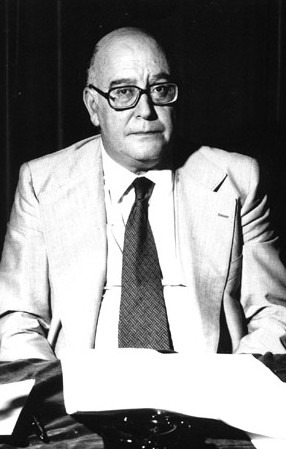
Cesare Terranova was an emblematic figure in the fight against the Sicilian Mafia, a crusader for justice whose life and career were tragically cut short by the very forces he sought to dismantle. Born on August 15, 1921, in Petralia Sottana, a small town in the Madonie Mountains near Palermo, Terranova’s life was marked by his unwavering commitment to law, order, and the eradication of organized crime in Italy. His work as a magistrate, legislator, and member of the Italian Parliament’s Anti-Mafia Commission placed him at the forefront of the battle against the Mafia, making him a target for those who thrived on violence and corruption. This article explores the life, career, and legacy of Cesare Terranova, offering a detailed look into his contributions to Italian society, his fight against the Mafia, and the circumstances surrounding his untimely death.
Early Life and Education
Cesare Terranova was born into a modest family in Petralia Sottana, a town deeply rooted in the rural traditions of Sicily. Growing up in this environment, Terranova was acutely aware of the socio-economic challenges facing the region, particularly the influence of feudal structures and the emerging power of organized crime. These early experiences shaped his worldview and motivated him to pursue a career in law.
After completing his early education in Sicily, Terranova moved to Palermo to study law. He graduated from the University of Palermo with a degree in law and subsequently entered the judiciary in 1946, shortly after the end of World War II. His entry into the magistracy coincided with a period of significant social and political upheaval in Italy, as the country grappled with the aftermath of the war and the challenges of rebuilding a democratic society.
The Fight Against the Mafia: A Career in the Judiciary
Terranova’s early career as a magistrate saw him serving in various capacities across Sicily, including as a judge in Messina and Rometta. However, it was his transfer to the Tribunal of Palermo in 1958 that marked the beginning of his deep involvement in the fight against the Sicilian Mafia. Palermo, the heart of Sicily and a hotbed of Mafia activity, was a dangerous place for a magistrate dedicated to justice, but Terranova was undeterred.
Terranova quickly made a name for himself as a relentless prosecutor who was unafraid to take on the Mafia. He was among the first to recognize the growing threat posed by the so-called “viddani” (peasants), a new generation of Mafia bosses emerging from the countryside. These figures, including notorious criminals like Luciano Liggio, Salvatore “Totò” Riina, and Bernardo Provenzano, were transforming the Mafia from a collection of rural criminals into a highly organized and deadly force.
In the early 1960s, Terranova led several high-profile investigations and prosecutions against these emerging Mafia leaders. One of his most significant cases was the prosecution of Luciano Liggio and his associates following the infamous Viale Lazio massacre in 1969, a brutal event that underscored the Mafia’s growing power and willingness to use violence to achieve its ends. Despite his best efforts, many of these prosecutions were hampered by the Mafia’s influence within the judicial system, leading to numerous acquittals and reduced sentences.
Legislative Career: The Italian Parliament and Anti-Mafia Commission
Frustrated by the limitations of the judicial system and the pervasive corruption that undermined his work, Terranova decided to take his fight against the Mafia to the political arena. In 1972, he was elected to the Italian Parliament as an independent candidate on the Italian Communist Party (PCI) ticket. His election marked a new phase in his career, where he sought to influence national policy and bring about systemic change.
During his time in Parliament, Terranova was appointed as a member of the Parliamentary Anti-Mafia Commission, a body tasked with investigating and combating the Mafia’s influence in Italian society. Working alongside other prominent anti-Mafia figures, such as Pio La Torre, Terranova was instrumental in drafting and advocating for legislation aimed at curbing the Mafia’s power. He co-authored a critical minority report that highlighted the deep connections between the Mafia, politics, and business, implicating key figures within the Christian Democratic Party, including Giovanni Gioia, Vito Ciancimino, and Salvo Lima.
Terranova’s work in Parliament was crucial in raising public awareness about the Mafia’s infiltration of Italian society and the complicity of certain political and business leaders in perpetuating the problem. His efforts laid the groundwork for future anti-Mafia legislation, including the landmark Rognoni-La Torre Law, which introduced the crime of Mafia association into Italian law and provided tools for the seizure of Mafia assets.
Return to the Judiciary and Final Years
After his parliamentary term ended in 1979, Terranova made the decision to return to the judiciary. He was appointed as a Counselor to the Court of Appeals in Palermo, a position that allowed him to continue his fight against the Mafia on the front lines. However, his return to Palermo also marked the beginning of the end for Terranova, as the Mafia viewed his renewed judicial role as a direct threat to their operations.
Terranova was acutely aware of the dangers he faced, but he remained committed to his work. His dedication to justice and his willingness to confront the Mafia head-on made him a target for assassination. On the morning of September 25, 1979, Terranova and his bodyguard, Marshal Lenin Mancuso, were ambushed by Mafia hitmen as they were driving to work. The assailants, armed with a Winchester rifle and pistols, opened fire on Terranova’s car. Despite attempting to defend themselves, both Terranova and Mancuso were killed in the attack. Terranova was shot multiple times, including a fatal shot to the head, while Mancuso succumbed to his injuries shortly after.
The Aftermath and Legacy
The assassination of Cesare Terranova sent shockwaves through Italy and the international community. It was a stark reminder of the Mafia’s reach and the risks faced by those who dared to oppose it. The murder also underscored the urgent need for more robust measures to combat organized crime and protect those working to uphold the law.
In the years following Terranova’s death, several Mafia bosses, including Luciano Liggio, were implicated in the assassination. However, as with many Mafia-related cases, securing convictions was challenging due to the Mafia’s influence and the culture of silence (omertà) that protected its members. Eventually, some of the key figures involved in the assassination were convicted as masterminds behind the crime, though justice for Terranova and Mancuso came slowly and was often hampered by legal and procedural obstacles.
Cesare Terranova’s legacy is one of courage, integrity, and an unwavering commitment to justice. He is remembered as one of the most significant figures in the history of Italy’s fight against the Mafia, a man who dedicated his life to exposing and dismantling the criminal networks that plagued his beloved Sicily. His work laid the foundation for subsequent anti-Mafia efforts and inspired a new generation of magistrates, law enforcement officers, and activists to continue the fight against organized crime.
The Broader Impact on Italian Society
Terranova’s assassination, like those of other anti-Mafia figures such as Giovanni Falcone and Paolo Borsellino, highlighted the profound challenges faced by the Italian state in its battle against the Mafia. These events underscored the need for comprehensive reforms in the judiciary, law enforcement, and political institutions to effectively combat organized crime.
The public outcry following Terranova’s murder contributed to a growing movement in Italy for stronger anti-Mafia legislation and greater protection for those involved in prosecuting organized crime. His death also served as a catalyst for increased international attention on the Mafia, leading to greater collaboration between Italy and other countries in addressing the global dimensions of organized crime.
Conclusion: Cesare Terranova’s Enduring Legacy
Cesare Terranova’s life and career are a testament to the power of conviction and the importance of standing up against injustice, even in the face of overwhelming danger. His work as a magistrate, legislator, and anti-Mafia advocate left an indelible mark on Italy’s legal and political landscape, and his legacy continues to inspire those who fight for justice today.
Terranova’s story is a reminder of the human cost of the fight against organized crime and the sacrifices made by those who dedicate their lives to upholding the rule of law. His example serves as a beacon of hope and resilience, demonstrating that even in the darkest of times, there are individuals willing to confront evil and strive for a better future.
As Italy and the world continue to grapple with the challenges of organized crime, Cesare Terranova’s legacy remains a powerful symbol of the ongoing struggle for justice, integrity, and the protection of democratic values.


