
Introduction
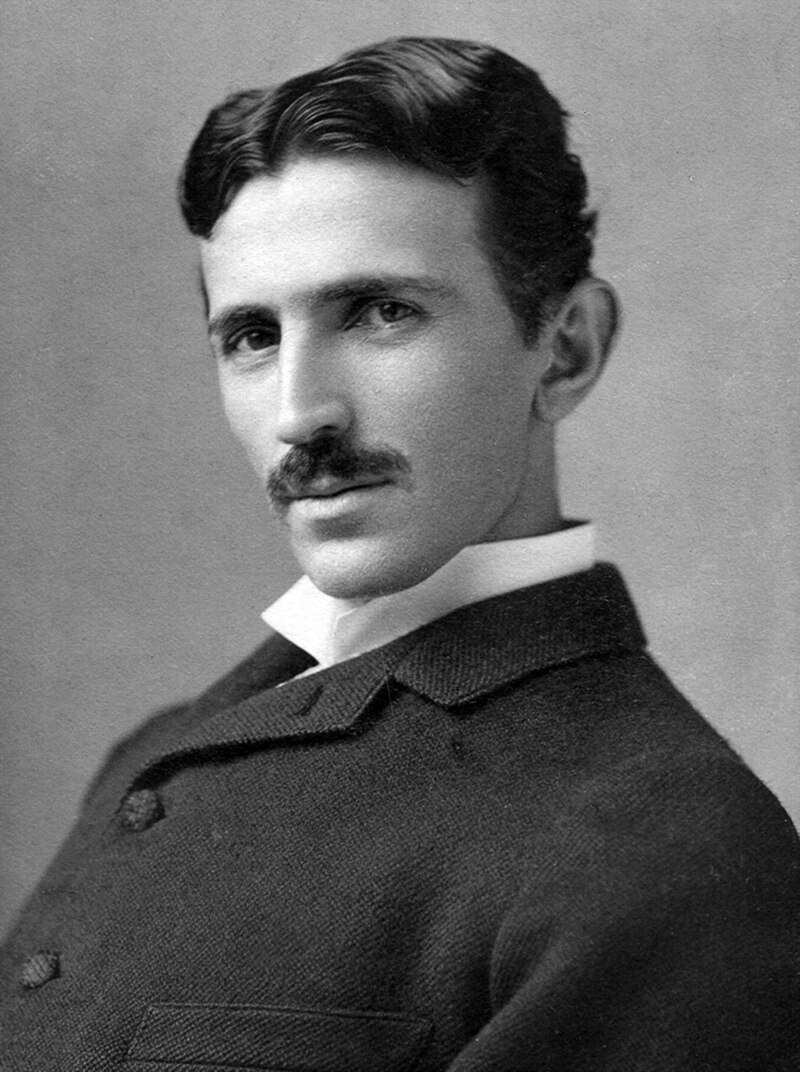
Nikola Tesla, born on July 10, 1856, in Smiljan, a village in the Austrian Empire (modern-day Croatia), was a Serbian-American inventor, electrical engineer, mechanical engineer, and futurist who is often celebrated as one of the most prolific and visionary minds in history. Tesla’s contributions to the development of alternating current (AC) electrical systems, wireless communication, and numerous other technological advancements have made him a towering figure in the world of science and innovation. Despite his profound impact on the modern world, Tesla’s life was marked by both extraordinary achievements and significant personal and financial struggles.
In this article, we will explore the life of Nikola Tesla, delving into the key moments that defined his journey, the inventions that cemented his legacy, and the challenges he faced along the way. By examining Tesla’s contributions to science and technology, as well as the historical context in which he worked, we can better understand why he remains a revered figure in the annals of history.
Early Life and Education
Nikola Tesla was born into a Serbian Orthodox family. His father, Milutin Tesla, was a priest and writer, while his mother, Đuka Mandić, was a homemaker known for her incredible memory and inventive spirit, despite having no formal education. Tesla attributed his remarkable memory and creative abilities to his mother, who often invented household gadgets and taught him the value of hard work and persistence.
Tesla’s early education took place in the local schools of Smiljan and later in Karlovac, where he developed a keen interest in physics and mathematics. His academic prowess was evident from a young age, and he soon enrolled at the Polytechnic Institute in Graz, Austria, to study engineering. It was during his time in Graz that Tesla first encountered the concept of alternating current, a principle that would later become central to his work. He was known to be a diligent student, often studying for 19 hours a day, which eventually took a toll on his health.
Tesla continued his studies at the University of Prague, where he furthered his knowledge in engineering and physics. However, he faced several personal and financial challenges during this period, leading him to leave the university without completing his degree. Despite this setback, Tesla’s passion for invention and discovery never waned.
Early Career and Move to the United States
Tesla’s early career was marked by a series of jobs that allowed him to develop his engineering skills. He first worked as a draftsman and engineer in Budapest, where he began to conceptualize the rotating magnetic field, a key principle behind alternating current (AC) systems. In 1882, Tesla moved to Paris to work for the Continental Edison Company, where he gained valuable experience in the burgeoning field of electrical engineering.
Tesla’s ambition to bring his ideas to life led him to move to the United States in 1884. Arriving in New York with little more than a letter of introduction and a few personal belongings, Tesla began working for Thomas Edison, the famed inventor and businessman. Edison, who was a strong proponent of direct current (DC) electrical systems, recognized Tesla’s talent but was skeptical of his ideas about alternating current. The two inventors eventually parted ways due to their differing views on electricity, with Tesla striking out on his own to develop his AC system.
The War of Currents and Major Inventions
The late 19th century saw the beginning of what would become known as the “War of Currents,” a fierce competition between Tesla’s alternating current (AC) and Edison’s direct current (DC) for the dominant method of electrical transmission. Tesla’s AC system had significant advantages over Edison’s DC, including the ability to transmit electricity over long distances with less power loss. This made AC more practical and cost-effective for large-scale electrical distribution.
In 1887, Tesla found a powerful ally in George Westinghouse, a prominent industrialist and inventor who believed in the potential of AC power. Westinghouse purchased Tesla’s patents for the AC motor and transformer, providing him with the financial backing to further develop his innovations. Together, Tesla and Westinghouse worked to demonstrate the superiority of AC power, culminating in their successful bid to light the 1893 World’s Columbian Exposition in Chicago. This achievement marked a significant victory for AC power and helped to solidify Tesla’s reputation as a leading inventor.
During this period, Tesla also developed the Tesla coil, an electrical resonant transformer circuit that has since become a cornerstone of radio technology and wireless transmission. The Tesla coil was capable of generating high-voltage, low-current, high-frequency alternating current electricity, and it played a crucial role in many of Tesla’s later experiments.
Wireless Communication and Visionary Ideas
Tesla’s work was not limited to electrical systems; he also had a keen interest in wireless communication. In the late 1890s, Tesla began experimenting with wireless transmission of electricity, believing that energy could be transmitted through the air without the need for wires. He envisioned a global system of wireless communication that could transmit information, music, and even power across vast distances.
Tesla’s ideas were far ahead of their time, and in 1899, he moved to Colorado Springs to conduct experiments in wireless transmission. There, he built a massive Tesla coil, which he used to generate and transmit electrical energy wirelessly. Tesla’s experiments in Colorado Springs laid the groundwork for many of the wireless technologies that we take for granted today, including radio, television, and mobile communication.
One of Tesla’s most ambitious projects was the construction of the Wardenclyffe Tower on Long Island, New York, in the early 1900s. Funded by the financier J.P. Morgan, the tower was intended to be the first of many stations that would form a global wireless communication network. Tesla envisioned a world where information and power could be transmitted wirelessly to any point on the globe, revolutionizing communication and energy distribution.
However, the project faced numerous challenges, including financial difficulties and skepticism from the scientific community. In 1901, Guglielmo Marconi successfully transmitted a radio signal across the Atlantic Ocean, using many of Tesla’s principles. This achievement, combined with Tesla’s mounting debts, led Morgan to withdraw his support, and the Wardenclyffe Tower project was eventually abandoned. Tesla’s dream of a global wireless network was never realized during his lifetime, but his ideas would later inspire generations of scientists and engineers.
Later Years and Legacy
Despite his many successes, Tesla’s later years were marked by financial difficulties and personal struggles. He continued to work on new inventions and ideas, but he was often unable to secure the funding needed to bring them to fruition. Tesla’s eccentric behavior and obsession with certain scientific concepts, such as his belief in the existence of free energy and his claims about communication with extraterrestrial life, further isolated him from the scientific community.
In the 1930s, Tesla’s health began to decline, and he became increasingly reclusive. He spent his final years living alone in a hotel room in New York City, where he continued to work on his inventions in relative obscurity. On January 7, 1943, Tesla passed away at the age of 86. His death marked the end of an era, but his legacy was only beginning to take shape.
In the years following his death, Tesla’s contributions to science and technology were gradually recognized. In 1943, the U.S. Supreme Court ruled that Tesla was the true inventor of radio, a decision that overturned Marconi’s earlier patents. Tesla’s work has since been celebrated for its groundbreaking innovations, and he is now regarded as one of the greatest inventors in history.
Tesla’s legacy extends far beyond his inventions. He was a visionary who foresaw many of the technological advancements that would shape the modern world, including wireless communication, renewable energy, and robotics. His ideas have inspired countless engineers, scientists, and innovators, and his name has become synonymous with creativity and innovation.
Conclusion
Nikola Tesla’s life was a remarkable journey of invention, discovery, and vision. From his early experiments with alternating current to his pioneering work in wireless communication, Tesla’s contributions to science and technology have had a profound impact on the modern world. Despite facing numerous challenges and setbacks, Tesla’s relentless pursuit of knowledge and his unwavering belief in the power of science have made him a true icon of innovation.
Tesla’s story is one of both triumph and tragedy, a testament to the brilliance of a man whose ideas were often ahead of their time. Today, Tesla is celebrated as a genius whose work has shaped the course of history, and his legacy continues to inspire future generations of inventors and thinkers. As we look to the future, Tesla’s vision of a world powered by clean, renewable energy and connected by wireless communication remains as relevant and inspiring as ever.


