
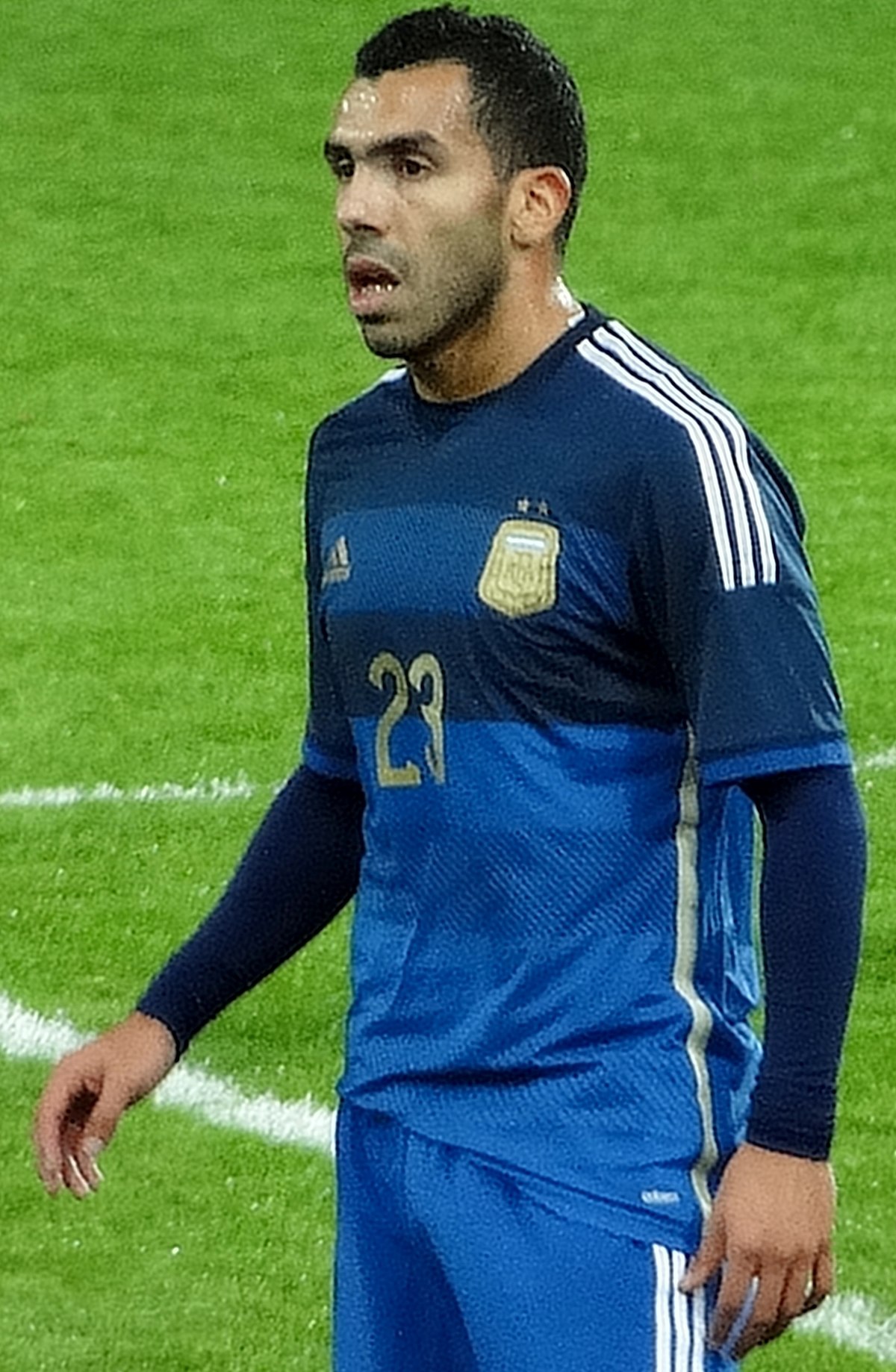
Carlos Tévez, born Carlos Alberto Martinez Tévez on February 5, 1984, in Ciudadela, Argentina, is one of the most iconic and successful footballers of his generation. His journey from the rough neighborhoods of Fuerte Apache to the pinnacle of world football is a story of resilience, talent, and determination. Known for his fierce playing style, exceptional skill, and never-give-up attitude, Tévez has earned his place among the football elite, leaving a lasting legacy in both South American and European football.
Early Life and Struggles
Carlos Tévez’s early life was marked by hardship and adversity. Born to Fabiana Martínez, he faced abandonment at a very young age when his mother left him at just three months old. At ten months, Tévez suffered a severe domestic accident when boiling water spilled on his face, resulting in first and second-degree burns. The situation worsened during his transport to the hospital when a nylon blanket melted onto his wounds. This accident left Tévez with permanent scars on his face, a constant reminder of the challenges he faced from infancy.
After this incident, Tévez was placed in the care of his maternal aunt and uncle, Segundo Tévez and Adriana Martínez, in the tough neighborhood of Fuerte Apache, which would later become synonymous with his identity. Despite the harsh environment and the dangers of growing up in such a place, Fuerte Apache played a crucial role in shaping Tévez’s character, instilling in him the grit and determination that would define his football career.
Tévez began playing football at a young age, finding solace and purpose on the streets and local fields. His talent was evident early on, and he joined Club Santa Clara, where he started honing his skills. Tragedy struck again when he was five years old: his biological father, whom he had never known, was killed in a shooting. Despite these early life challenges, Tévez’s love for football continued to grow, and he was soon scouted by an observer from Club Atlético All Boys, which marked the beginning of his journey in professional football.
Rise to Prominence at Boca Juniors
At the age of 15, Tévez was adopted officially by Segundo Tévez, whose surname he took, and moved to the Boca Juniors youth academy. Boca Juniors, one of Argentina’s most prestigious football clubs, became the platform where Tévez’s talents truly began to shine. His professional debut came on October 21, 2002, in a match against Talleres de Córdoba. It didn’t take long for Tévez to establish himself as a key player for Boca Juniors.
In 2003, Tévez helped Boca Juniors win the Argentine Apertura Championship, the Copa Libertadores, and the Intercontinental Cup, which included a victory over AC Milan. His performances were nothing short of spectacular, and he quickly became a fan favorite. Tévez’s skill, combined with his relentless work ethic and ability to perform in crucial matches, earned him the South American Footballer of the Year award in 2003 and 2004.
In 2004, Tévez played a pivotal role in Argentina’s triumph at the Athens Olympics, where he was the tournament’s top scorer, leading his team to a gold medal. This victory on the international stage further cemented his reputation as one of the brightest talents in world football.
The Move to Brazil and Success in Europe
In December 2004, Tévez made a surprising move to Brazil, joining Corinthians for a then-record fee of around $20 million. This transfer made headlines not only for the significant amount but also because it was rare for an Argentine star of Tévez’s caliber to move to a Brazilian club. At Corinthians, Tévez continued to excel, leading the club to a Brazilian Championship in 2005 and earning the affection of the Corinthians fans, despite the initial skepticism surrounding his arrival.
Tévez’s success in Brazil caught the attention of European clubs, and in 2006, he moved to West Ham United in the English Premier League. His arrival in England, alongside fellow Argentine Javier Mascherano, was part of a controversial and complex transfer deal that would later lead to legal disputes. On the pitch, Tévez struggled initially, often played out of position as a left winger by West Ham manager Alan Pardew. Despite these challenges, Tévez eventually found his form, scoring his first goal for the club in March 2007. His performances in the latter part of the season were instrumental in helping West Ham avoid relegation, with Tévez scoring crucial goals in the final games of the season.
Following his successful stint at West Ham, Tévez moved to Manchester United in 2007. At United, he formed a formidable attacking trio with Cristiano Ronaldo and Wayne Rooney. During his time at Old Trafford, Tévez won two Premier League titles (2007-08, 2008-09), the UEFA Champions League in 2008, and the FIFA Club World Cup. Tévez’s tireless work rate, combined with his ability to score important goals, made him a fan favorite at Manchester United.
In 2009, Tévez made a highly publicized and controversial move across town to Manchester City, becoming one of the first marquee signings under the club’s new ownership. His transfer fee was reported to be nearly €30 million, making him one of the most expensive players at the time. Tévez’s time at Manchester City was equally successful, where he played a crucial role in helping the club end their long trophy drought by winning the FA Cup in 2011 and the Premier League title in 2011-12. He also won the Premier League Golden Boot in the 2010-11 season, solidifying his status as one of the best forwards in the world.
Later Career and Return to Argentina
In June 2013, after his successful stint in England, Tévez moved to Italy, joining Juventus for a reported fee of €9 million. At Juventus, Tévez quickly became a key player, leading the line for one of Europe’s top clubs. His debut season saw him score 19 goals in Serie A, helping Juventus win the Scudetto and the Italian Super Cup. Tévez’s performances in the Champions League were also noteworthy, with his goals helping Juventus reach the final in the 2014-15 season, where they were ultimately defeated by Barcelona.
Despite his success in Europe, Tévez faced personal challenges, particularly related to his relationship with the Argentine national team. His omission from the squad for the 2014 World Cup in Brazil was a significant disappointment for Tévez, as Argentina reached the final without him. In the same year, Tévez’s adopted father, Segundo, was kidnapped, but was fortunately released unharmed after a few hours.
In 2015, Tévez made an emotional return to Boca Juniors, fulfilling a promise to return to the club where his career began. His return to Boca was met with immense joy from the fans, and Tévez did not disappoint, helping Boca win the Argentine Primera División and Copa Argentina in his first season back.
Legacy and Impact on Football
Carlos Tévez’s career is a testament to his extraordinary talent, resilience, and determination. He is a player who overcame immense personal challenges and adversity to reach the pinnacle of world football. Tévez’s journey from the streets of Fuerte Apache to becoming one of the most recognizable and successful footballers in the world is an inspiration to many.
Tévez is known for his versatility, capable of playing in multiple attacking roles, his exceptional work ethic, and his ability to perform in the biggest matches. He has won numerous titles in South America and Europe, including domestic league titles, international tournaments, and individual awards. His playing style, characterized by his physicality, technical skill, and never-say-die attitude, has made him a beloved figure among fans wherever he has played.
Off the pitch, Tévez’s story is one of overcoming adversity. The scars on his face are a constant reminder of the challenges he faced as a child, but they also symbolize his resilience and determination. Tévez has used his platform to give back to his community, often speaking about the importance of staying true to one’s roots and helping those in need.
Conclusion
Carlos Tévez’s life and career are a testament to the power of resilience, determination, and talent. From his humble beginnings in Fuerte Apache to becoming a global football icon, Tévez has consistently defied the odds and established himself as one of the most successful and beloved footballers of his generation. His legacy is one of triumph over adversity, and his impact on the game will be felt for years to come.


