
Introduction
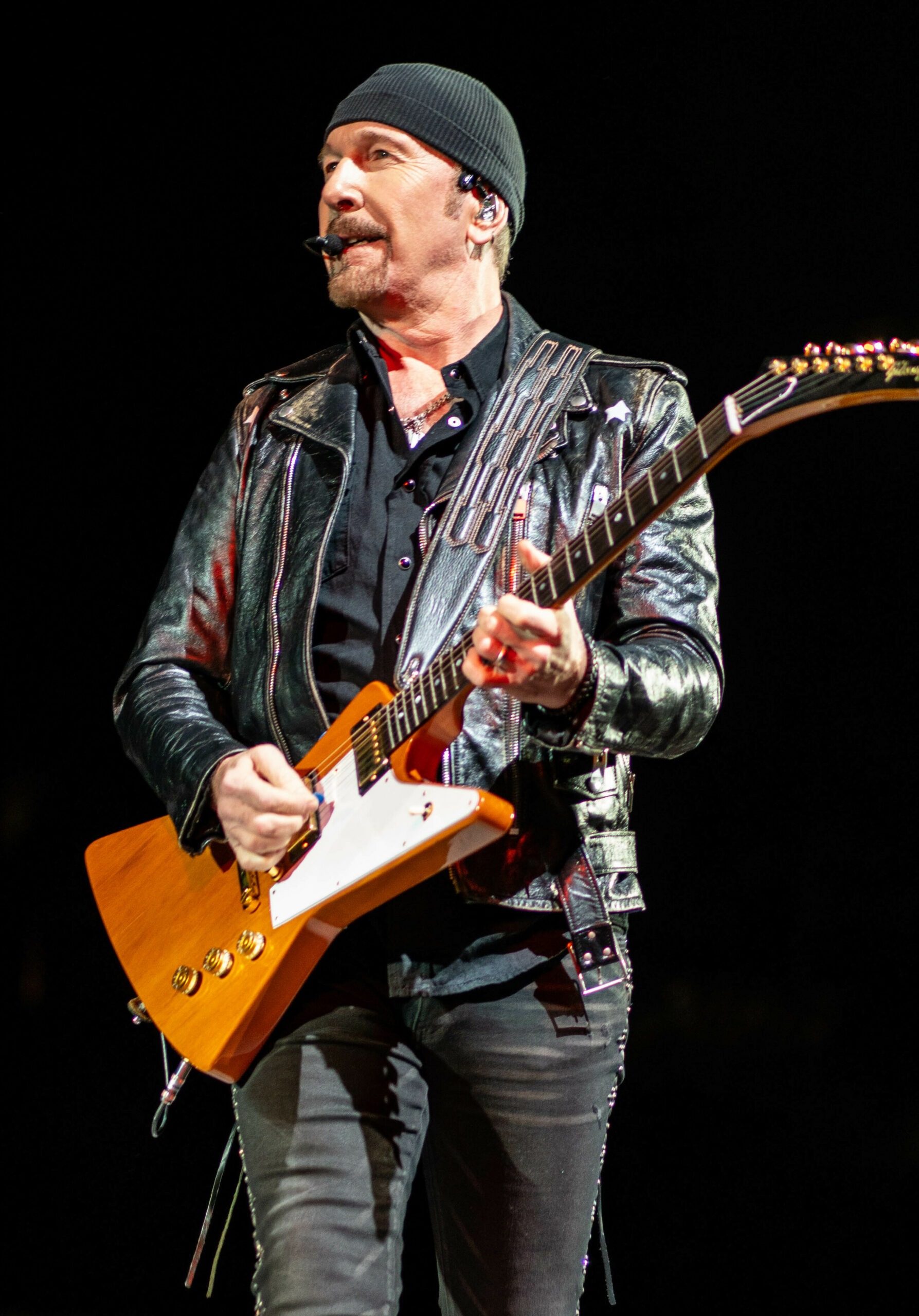
David Howell Evans, universally known as The Edge, is not just another rock guitarist; he is a music icon who has shaped the sound of one of the most influential bands in history, U2. Born on August 8, 1961, in East London, England, The Edge has become synonymous with the distinctive guitar sound that has defined U2’s music for over four decades. This article will explore the life, fame, and significant contributions of The Edge, providing detailed insights, historical context, and explanations that highlight his impact on the music world.
Early Life and Background
David Howell Evans was born into a Welsh family in East London, the second of three children. His father, Garvin Evans, was an engineer, and his mother, Gwenda, was a homemaker. In 1962, when The Edge was just a year old, his family moved to Dublin, Ireland, where he would spend the rest of his childhood. Growing up in Dublin, he was immersed in the Irish culture, which significantly influenced his identity and, later, his music.
The Edge was always recognized for his intelligence and introspective nature. His keen interest in music developed early on, and he began taking piano and guitar lessons as a child. By the time he was a teenager, The Edge had already shown signs of the brilliance that would later define his career. His first musical experiences were shared with his older brother, Dick Evans, with whom he would play and experiment with various musical ideas.
The Formation of U2: A Band’s Genesis
The genesis of U2 began in 1976 when The Edge, then a student at Mount Temple Comprehensive School in Dublin, answered a notice posted by a fellow student, Larry Mullen Jr., who was looking for musicians to form a band. Alongside his brother Dick, The Edge joined forces with Mullen, Adam Clayton, and Paul Hewson (later known as Bono). This group would eventually become U2, one of the most successful and enduring bands in rock history.
Initially, the band members were just teenagers with a shared passion for music, but it didn’t take long for them to realize they had something special. The chemistry between the members, particularly the dynamic between The Edge’s innovative guitar work and Bono’s powerful vocals, became the hallmark of U2’s sound. Despite his quiet and introspective nature, The Edge’s influence on the band’s direction was profound. His technical prowess on the guitar, coupled with his ability to craft unique soundscapes, set the stage for U2’s rise to global stardom.
The Edge’s Guitar Style: A Revolutionary Sound
The Edge’s guitar style is nothing short of revolutionary. While many rock guitarists of his era were known for their flashy solos and technical virtuosity, The Edge took a different approach. His playing is characterized by the use of delay effects, creating an atmospheric sound that has become synonymous with U2. Songs like “Where the Streets Have No Name,” “With or Without You,” and “Sunday Bloody Sunday” showcase his ability to use the guitar not just as a lead instrument but as a way to create texture and mood within the music.
His minimalistic approach, focusing on melody and rhythm rather than complexity, has been both influential and iconic. The Edge’s sound is instantly recognizable, and his innovative use of technology, particularly with delay and echo effects, has inspired countless musicians. His guitar work is often described as “orchestral,” and he is known for using a vast array of effects pedals and technology to craft his unique sound.
The Edge’s Personal Life and Influence
Behind the stage persona of The Edge lies a man of deep intellect and spirituality. In the early 1980s, The Edge went through a period of intense religious reflection, which at one point led him to consider leaving the band. However, his faith and his belief in the band’s mission ultimately kept him with U2. His spiritual journey has influenced not just his music but also his approach to life and his philanthropic efforts.
In 1983, The Edge married Aislinn O’Sullivan, with whom he had three daughters: Holly, Arun, and Blue Angel. However, the marriage faced challenges, and the couple separated in 1990, eventually divorcing in 1996. During this time, The Edge began a relationship with Morleigh Steinberg, a dancer and choreographer he met during U2’s Zoo TV Tour. They married in 2002 and have two children together, Sian and Levi.
The Edge is also known for his philanthropic efforts. Alongside Bono, he has been heavily involved in various charitable initiatives, particularly those focused on human rights, poverty alleviation, and disaster relief. His commitment to using his platform for positive change is a testament to his character and the values that drive him.
U2’s Evolution and The Edge’s Role
As U2’s music evolved over the decades, so too did The Edge’s role within the band. From their early post-punk roots in the late 1970s and early 1980s to their exploration of alternative rock, electronic music, and beyond, The Edge has been at the forefront of U2’s sound evolution. Albums like The Joshua Tree (1987), Achtung Baby (1991), and All That You Can’t Leave Behind (2000) are milestones in U2’s career, with The Edge’s guitar work playing a central role in defining the band’s direction.
The Joshua Tree, often considered U2’s masterpiece, features some of The Edge’s most iconic guitar work. His use of delay and reverb on tracks like “With or Without You” and “I Still Haven’t Found What I’m Looking For” created a sonic landscape that was both expansive and intimate. The album’s success catapulted U2 to international superstardom, and The Edge’s guitar playing became the soundtrack for a generation.
In the 1990s, U2 took a bold step into the world of electronic music with Achtung Baby. The Edge’s willingness to experiment with different sounds and textures was crucial to the album’s success. Tracks like “Mysterious Ways” and “The Fly” showcased a different side of The Edge’s playing, one that was more aggressive and sonically adventurous. This period of experimentation solidified The Edge’s reputation as a guitarist who was not afraid to push boundaries and redefine what was possible within rock music.
The Edge’s Legacy and Continued Influence
As U2 continues to be a force in the music industry, The Edge’s legacy grows ever stronger. His contributions to the band’s sound and success are immeasurable, and his influence on subsequent generations of guitarists is profound. The Edge has been recognized by numerous publications and organizations as one of the greatest guitarists of all time. His innovative approach to guitar playing, coupled with his technical skill and creative use of effects, has made him a role model for aspiring musicians around the world.
Beyond his musical achievements, The Edge’s commitment to social justice and philanthropy has cemented his status as not just a musician but a global citizen. He has been a vocal advocate for causes such as AIDS research, disaster relief, and environmental protection. Alongside his bandmates, The Edge has used his fame to shine a light on important issues and to inspire others to take action.
Historical Context and The Edge’s Place in Music History
To fully understand The Edge’s impact, it’s essential to consider the historical context of his work. When U2 emerged in the late 1970s, the music scene was dominated by punk rock, which was characterized by its raw energy and DIY ethos. U2, however, brought something different to the table. While they were influenced by punk, they also incorporated elements of post-punk, alternative rock, and even gospel and blues into their sound. The Edge’s guitar work was central to this unique blend of influences.
The Edge’s approach to the guitar was a departure from the flashy, solo-heavy style that had dominated rock music in the 1970s. Instead, he focused on creating atmospheres and moods with his playing. This approach was in line with the post-punk movement, which emphasized texture and emotion over technical prowess. The Edge’s style helped to define a new era of rock music, one that was more introspective and experimental.
As U2’s music evolved in the 1980s and 1990s, The Edge continued to push the boundaries of what was possible with the guitar. His willingness to experiment with new sounds and technologies made him a pioneer in the use of digital effects and looping techniques. His influence can be heard in the work of countless artists who have followed in his footsteps, from alternative rock bands like Radiohead to modern pop acts who incorporate elements of rock and electronic music into their sound.
Conclusion
David Howell Evans, better known as The Edge, is more than just a guitarist; he is a visionary artist who has left an indelible mark on the music world. From his early days in Dublin to his role as the driving force behind U2’s sound, The Edge has consistently pushed the boundaries of what is possible in rock music. His innovative approach to the guitar, his commitment to social justice, and his influence on generations of musicians make him a true icon.
As U2 continues to tour and release new music, The Edge’s legacy only grows stronger. His contributions to the band’s sound, his pioneering use of technology, and his dedication to making a difference in the world ensure that he will be remembered not just as a great guitarist, but as one of the most influential musicians of his time.


