
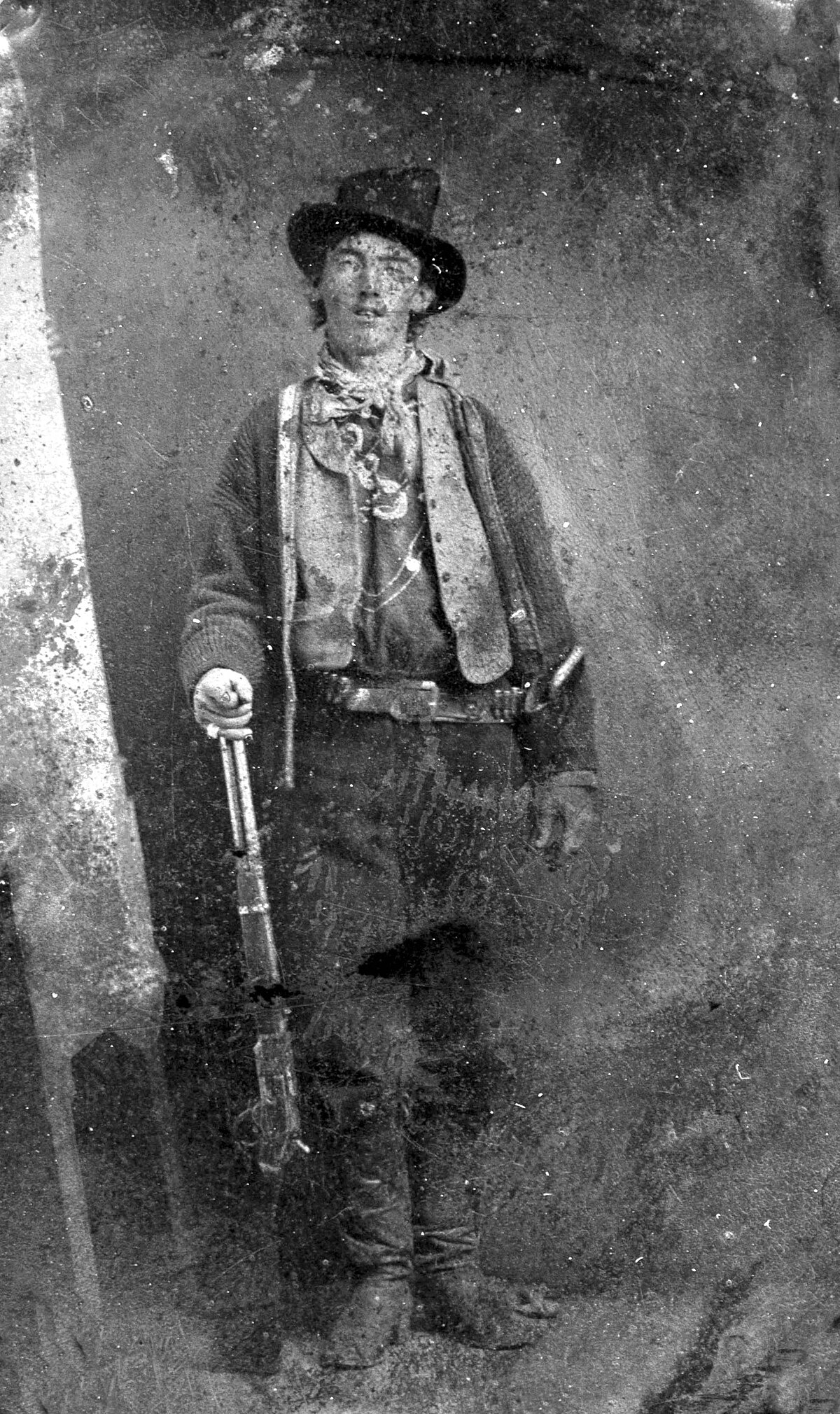
Billy the Kid, born Henry McCarty and later known as William H. Bonney, is one of the most iconic and enigmatic figures of the American Wild West. His life, steeped in legend and shrouded in mystery, has been the subject of countless stories, songs, and films. Despite his relatively short life, ending at the age of around 21, Billy the Kid left an indelible mark on American history. This article explores the life of Billy the Kid, tracing his journey from a troubled youth to one of the most famous outlaws in the American West, examining the myths and realities that surround his legacy.
Early Life: From New York to the Wild West
Billy the Kid was born Henry McCarty on November 23, 1859, in the slums of New York City. The exact details of his early life are somewhat murky due to the poor record-keeping practices of the time. However, it is widely accepted that he was born to Irish immigrants in a poverty-stricken neighborhood, a tough beginning that would shape his life in significant ways.
After the death of his father, Henry’s mother, Catherine McCarty, moved the family westward, seeking a new life. In 1873, she remarried William Antrim, and the family settled in Santa Fe, New Mexico. The young Henry, who occasionally went by the name Henry Antrim after his stepfather, had a difficult childhood. His mother’s death in 1874 left him and his younger brother, Joseph, orphaned. From this point, Henry began to drift into a life of petty crime, starting with minor thefts and gradually escalating to more serious offenses.
The Birth of Billy the Kid
Henry McCarty’s transformation into Billy the Kid began in the mid-1870s when he was still a teenager. By the time he was 16, he had already been arrested for theft and had escaped from jail by climbing up a chimney—his first recorded jailbreak. It was during this period that he adopted the alias William H. Bonney, though the reasons for this name change remain unclear. Some historians speculate that he chose “Bonney” after his mother’s maiden name, while others believe it was simply an attempt to evade the law.
Billy the Kid’s reputation as an outlaw began to take shape after a violent altercation in Arizona in 1877, where he killed a blacksmith named Frank “Windy” Cahill during a brawl. This incident forced Billy to flee Arizona, and he headed back to New Mexico, where he joined a group of cattle rustlers. It was during this time that Billy’s life as a notorious outlaw truly began, as he became embroiled in the Lincoln County War, a violent and bloody feud that would cement his place in Wild West folklore.
The Lincoln County War: Outlaw and Rebel
The Lincoln County War was a conflict between rival factions competing for control of trade and territory in Lincoln County, New Mexico. The war was sparked by a combination of political corruption, business rivalry, and old-fashioned revenge. Billy the Kid found himself on the side of the Regulators, a group of vigilantes who sought to avenge the murder of their employer, John Tunstall, a British rancher and businessman.
Tunstall’s murder on February 18, 1878, by a posse working for his business rivals, Lawrence Murphy and James Dolan, ignited a series of violent confrontations. Billy the Kid, who had formed a close bond with Tunstall, became one of the most active and ruthless members of the Regulators. The Regulators quickly retaliated, and Billy was involved in several killings, including the ambush and killing of Sheriff William Brady, who was allied with Murphy and Dolan.
The Lincoln County War, which lasted until 1879, was marked by a series of bloody skirmishes, ambushes, and murders. While the war ultimately ended in a stalemate, it left a deep mark on Billy the Kid’s reputation. He was now a wanted man with a price on his head, and his notoriety began to grow as tales of his exploits spread across the West.
The Legend of Billy the Kid
As Billy the Kid’s fame grew, so did the legends surrounding him. The newspapers of the time, hungry for sensational stories, often exaggerated his exploits, portraying him as a ruthless killer who had taken the lives of as many as 21 men—one for each year of his life. In reality, the number of people Billy the Kid killed is likely closer to four, though even this number is disputed by historians.
One of the most influential sources of Billy the Kid’s legend was the book The Authentic Life of Billy the Kid, written by Pat Garrett, the sheriff who eventually killed him. Published in 1882, just a year after Billy’s death, Garrett’s book was both an attempt to justify his killing of the young outlaw and a means of capitalizing on the public’s fascination with the Wild West. While Garrett’s account was heavily embellished, it cemented Billy the Kid’s place as a legendary figure in American history.
Billy the Kid was often portrayed as a Robin Hood-like figure who stood up to corrupt lawmen and wealthy landowners. This romanticized image, though far from the truth, contributed to his enduring legacy. In reality, Billy was a complex character—charming and charismatic, yet also capable of violence and ruthlessness. He was a product of the chaotic and lawless environment of the American frontier, where survival often depended on one’s ability to navigate a world of shifting alliances and violent retribution.
The Final Days and the Death of Billy the Kid
By 1880, Billy the Kid was one of the most wanted men in the West. Despite numerous brushes with the law, including several arrests and escapes, he continued his life of crime, primarily focusing on cattle rustling. His life on the run, however, was beginning to take its toll. The constant threat of capture, the betrayals of former allies, and the pressure from law enforcement were closing in on him.
The man who would ultimately bring Billy the Kid’s life to an end was Pat Garrett, a former friend turned lawman. In November 1880, Garrett was elected sheriff of Lincoln County with a clear mandate: to capture or kill Billy the Kid. Garrett pursued Billy with relentless determination, and after months of tracking him across New Mexico, he finally caught up with him in July 1881.
On the night of July 14, 1881, Garrett ambushed Billy the Kid at Fort Sumner, New Mexico. According to Garrett’s account, Billy entered a dark room where Garrett was waiting and asked, “¿Quién es? ¿Quién es?” (“Who is it? Who is it?”). Garrett responded by firing his gun twice, killing Billy instantly. The outlaw was just 21 years old.
The death of Billy the Kid quickly became the stuff of legend. Despite his brief life, Billy had become a symbol of the Wild West—an era of lawlessness, adventure, and the clash between civilization and the frontier. His death marked the end of an era, but it also ensured that his legend would live on for generations to come.
Legacy and Impact on American Culture
The legend of Billy the Kid has endured for over a century, with his story being retold in countless books, films, and songs. He has become a symbol of the American frontier spirit—both its romantic ideals and its harsh realities. Billy the Kid represents the contradictions of the Wild West: the pursuit of freedom and justice, but also the violence and lawlessness that often accompanied it.
In American culture, Billy the Kid is often depicted as a tragic hero, a young man who was forced into a life of crime by circumstances beyond his control. This portrayal, while not entirely accurate, speaks to the broader themes of American mythology, where the line between hero and villain is often blurred.
Billy the Kid’s influence extends beyond the realm of popular culture. His life has been the subject of serious historical study, as scholars seek to separate the facts from the myths. His story offers insights into the social and economic conditions of the American West in the late 19th century, a time when the frontier was rapidly closing and the forces of law and order were beginning to assert themselves.
The Continuing Fascination with Billy the Kid
The fascination with Billy the Kid shows no signs of waning. New theories and stories about his life and death continue to emerge, and debates over the accuracy of historical accounts persist. Some historians have even suggested that Billy the Kid may have survived the encounter with Pat Garrett and lived under an assumed identity for many years, though these claims remain controversial and largely unsubstantiated.
In 2010, a photograph believed to be only the second known image of Billy the Kid was discovered, reigniting interest in the outlaw’s life. The photo, which shows a group of men playing croquet, was authenticated and sold at auction for over $2 million. This discovery underscores the enduring appeal of Billy the Kid and the continuing effort to uncover new details about his life.
In the political sphere, Billy the Kid’s legacy was revisited in 2011 when the governor of New Mexico, Bill Richardson, considered granting a posthumous pardon to Billy the Kid for the killing of Sheriff William Brady during the Lincoln County War. Although the pardon was ultimately denied, the debate highlighted the ongoing interest in Billy the Kid’s life and the question of justice in the context of the Wild West.
Conclusion: The Enduring Legacy of Billy the Kid
Billy the Kid remains one of the most iconic figures in American history. His life, though short, encapsulates the spirit of the Wild West—a time of opportunity, danger, and the relentless pursuit of freedom. While much of his story has been romanticized or distorted over time, the essence of Billy the Kid’s legend endures: a young outlaw who defied the odds, lived by his own rules, and left an indelible mark on the American imagination.
As we continue to explore the complexities of Billy the Kid’s life and the myths that surround him, it becomes clear that his legacy is not just about the man himself, but about the larger story of the American West. It is a story of struggle, survival, and the enduring human desire for freedom—a story that continues to resonate with audiences today.


