
Introduction
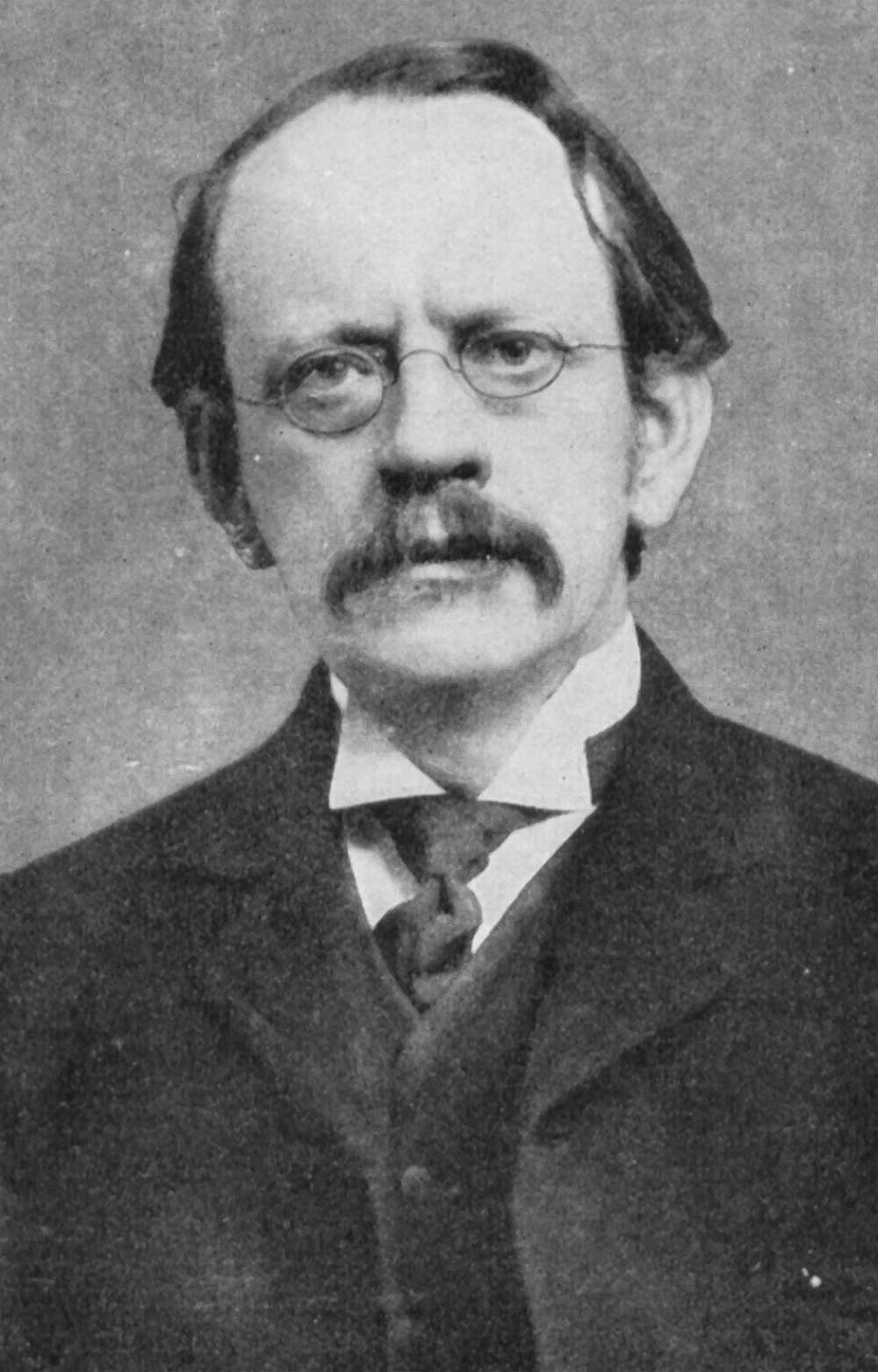
Joseph John Thomson, born on December 18, 1856, in Cheetham, near Manchester, England, stands as a towering figure in the history of science, particularly in the field of physics. His groundbreaking work in the late 19th and early 20th centuries laid the foundation for modern atomic theory, earning him a permanent place in the annals of scientific achievement. This article delves into the life, fame, and significant contributions of Joseph John Thomson, providing detailed insights and historical context that illuminate his lasting impact on science.
Early Life and Education
Joseph John Thomson, often referred to as J.J. Thomson, was born into a Scottish family. His father, a bookseller, instilled in him a deep love for learning from an early age. Thomson’s early education was marked by brilliance, and he soon enrolled at Owens College (now the University of Manchester), where he initially pursued engineering. However, his interests soon shifted to the natural sciences, particularly physics, a field that was rapidly evolving during his time.
Thomson’s academic journey took a significant turn when he was admitted to Trinity College, Cambridge, one of the most prestigious institutions in the world. It was here that he began to delve deeper into the mysteries of electromagnetism, a subject that would eventually lead him to his most famous discoveries.
Rise to Fame: Discovering the Electron
Thomson’s rise to fame can be traced back to his work at the Cavendish Laboratory at Cambridge, where he became a professor of physics in 1884. The Cavendish Laboratory was, at the time, a hub of scientific innovation, and Thomson’s role as its director from 1894 to 1919 allowed him to spearhead several important research projects.
The discovery that cemented Thomson’s place in history was that of the electron in 1897. This discovery was a pivotal moment in the field of physics. Before Thomson’s experiments, the prevailing belief was that atoms were indivisible, the smallest units of matter. However, through his experiments with cathode rays, Thomson was able to show that these rays were composed of negatively charged particles, which he called “corpuscles”—later known as electrons.
Thomson’s work demonstrated that atoms were not indivisible, as previously thought, but were made up of smaller, subatomic particles. This was a radical departure from the then-accepted atomic model and marked the beginning of a new era in scientific understanding. His work was met with widespread acclaim, and in 1906, he was awarded the Nobel Prize in Physics for his discovery.
The Plum Pudding Model
In 1904, Thomson proposed what is now known as the “plum pudding model” of the atom. According to this model, the atom was composed of a sphere of positive charge, within which negatively charged electrons were embedded, much like plums within a pudding. While this model was eventually superseded by the Rutherford model, and later by the Bohr model, it represented a crucial step in the development of atomic theory.
Thomson’s model was the first to suggest that the atom was not a solid, indivisible object, but rather a structure composed of charged particles. This was an essential precursor to the more sophisticated models that followed, which incorporated the nucleus and orbiting electrons.
Advancements and Legacy
Thomson’s contributions to science did not end with the discovery of the electron. He continued to explore the nature of atomic particles, and in 1912, he made another significant discovery—the existence of isotopes. This discovery was made while he was conducting experiments on canal rays, which are streams of positive ions produced in certain types of electrical discharge. Thomson observed that the rays were composed of particles with different masses, leading to the realization that elements could exist in different forms, each with a different atomic mass.
This discovery of isotopes was a key development in the field of chemistry and led to the creation of the mass spectrometer by his assistant, F.W. Aston, in 1920. The mass spectrometer became a crucial tool for identifying and measuring the masses of isotopes, furthering our understanding of atomic structure.
In recognition of his contributions to science, Thomson was appointed Master of Trinity College in 1918, a position he held until his death in 1940. His influence extended beyond his own work, as he mentored many students who would go on to become prominent scientists in their own right, including Ernest Rutherford, who later developed the nuclear model of the atom.
Personal Life and Character
While Thomson is best known for his scientific achievements, his personal life and character also played a significant role in his success. In 1890, he married Rose Paget, with whom he had two children. His son, George Paget Thomson, would later win the Nobel Prize in Physics in 1937 for his work demonstrating the wave-like properties of the electron, further cementing the Thomson family’s legacy in the world of science.
Thomson was known for his modesty and humility, traits that endeared him to his colleagues and students. Despite his many accomplishments, he remained a dedicated teacher and mentor, always willing to share his knowledge and insights with others. His ability to inspire and guide young scientists was one of his greatest strengths, and many of his students went on to make significant contributions to science.
Historical Context and Impact
To fully appreciate Thomson’s contributions, it is important to understand the historical context in which he worked. The late 19th and early 20th centuries were a period of rapid advancement in the physical sciences. The discovery of X-rays, radioactivity, and the electron all occurred within a few decades, fundamentally altering our understanding of the natural world.
Thomson’s work on the electron was particularly significant because it challenged the existing atomic theory and laid the groundwork for the development of quantum mechanics. His discovery of the electron was a key factor in the shift from classical physics to modern physics, a transition that would eventually lead to the development of technologies such as semiconductors, computers, and various forms of medical imaging.
Moreover, Thomson’s discovery had profound philosophical implications. By showing that atoms were composed of smaller particles, he forced scientists and philosophers alike to reconsider the nature of matter and the fundamental building blocks of the universe. This was a major shift in thought, comparable in importance to the earlier work of figures like Isaac Newton, whose laws of motion had dominated scientific thinking for centuries.
Conclusion
Joseph John Thomson’s life and work represent a pivotal chapter in the history of science. His discovery of the electron not only revolutionized our understanding of atomic structure but also set the stage for many of the technological advancements that define the modern world. As a teacher, mentor, and scientist, Thomson’s influence extended far beyond his own research, shaping the careers of many who would continue to push the boundaries of scientific knowledge.
Thomson’s legacy is a testament to the power of curiosity and perseverance in the pursuit of knowledge. His willingness to challenge established ideas and explore new frontiers of science serves as an inspiration to scientists and thinkers today. As we continue to build on the foundation he laid, Thomson’s contributions will undoubtedly remain a cornerstone of modern physics and a reminder of the importance of looking beyond the obvious to discover the hidden truths of our universe.


