
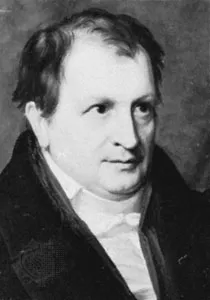
Ludwig Tieck was born on May 31, 1773, in Berlin, Germany. As a child, he exhibited a remarkable aptitude for language and storytelling, a trait that would define his entire career. From an early age, Tieck was deeply immersed in the world of literature, a passion that led him to study philology and literature at the universities of Halle, Göttingen, and Erlangen.
Early Life and Literary Beginnings
Tieck’s early years were marked by an intense curiosity and a profound sensitivity. He was drawn to new cultural movements and ideas, particularly those that challenged the status quo. His early works, though numerous, reflect an existential struggle, a recurring theme throughout his life. His friendship with Wilhelm Heinrich Wackenroder, a fellow writer and romantic, played a pivotal role in shaping his spiritual and intellectual outlook. Together, they explored the burgeoning Romantic movement, which emphasized emotion over rationality, a concept that resonated deeply with Tieck.
In 1796, Tieck published “The Story of Mr. William Lovell,” followed by the incomplete “Peregrinations of Franz Sternbald” in 1798, works that highlighted his burgeoning literary talent. These early works were instrumental in establishing Tieck as a prominent figure in the literary world.
The Jena Period and Romanticism
In February 1799, Tieck moved to Jena, where he became a central figure in the literary circle of the Schlegel brothers, August Wilhelm and Friedrich. This period was crucial for Tieck, as he immersed himself in the intellectual and artistic ferment of the time. Jena was the epicenter of the Romantic movement, and Tieck found himself among like-minded individuals, including Fichte, Schelling, and Novalis.
His friendship with Novalis, in particular, had a profound impact on his work. Inspired by Novalis, Tieck wrote the novella “The Faithful Eckart and Tannenhauser,” published in 1799, alongside the drama “Life and Death of Saint Genevieve.” In 1804, he published another drama, “Emperor Octavian.” However, it was in his novellas and fairy tales that Tieck’s literary genius truly shone. Works like “The Blonde Eckbert” (1796), “The Faithful Eckart” (1799), and dramatic fairy tales such as “Puss in Boots” (1797), “The World Turned Upside Down” (1798), and “Prince Zerbino” (1799) showcased his unique ability to blend fantasy with drama.
Later Years and Realism
After his time in Jena, Tieck embarked on a series of travels across Germany and abroad, including a significant trip to Italy, which inspired his “Travel Poems.” In 1817, during a stay in London, Tieck deepened his appreciation for Shakespeare, whose works had a lasting influence on him. Two years later, in Dresden, he collaborated with August Wilhelm Schlegel on the translation of Shakespeare’s plays. Tieck eventually took over the project, publishing the first two volumes in 1825 and later entrusting the remaining translations to his daughter Dorothea and Count Baudissin.
As he matured, Tieck began to distance himself from the Romantic ideals that had defined his early career. He gravitated toward the more restrained realism of the Biedermeier movement, which appealed to the German and Austrian bourgeoisie between 1815 and 1848. This phase of his career produced works such as “The Engagement” (1823), “Revolt in the Cevennes” (1826), “The Scholar” (1827), “The Superfluity of Life” (1839), and the novel “Vittoria Accorombona” (1840).
Legacy and Influence
By the time Tieck reached the later stages of his career, he had become a revered figure in the literary world. In 1825, he was appointed to the Court Theater Council, and in 1841, he was invited to join the Berlin Court Council by King Frederick William IV of Prussia. Tieck’s influence extended beyond his literary output; he played a significant role in shaping the cultural and intellectual landscape of his time.
Ludwig Tieck passed away on April 28, 1853, in Berlin, at the age of 79. His legacy as a writer, translator, and key figure in the Romantic movement remains enduring. Tieck’s works continue to be studied and celebrated for their exploration of the human experience, blending of fantasy and reality, and profound emotional depth.
Historical Context and Nuances
Ludwig Tieck’s life and work must be understood within the broader context of the late 18th and early 19th centuries, a period marked by significant social, political, and cultural upheaval in Europe. The Romantic movement, which Tieck was a central figure of, emerged as a reaction against the Enlightenment’s emphasis on reason and order. Instead, Romanticism championed emotion, individualism, and the sublime, often drawing inspiration from nature, folklore, and the supernatural.
Tieck’s early embrace of Romanticism was not just an artistic choice but also a response to the existential anxieties of his time. The French Revolution and the subsequent Napoleonic Wars had shaken the foundations of European society, leading many intellectuals to seek solace in art and literature. Tieck’s works, with their focus on inner turmoil, fantasy, and the tension between reality and imagination, reflect this broader cultural shift.
However, Tieck’s later turn toward realism and the Biedermeier movement signals a shift in his worldview. The Biedermeier period, which followed the Congress of Vienna in 1815, was characterized by a retreat into domesticity and a focus on the everyday lives of the middle class. This shift in Tieck’s work can be seen as a reflection of the changing times, as Europe moved from the revolutionary fervor of the early 19th century to a more conservative and stable era.
Key Themes and Contributions
Tieck’s work is marked by several recurring themes, including the exploration of the individual’s inner life, the tension between reality and fantasy, and the critique of contemporary society. His early works, influenced by Romanticism, often feature protagonists who struggle with existential dilemmas, torn between their desires and the constraints of society.
In his later works, as he moved toward realism, Tieck began to focus more on social issues, particularly the lives of the middle class. His stories often feature characters grappling with the challenges of modern life, from the pressures of social conformity to the search for meaning in a rapidly changing world.
Tieck’s contributions to literature extend beyond his own writings. His translations of Shakespeare were instrumental in introducing the English playwright to a German audience, and his involvement in the literary circles of his time helped shape the direction of German literature. As a mentor and collaborator, Tieck influenced many of his contemporaries, including Novalis and the Schlegel brothers.
Conclusion
Ludwig Tieck was a towering figure in the literary world, whose work spanned the Romantic and Biedermeier periods. His early embrace of Romanticism and later shift toward realism reflect the broader cultural currents of his time. Tieck’s ability to blend fantasy with reality, his exploration of the human condition, and his contributions to the translation and dissemination of Shakespeare’s works have left an indelible mark on the literary landscape.
Today, Tieck is remembered not only as a writer but also as a key figure in the cultural and intellectual history of Europe. His works continue to be studied for their rich emotional depth, their exploration of the complexities of the human experience, and their ability to capture the spirit of an age.


