
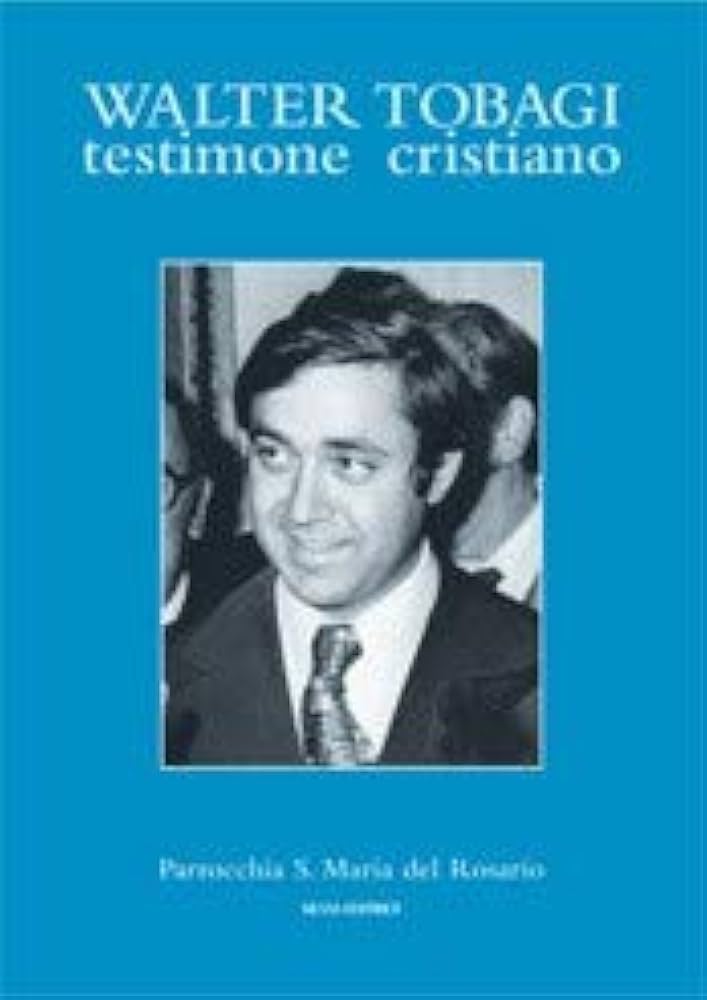
Walter Tobagi was an influential Italian journalist whose life was tragically cut short due to his unyielding commitment to uncovering the truth during one of Italy’s most turbulent periods, known as the “Years of Lead.” Born on March 18, 1947, in San Brizio, Umbria, Tobagi’s career and legacy are defined by his fearless approach to journalism, his in-depth analyses of social and political issues, and his ultimate sacrifice in the line of duty. This article delves into the life of Walter Tobagi, exploring his early years, rise to prominence, and the profound impact he had on journalism and Italian society.
Early Life and Education
Walter Tobagi was born in the small village of San Brizio, near Spoleto, in the heart of Italy. His family moved to Bresso, a suburb of Milan, when he was eight years old, as his father, Ulderico, was a railway worker seeking better opportunities for his family. Growing up in the industrial and politically charged environment of Milan, Tobagi quickly developed a keen interest in current events and social issues.
His passion for journalism was evident early on when he became involved with La Zanzara, the student newspaper at the prestigious Giuseppe Parini High School in Milan. Tobagi quickly rose to the position of editor-in-chief, and under his leadership, the paper gained notoriety for its bold articles on social and cultural issues, including a controversial piece on sexual education that led to a high-profile court case. This early experience shaped Tobagi’s journalistic style, characterized by thorough research, balanced perspectives, and a commitment to truth.
The Path to Professional Journalism
After completing high school, Tobagi began his professional journalism career at a remarkably young age. He initially worked for Avanti!, the newspaper affiliated with the Italian Socialist Party, but his tenure there was brief. He soon moved to l’Avvenire, a Catholic daily newspaper undergoing significant restructuring at the time. Tobagi’s intellectual curiosity and commitment to impartiality set him apart from his peers. As noted by Leonardo Valente, the director of l’Avvenire during Tobagi’s early years, “In 1969, when I hired him, I realized I was facing a young man who was exceptionally well-prepared, sharp, and loyal.”
At l’Avvenire, Tobagi wrote on a wide array of topics, ranging from social and political issues to cultural critiques. He was particularly interested in the dynamics of the labor movement, the intricacies of trade union politics, and the social conditions of workers in Italy. His writing was marked by a rigorous, analytical approach, often dissecting complex social phenomena with a calm and rational tone, eschewing the emotional rhetoric that was common in the political discourse of the time.
Rise to Prominence: Coverage of Terrorism and Social Unrest
The 1970s were a period of intense social and political upheaval in Italy, with frequent clashes between far-left and far-right extremist groups, widespread labor strikes, and a series of high-profile terrorist attacks. This era, known as the “Years of Lead” (Anni di Piombo), saw the rise of radical groups such as the Red Brigades (Brigate Rosse), who sought to destabilize the Italian state through violence.
Walter Tobagi emerged as one of the leading voices in journalism during this tumultuous period. He joined Corriere d’Informazione, a sister publication of Corriere della Sera, and later moved to Corriere della Sera itself, where he became known for his incisive reporting on terrorism, political unrest, and labor issues. Tobagi’s approach was marked by his ability to convey the complexity of these issues without resorting to sensationalism. He sought to understand the motivations behind the violence and to present a balanced view of the socio-political landscape.
Tobagi’s in-depth coverage of the Piazza Fontana bombing in 1969, one of the most devastating terrorist attacks in Italian history, exemplified his meticulous journalistic style. He delved into the murky connections between neo-fascist groups and the state, uncovering details that many other journalists overlooked. His work extended to the leftist terrorism of the Red Brigades, where he critically examined their ideological roots and their impact on Italian society.
Intellectual Contributions and Literary Pursuits
Beyond his work as a journalist, Tobagi was also deeply engaged in intellectual and cultural debates. He wrote extensively on the cultural changes sweeping through Italy in the 1970s, critiquing consumerism and the commercialization of art. One of his notable essays was a scathing critique of renowned Italian writer Alberto Moravia, whom Tobagi accused of being complicit in a society that transformed even art into a consumer product.
Tobagi’s intellectual rigor extended to his research on international politics. He closely followed developments in Europe, the Middle East, and Asia, providing readers with insights into global events from a uniquely Italian perspective. His analysis of Francoist Spain on the brink of collapse, the guerrilla warfare in Chad, and the economic and political crises in Tunisia demonstrated his wide-ranging interests and his ability to connect global events to the Italian context.
Leadership in Journalism and Union Activism
Walter Tobagi’s leadership extended beyond the newsroom. He was actively involved in the Associazione Lombarda dei Giornalisti (Lombardy Journalists’ Association), where he served as president. In this role, Tobagi was instrumental in advocating for the rights of journalists, particularly during a time when the profession was under significant threat from both state repression and terrorist violence.
Tobagi was committed to maintaining the integrity and independence of journalism. He believed that journalists had a responsibility to provide accurate, unbiased information, even in the face of personal risk. This commitment made him a target for both the far-left and far-right, who saw his balanced reporting as a threat to their radical agendas.
The Tragic End: Assassination by the Red Brigades
Walter Tobagi’s career and life were tragically cut short on May 28, 1980. On that day, he was assassinated by members of the Red Brigades, who viewed him as a significant threat due to his critical reporting on their activities. The assassination shocked the nation and highlighted the perilous environment in which Italian journalists operated during the Years of Lead.
In the days leading up to his death, Tobagi had expressed concern about the increasing violence against journalists but remained steadfast in his commitment to his work. On the evening before his murder, Tobagi chaired a meeting at the Circolo della Stampa in Milan, where he discussed the challenges facing journalists in the face of terrorism. His final words at the meeting, eerily prescient, were, “Who knows who will be next?” Just hours later, he was gunned down by young extremists in the streets of Milan.
Legacy and Impact on Journalism
Walter Tobagi’s assassination marked a dark chapter in Italian history, but it also underscored the crucial role that journalism plays in safeguarding democracy. Tobagi’s work has left an enduring legacy in the field of journalism, not only in Italy but internationally. His commitment to truth, his rigorous analysis of social and political issues, and his courage in the face of danger continue to inspire journalists around the world.
Tobagi’s writings, particularly his articles on terrorism, labor issues, and political unrest, remain relevant today as they provide valuable insights into the dynamics of power, violence, and social change. His work is often cited in discussions about the ethics of journalism and the responsibilities of journalists in times of crisis.
Commemorations and Recognition
In recognition of his contributions to journalism and his ultimate sacrifice, Walter Tobagi has been honored in various ways. Streets and squares in Italy have been named after him, and numerous awards and scholarships have been established in his memory to support young journalists. These commemorations serve as a reminder of the importance of a free press and the dangers that journalists face in their pursuit of the truth.
Tobagi’s life and work are also the subject of several books and documentaries, which explore his impact on journalism and his role in the broader context of Italian history during the Years of Lead. These works ensure that Tobagi’s legacy is preserved for future generations, highlighting the ongoing relevance of his ideas and the lessons that can be drawn from his life.
The Enduring Relevance of Walter Tobagi’s Work
In today’s world, where journalism is increasingly under threat from both political pressures and digital misinformation, the work of Walter Tobagi offers a powerful reminder of the importance of integrity, courage, and dedication to the truth. His analysis of the societal impact of terrorism, the role of the media in shaping public opinion, and the challenges of maintaining journalistic independence remain as pertinent as ever.
Tobagi’s life serves as a testament to the critical role that journalists play in holding power to account and providing the public with the information they need to make informed decisions. His legacy continues to inspire journalists who, like Tobagi, are committed to the pursuit of truth, even in the most challenging circumstances.
In conclusion, Walter Tobagi was more than just a journalist; he was a symbol of the power of the press in a democratic society. His life and work exemplify the highest ideals of journalism—courage, integrity, and a relentless commitment to the truth. As we reflect on his contributions, we are reminded of the vital role that journalists play in defending democracy and the need to continue supporting and protecting those who dedicate their lives to this noble profession.


