
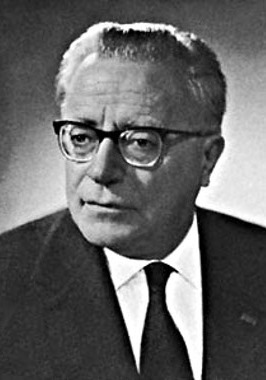
Palmiro Togliatti is a name that looms large in the history of 20th-century Italian and European politics. Born on March 26, 1893, in Genoa, Italy, Togliatti was a key figure in the Italian Communist movement and played a significant role in shaping the political landscape of Italy during and after World War II. His life was marked by ideological commitment, political strategy, and a vision for a new social order. This article delves into the life of Palmiro Togliatti, exploring his age, rise to fame, and the significant highlights that defined his impact on Italian politics.
Early Life and Education
Palmiro Michele Nicola Togliatti was born into a modest family in Genoa. His father, Antonio, was a schoolteacher, and his mother, Teresa Vitale, was a homemaker. The family relocated to Turin when Palmiro was young, which would later prove to be a pivotal move for his education and political awakening. Turin, a hub of industrial and intellectual activity, provided Togliatti with an environment rich in political discourse.
Togliatti excelled academically and in 1911 enrolled in the Faculty of Law at the University of Turin. It was here that he met Antonio Gramsci, who would become a lifelong friend and ideological companion. Gramsci was a student of literature, but the two shared a profound interest in Marxism and the plight of the working class. Their partnership would later become one of the most influential collaborations in the history of European communism.
The First World War and Political Awakening
The outbreak of World War I in 1914 had a profound impact on Togliatti. Unlike many of his contemporaries in the Italian Socialist Party (PSI), Togliatti supported Italy’s intervention in the war. He believed that the conflict could be a catalyst for revolutionary change in Europe, a view that put him at odds with the majority of the PSI, which was largely anti-war.
After the war, the Russian Revolution of 1917 ignited hopes among leftist intellectuals and workers across Europe. The Bolshevik success in Russia fueled a desire to replicate similar revolutions elsewhere, including Italy. Togliatti, inspired by the revolutionary fervor, became more deeply involved in socialist politics. He contributed to “L’Ordine Nuovo,” a newspaper founded by Antonio Gramsci in 1919, which advocated for workers’ councils and was aligned with Leninist principles.
The Birth of the Italian Communist Party
The early 1920s were a period of political turmoil in Italy. The country was grappling with economic hardship, social unrest, and the rise of Benito Mussolini’s Fascist movement. It was against this backdrop that the Italian Communist Party (Partito Comunista Italiano, PCI) was born. In 1921, during the 17th Congress of the Italian Socialist Party in Livorno, a schism occurred. Togliatti, alongside Gramsci, Amadeo Bordiga, and others, left the PSI to form the PCI, a party that aligned itself with the principles of the Third International and the Russian Bolsheviks.
Togliatti quickly rose through the ranks of the PCI, demonstrating his organizational acumen and ideological commitment. However, the rise of Fascism in Italy soon forced the PCI into clandestinity. Mussolini’s regime outlawed all opposition parties, and many Communist leaders were arrested or forced into exile. Togliatti, in 1926, moved to the Soviet Union, where he would spend much of the next two decades.
Exile in the Soviet Union and Leadership of the PCI
In the Soviet Union, Togliatti became deeply involved in the international Communist movement. He held various positions within the Comintern (Communist International), an organization that sought to coordinate communist activities globally. During this period, Togliatti solidified his standing as a leading figure in European communism, working closely with Soviet leaders and navigating the complex dynamics of international socialist politics.
In 1926, following the arrest of Antonio Gramsci by the Fascist regime, Togliatti was appointed as the secretary of the PCI, a position he would hold until his death. His time in the Soviet Union was also marked by his involvement in the infamous Stalinist purges of the late 1930s, a chapter of his life that has been the subject of much historical scrutiny and debate.
Return to Italy and the “Salerno Turn”
World War II dramatically altered the political landscape in Europe. As the tide of the war turned against the Axis powers, Togliatti saw an opportunity to reassert the PCI’s influence in Italy. In 1944, he returned to Italy aboard the British ship Tuscania, which docked in Naples. Togliatti’s return marked a turning point in Italian politics, famously known as the “Svolta di Salerno” (Salerno Turn).
Faced with a divided anti-fascist coalition, Togliatti proposed a pragmatic shift in the PCI’s strategy. He urged the Italian Communist Party to set aside its anti-monarchist stance temporarily and join forces with other anti-fascist parties to form a united front against Mussolini’s remnants and the occupying German forces. This strategy was aimed at preserving national unity and focusing on the immediate goal of defeating Fascism. The Salerno Turn was a critical moment that allowed the PCI to re-enter the mainstream of Italian politics and position itself as a mass party rather than a revolutionary vanguard.
Post-War Politics and the PCI’s Role in Italy
The end of World War II ushered in a new era in Italian politics. The country, devastated by war and Fascism, was at a crossroads, and Togliatti’s PCI was at the forefront of shaping its future. In 1946, Italy became a republic following a referendum that abolished the monarchy. Togliatti played a significant role in the post-war government, serving as Minister of Justice in Alcide De Gasperi’s coalition government.
As Minister of Justice, Togliatti introduced an amnesty for former Fascists, a move that was highly controversial and led to widespread criticism from within his own party as well as from other leftist factions. However, Togliatti believed that reconciliation was necessary to rebuild the nation and avoid further civil strife. His pragmatic approach was consistent with his earlier decision during the Salerno Turn and reflected his broader strategy of ensuring the PCI’s survival and relevance in the new Italian political landscape.
In 1947, Togliatti was instrumental in the passage of Article 7 of the Italian Constitution, which recognized the Lateran Treaty of 1929, thereby maintaining the concordat between the Vatican and the Italian state. This decision, while pragmatic, was divisive, as many within the left criticized Togliatti for not defending the principle of a secular state. Nevertheless, this move illustrated Togliatti’s ability to navigate complex political waters and secure the PCI’s influence in a predominantly Catholic country.
The Cold War Era and Challenges to Togliatti’s Leadership
The onset of the Cold War brought new challenges to Togliatti and the PCI. As the world divided into East and West, with Italy firmly anchored in the Western bloc under U.S. influence, the PCI found itself increasingly isolated. In the 1948 elections, the PCI, allied with the Italian Socialist Party (PSI) in the Popular Democratic Front, suffered a decisive defeat. The Christian Democrats, supported by the United States, won a sweeping victory, securing 48.5% of the vote and effectively sidelining the PCI from mainstream Italian politics.
Later that year, on July 14, 1948, Togliatti survived an assassination attempt by Antonio Pallante, a young far-right extremist. The shooting nearly killed Togliatti and led to a massive wave of protests and strikes across Italy. The Communist Party’s leadership, however, under Togliatti’s guidance, worked to prevent the situation from escalating into a full-scale revolution. Togliatti’s measured response to the crisis reinforced his reputation as a strategic thinker who prioritized stability over revolutionary zeal.
The Crisis of 1956 and Togliatti’s Response
One of the most challenging periods of Togliatti’s career came in 1956, during the 20th Congress of the Communist Party of the Soviet Union. Nikita Khrushchev’s denunciation of Stalin’s cult of personality and the revelation of Stalin’s crimes shocked the global communist movement. Togliatti, who had witnessed the purges and had been a staunch supporter of the Soviet Union, found himself in a difficult position.
In response, Togliatti articulated the concept of “polycentrism,” arguing that the international communist movement should not be monolithically controlled by Moscow but should allow for independent paths to socialism in different countries. This idea marked a significant departure from the rigid adherence to Soviet directives that had characterized the PCI’s earlier stance.
The Hungarian Uprising later that year further strained Togliatti’s position. When Soviet tanks rolled into Budapest to crush the rebellion, the PCI, under Togliatti’s leadership, supported the intervention, arguing that it was necessary to defend the socialist cause. This stance caused a rift within the Italian left, as many socialists and even some communists condemned the Soviet action.
Legacy and Death
Palmiro Togliatti remained a central figure in Italian and European communism until his death. He passed away on August 21, 1964, in Yalta, then part of the Soviet Union. His death marked the end of an era for the PCI and the broader communist movement in Europe. Togliatti was given a state funeral in Rome, attended by over a million people, a testament to his enduring influence on Italian politics.
Togliatti’s legacy is complex and multifaceted. He was a pragmatic leader who sought to adapt Marxist principles to the realities of Italian society. His ability to maneuver within the constraints of Cold War politics while maintaining the PCI as a significant force in Italian politics is a testament to his strategic acumen. However, his involvement in the Stalinist purges and his support for Soviet interventions in Eastern Europe have also cast long shadows over his historical reputation.
Conclusion
Palmiro Togliatti’s life and career were deeply intertwined with the tumultuous history of 20th-century Europe. As a leader of the Italian Communist Party, he played a crucial role in shaping the post-war Italian state and navigating the challenges of the Cold War. His legacy, while controversial, is a significant chapter in the history of European socialism, reflecting both the potential and the pitfalls of revolutionary politics.
Togliatti’s story is one of ideological commitment, political pragmatism, and the challenges of leading a mass movement in a rapidly changing world. His contributions to Italian and European politics continue to be studied and debated, ensuring that his influence endures long after his passing.


