
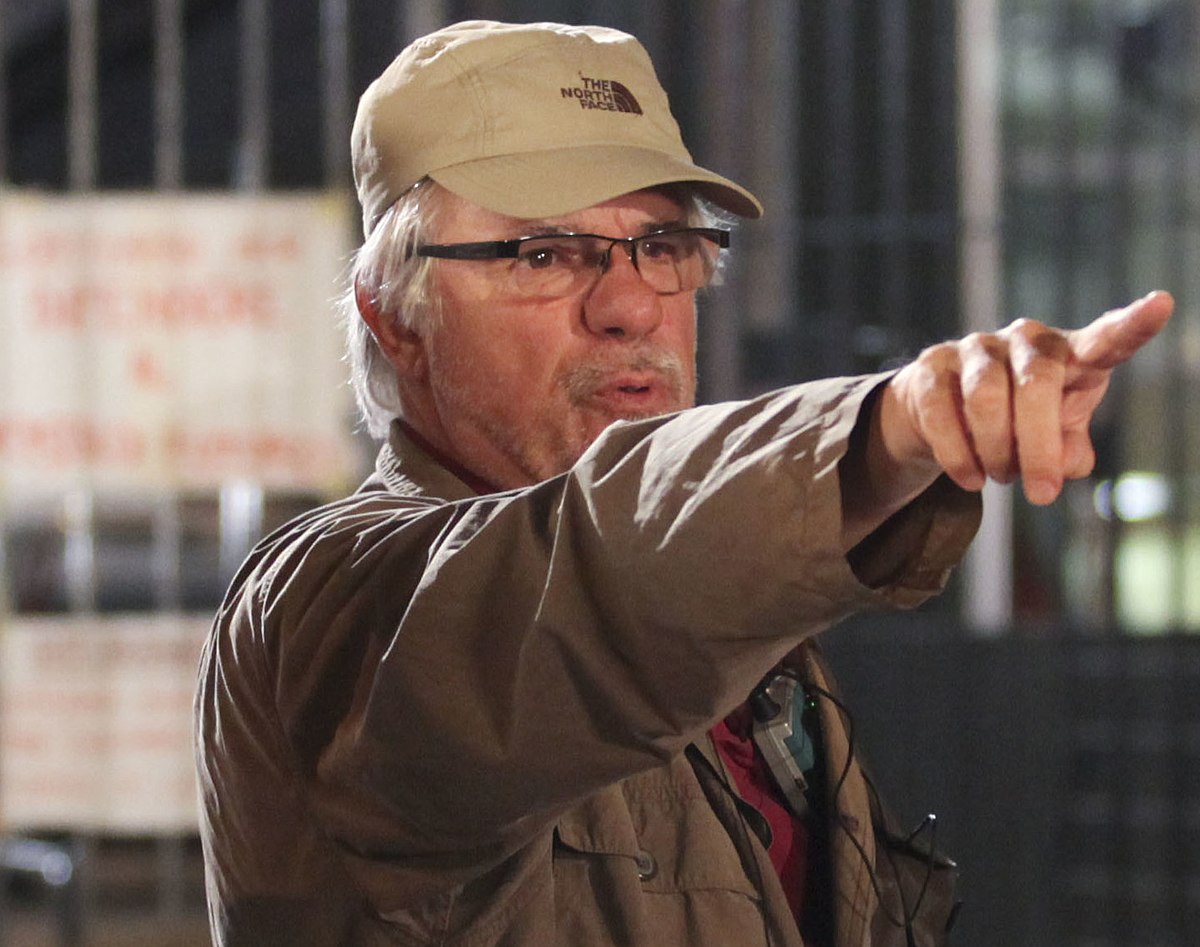
Ricky Tognazzi, born Riccardo Tognazzi on May 1, 1955, in Milan, Italy, is a prominent figure in the Italian film industry, known for his versatility as an actor, director, and screenwriter. As the son of the legendary Italian actor Ugo Tognazzi and the Irish actress Pat O’Hara, Ricky was exposed to the world of cinema from a young age. Over the decades, he has carved out a successful career in his own right, contributing to Italian cinema both in front of and behind the camera.
Early Life and Family Background
Ricky Tognazzi was born into a family steeped in the arts, particularly in cinema. His father, Ugo Tognazzi, was a leading figure in Italian cinema, known for his roles in both comedic and dramatic films. Growing up, Ricky was surrounded by the creative influences of his parents, which naturally led him to develop an interest in the film industry. His early experiences on film sets, where he often accompanied his father, laid the foundation for his future career.
Ricky’s upbringing was unique, characterized by the dual cultural influences of his Italian father and Irish mother. This blend of cultures likely contributed to his broad perspective on life and art, allowing him to bring a diverse range of influences into his work. As a child, Ricky appeared in several films alongside his father, including the 1963 anthology film “Ro.Go.Pa.G.” and the Italian comedy classic “I Mostri.” These early roles, though small, gave him a taste of the acting world and sparked his interest in pursuing a career in cinema.
Education and Early Career
Ricky Tognazzi’s formal education took him to England and later to the University of Bologna, where he studied at the DAMS (Discipline of Arts, Music, and Performing Arts) program. This academic background provided him with a solid foundation in the arts, equipping him with the knowledge and skills needed to navigate the complex world of cinema.
After completing his studies, Ricky returned to the film industry, initially working as an assistant director. He collaborated with some of Italy’s most respected filmmakers, including Pupi Avati, Luigi Comencini, and Maurizio Ponzi. These early experiences were invaluable, allowing him to learn the intricacies of filmmaking from the ground up.
In addition to his work behind the camera, Ricky continued to act, appearing in Bernardo Bertolucci’s “La Tragedia di un Uomo Ridicolo” and several other films throughout the 1980s. His performances were well-received, showcasing his range as an actor and his ability to bring depth and nuance to his roles.
Transition to Directing: The Birth of a Filmmaker
Ricky Tognazzi’s transition from actor to director was a natural progression in his career. In 1987, he made his directorial debut with “Fernanda,” an episode in the television film “Piazza Navona,” which was conceived by the legendary Italian filmmaker Ettore Scola. This debut marked the beginning of a prolific career as a director, with Ricky quickly establishing himself as a talented filmmaker with a unique voice.
His first feature film, “Piccoli Equivoci” (1989), was a comedy that explored the complexities of relationships and communication. The film was well-received, earning Ricky critical acclaim and solidifying his reputation as a director capable of handling both humor and drama with equal skill.
However, it was his 1991 film “Ultrà” that truly established Ricky as a significant force in Italian cinema. “Ultrà” is a gritty, unflinching look at the world of football hooliganism in Italy, and it earned Ricky the prestigious Silver Bear for Best Director at the Berlin International Film Festival. The film’s raw portrayal of violence and its exploration of social issues resonated with audiences and critics alike, marking Ricky as a filmmaker willing to tackle challenging and controversial subjects.
Following the success of “Ultrà,” Ricky directed “La Scorta” (1993), a tense political thriller about a group of bodyguards assigned to protect a Sicilian judge. The film was a critical success, further establishing Ricky’s reputation as a director of serious, socially-conscious cinema. “La Scorta” was also presented in competition at the Cannes Film Festival, highlighting Ricky’s growing international profile.
Continued Success and Personal Life
Throughout the 1990s, Ricky Tognazzi continued to build on his success as both an actor and director. In 1994, he starred in “Maniaci Sentimentali,” directed by Simona Izzo, whom he married the following year. Simona Izzo, a talented filmmaker and actress, became Ricky’s partner in both life and work, and their collaboration resulted in several successful films.
One of Ricky’s most notable films during this period was “Un Eroe Borghese” (1995), directed by Michele Placido. The film, based on the true story of Giorgio Ambrosoli, a lawyer who was murdered for his investigation into financial corruption, featured Ricky in a leading role. His performance was widely praised, showcasing his ability to convey complex emotions and the moral dilemmas faced by his character.
In 2000, Ricky directed and starred in “Canone Inverso – Making Love,” a film based on the novel by Paolo Maurensig. The film was a critical success, winning five David di Donatello awards and two Nastri d’Argento. “Canone Inverso” was notable for its intricate narrative structure and its exploration of themes such as love, betrayal, and the search for identity. Ricky’s work on the film demonstrated his growth as a filmmaker and his ability to craft compelling, emotionally resonant stories.
Diversification and Television Success
As the 2000s progressed, Ricky Tognazzi continued to diversify his career, taking on a variety of projects in both film and television. He directed the 2001 miniseries “Il Papa Buono,” which was based on the life of Pope John XXIII. The series was a success, showcasing Ricky’s ability to handle historical material with sensitivity and depth.
In 2012, Ricky took on one of his most challenging roles, portraying the Italian television presenter Enzo Tortora in the biographical drama “Il Caso Enzo Tortora – Dove Eravamo Rimasti?” The film recounted the true story of Tortora, who was wrongfully accused of drug trafficking and spent years fighting to clear his name. Ricky’s portrayal of Tortora was widely acclaimed, earning him praise for his nuanced and empathetic performance.
Throughout his career, Ricky has also been active in the world of television, both as an actor and a director. He has appeared in numerous Italian television series and has directed several successful TV movies and miniseries. His work in television has allowed him to reach a wider audience and to explore a variety of genres and themes.
Personal Life and Legacy
Ricky Tognazzi’s personal life has been closely intertwined with his professional career. His marriage to Simona Izzo has been a significant partnership, both personally and professionally. Together, they have collaborated on numerous film and television projects, blending their talents to create compelling stories that resonate with audiences.
Ricky’s legacy in Italian cinema is significant. He has successfully navigated the transition from actor to director, earning acclaim in both roles. His films are known for their social relevance, their emotional depth, and their ability to engage with complex moral and ethical questions.
As a filmmaker, Ricky Tognazzi has consistently sought to challenge his audiences, to provoke thought and discussion, and to shed light on the darker aspects of human nature. His work is characterized by a commitment to realism, a deep empathy for his characters, and a willingness to explore difficult and often uncomfortable subjects.
Conclusion: The Enduring Influence of Ricky Tognazzi
Ricky Tognazzi’s contributions to Italian cinema are profound and enduring. His ability to transition seamlessly between acting and directing has made him a versatile and influential figure in the industry. Whether portraying a complex character on screen or crafting a narrative behind the camera, Ricky’s work is marked by its depth, intelligence, and emotional resonance.
His films have tackled a wide range of themes, from the personal to the political, often exploring the intersections of individual morality and societal pressures. As a director, Ricky has demonstrated a keen eye for detail and a deep understanding of human nature, qualities that have made his films both thought-provoking and emotionally powerful.
Ricky Tognazzi continues to be a significant presence in Italian cinema, and his work remains influential both in Italy and internationally. His career serves as an inspiration to aspiring filmmakers and actors, demonstrating the importance of passion, dedication, and a commitment to storytelling.
In a career that spans several decades, Ricky Tognazzi has built a legacy that will endure for years to come. His films are a testament to his talent, his vision, and his unwavering commitment to his craft. As he continues to create and inspire, Ricky Tognazzi’s influence on Italian cinema will undoubtedly be felt for generations.


