
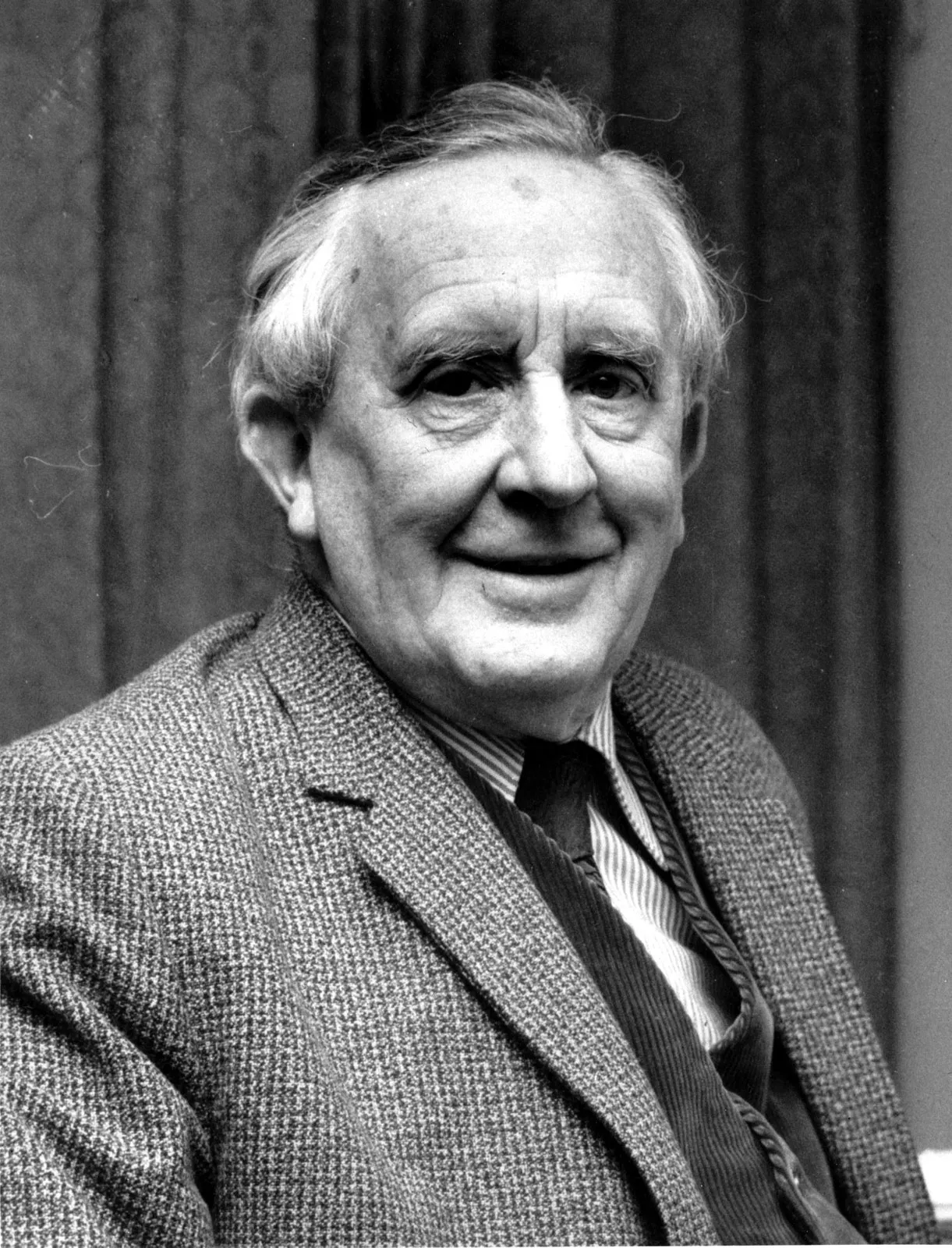
Introduction: The Creator of Middle-earth
John Ronald Reuel Tolkien, known to millions simply as J.R.R. Tolkien, was a British author, philologist, and professor whose works have left an indelible mark on modern literature. Born in 1892 in Bloemfontein, South Africa, Tolkien’s life was one of immense academic and creative achievements, culminating in his creation of the rich, immersive world of Middle-earth, which remains a cornerstone of fantasy literature today.
Early Life and Education
J.R.R. Tolkien’s early years were marked by a series of significant life changes. Born to English parents in South Africa, Tolkien was only three years old when his father passed away, prompting his mother to return to England with Tolkien and his younger brother. They settled in Sarehole, a village near Birmingham, where Tolkien developed a deep love for the English countryside—an influence that would later permeate his writings.
The death of his mother in 1904 was another profound event that shaped Tolkien’s life. The young Tolkien and his brother were placed under the guardianship of Father Francis Xavier Morgan, a Catholic priest of the Birmingham Oratory. Under Father Morgan’s care, Tolkien was introduced to the Catholic faith, which would become a central pillar of his life and work.
Tolkien’s academic journey began at King Edward’s School in Birmingham, where he demonstrated an early aptitude for languages. He went on to study at Exeter College, Oxford, where he specialized in Anglo-Saxon and Germanic languages, earning a Bachelor of Arts degree in 1915.
The Impact of War
The outbreak of the First World War in 1914 had a significant impact on Tolkien, as it did on many of his contemporaries. Tolkien served as a second lieutenant in the Lancashire Fusiliers and experienced the horrors of trench warfare on the Western Front. The war not only influenced his later writings but also took a personal toll; many of his closest friends were killed in action, and Tolkien himself suffered from trench fever, which led to his eventual return to England.
Despite the challenges posed by the war, Tolkien continued his academic pursuits, returning to Oxford after the war to complete his Master of Arts degree in 1919. His experiences during the war would later find echoes in his writings, particularly in “The Lord of the Rings,” where the themes of loss, courage, and the corrupting influence of power are explored with great depth.
Academic Career and Literary Beginnings
Tolkien’s academic career began at the University of Leeds, where he worked as a lecturer in English language. In 1925, he returned to Oxford as a professor of Anglo-Saxon at Pembroke College, a position he would hold until 1945. It was during his time at Oxford that Tolkien began to develop the stories and languages that would later become the foundation of Middle-earth.
His first published work of fiction, “The Hobbit,” was released in 1937. The book, which began as a story for his children, quickly gained popularity and introduced readers to a world inhabited by hobbits, dwarves, elves, and other fantastical creatures. The success of “The Hobbit” laid the groundwork for Tolkien’s magnum opus, “The Lord of the Rings.”
The Creation of Middle-earth
Tolkien’s most famous work, “The Lord of the Rings,” was published in three volumes between 1954 and 1955. This epic fantasy novel is set in the meticulously crafted world of Middle-earth, a realm filled with its own languages, cultures, and histories. The story follows the quest to destroy the One Ring, a powerful artifact created by the Dark Lord Sauron to control all of Middle-earth.
The trilogy—comprising “The Fellowship of the Ring,” “The Two Towers,” and “The Return of the King”—is widely regarded as one of the greatest literary achievements of the 20th century. It has been translated into numerous languages and has sold over 150 million copies worldwide. Tolkien’s work has influenced countless writers, filmmakers, and artists, cementing his place as the father of modern fantasy literature.
The success of “The Lord of the Rings” brought Tolkien international fame, but it also presented challenges. The author was often overwhelmed by the attention and the expectations of his readers. Despite this, he continued to expand the mythology of Middle-earth, working on additional stories and histories that were published posthumously by his son, Christopher Tolkien, in works such as “The Silmarillion.”
Influence and Legacy
Tolkien’s impact on literature and popular culture cannot be overstated. His creation of Middle-earth introduced readers to a fully realized fantasy world, complete with its own languages, myths, and legends. This approach to world-building has become a standard in the genre, influencing generations of writers and creators.
In addition to his literary achievements, Tolkien was a respected academic. His scholarship on Old English and Norse literature was highly regarded, and his work on the Oxford English Dictionary remains a testament to his linguistic expertise. He was a founding member of the informal literary discussion group known as The Inklings, which included other notable writers such as C.S. Lewis, author of “The Chronicles of Narnia.”
Tolkien’s influence extended beyond the written word. In the 21st century, his works were adapted into a highly successful film series directed by Peter Jackson. The “Lord of the Rings” film trilogy, released between 2001 and 2003, garnered critical acclaim and won numerous awards, including 17 Academy Awards. The films introduced Tolkien’s world to a new generation of fans and further solidified his status as a cultural icon.
Historical Context and Cultural Significance
Understanding the historical context in which Tolkien wrote is essential to appreciating his work. Tolkien’s writings were deeply influenced by his experiences in the early 20th century, a period marked by significant social and political upheaval. The devastation of the First World War, the rise of totalitarian regimes, and the advent of industrialization all left their mark on Tolkien’s worldview.
Tolkien was a staunch critic of the modern world, particularly the environmental degradation and loss of traditional values that accompanied industrialization. These concerns are reflected in his depiction of the Shire, the idyllic homeland of the hobbits, as well as the encroaching evil of Sauron, who seeks to dominate and destroy the natural world.
Tolkien’s work also reflects his deep Catholic faith. While he denied that his stories were allegories, many readers have noted the Christian themes present in “The Lord of the Rings,” such as the triumph of good over evil, the importance of free will, and the redemptive power of sacrifice. Tolkien’s faith was a guiding force in his life, and it informed his understanding of morality, heroism, and the human condition.
Conclusion: The Enduring Legacy of J.R.R. Tolkien
J.R.R. Tolkien passed away on September 2, 1973, at the age of 81. Yet, his legacy lives on, not only through his writings but also through the countless adaptations, analyses, and creative works inspired by his vision of Middle-earth. Tolkien’s ability to create a world that feels both timeless and profoundly real is a testament to his genius.
Today, Tolkien is celebrated as one of the most influential writers of the 20th century. His work continues to resonate with readers of all ages, offering a rich tapestry of stories that explore universal themes of friendship, bravery, and the struggle between good and evil. As the creator of Middle-earth, Tolkien has given the world a gift that will be cherished for generations to come.
Whether you are a lifelong fan or a newcomer to his works, exploring Tolkien’s writings offers a journey into a world of unparalleled depth and imagination. His stories are more than just tales of adventure; they are explorations of the human spirit, reflections on the complexities of life, and celebrations of the power of storytelling. Through his works, Tolkien invites us all to journey with him into the timeless realms of Middle-earth, where the battle between light and darkness continues to unfold.


