
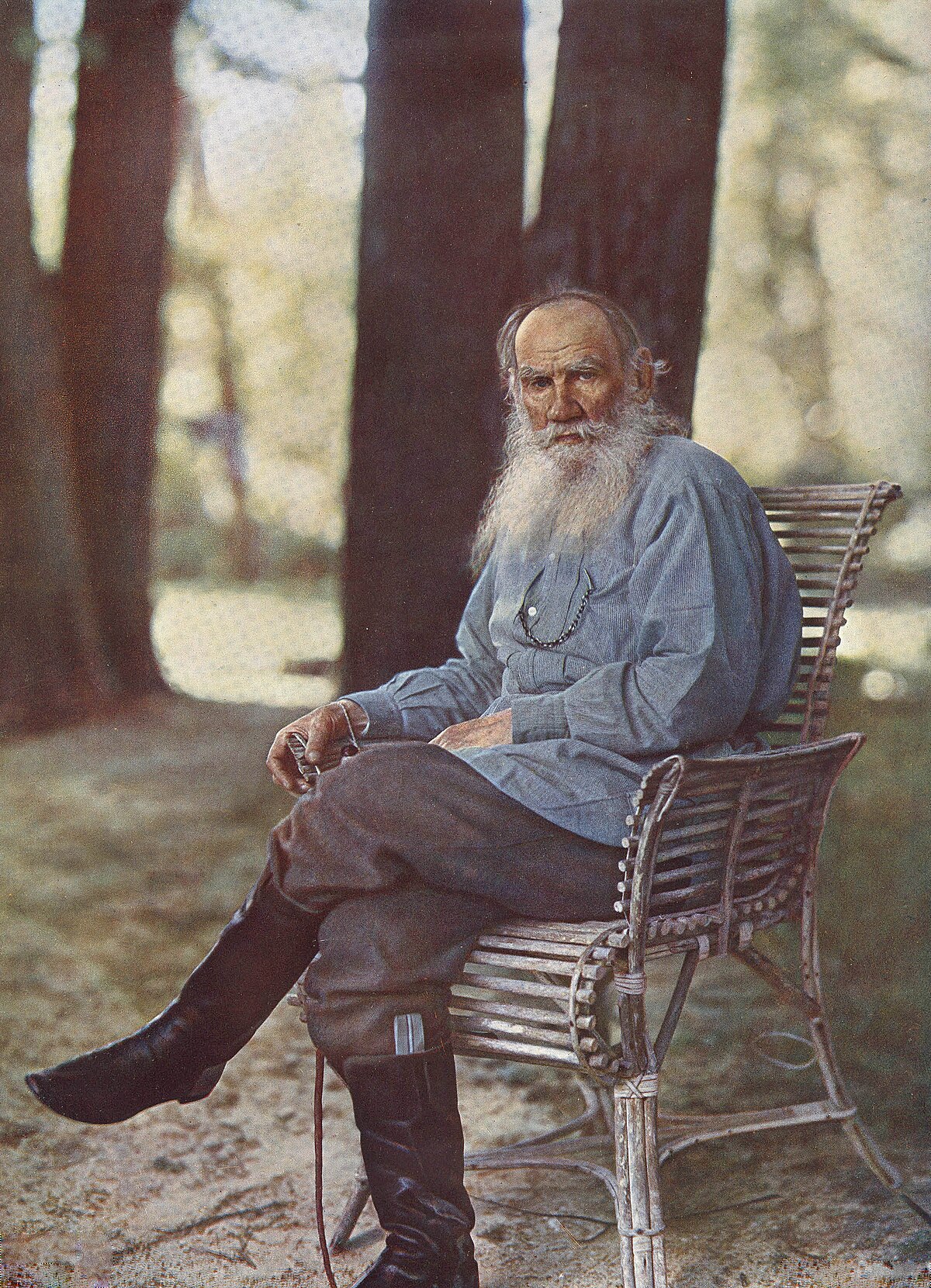
Lev Tolstoj, also known as Leo Tolstoy, is one of the most prominent and celebrated authors in world literature. Born on September 9, 1828, in the aristocratic family estate of Yasnaya Polyana in Russia, Tolstoj’s life was marked by the tensions between his privileged upbringing and his later philosophical and religious ideals, which diverged sharply from the societal norms of his time.
Early Life and Family Background
Lev Nikolaevič Tolstoj was born into an aristocratic family with deep roots in the old Russian nobility. His early life, however, was shadowed by loss. He lost his mother at the tender age of two, and by the time he was nine, he was also orphaned of his father. Tolstoj and his siblings were raised by their aunt, who ensured they received a quality education. Tolstoj attended the University of Kazan, where he initially studied Oriental languages before switching to law. However, despite his academic endeavors, Tolstoj did not complete his degree, dropping out in pursuit of a more meaningful life.
Military Service and Early Literary Success
In 1851, Tolstoj enlisted in the Russian army, an experience that profoundly influenced his writing. His time in the military, especially during the Crimean War, exposed him to the brutal realities of life and death, themes that would later permeate his literary works. During this period, he began writing “Sevastopol Sketches,” a series of short stories that brought him considerable recognition in Moscow and St. Petersburg literary circles.
Tolstoj’s military career, however, was short-lived. He left the army in 1856 and embarked on a journey of self-discovery, traveling across Europe and exploring different lifestyles and philosophies. This period was marked by an internal struggle between his aristocratic privileges and a deepening sense of dissatisfaction with the superficiality of the life that surrounded him.
The Turning Point: Marriage and Masterpieces
At the age of 32, Tolstoj married Sofya Andreyevna Behrs, a union that provided him with the stability and contentment he had long sought. The couple had 13 children, though not all survived into adulthood. During this period, Tolstoj wrote his most renowned works: “War and Peace” (1869) and “Anna Karenina” (1877). These novels are monumental in scope and depth, exploring the intricacies of Russian society, the nature of war, love, and the human condition.
“War and Peace” is often hailed as one of the greatest novels ever written, a complex tapestry that intertwines the lives of its characters with historical events, particularly the Napoleonic Wars. “Anna Karenina,” on the other hand, is a profound exploration of love, betrayal, and the constraints of society, encapsulating Tolstoj’s growing disillusionment with the Russian aristocracy.
Philosophical and Religious Conversion
Despite his literary success, Tolstoj was increasingly tormented by existential questions. The death of his brother in 1860 further intensified his inner turmoil. He grappled with the meaning of life and the inevitability of death, leading to a profound spiritual crisis. In search of answers, Tolstoj turned to religion, but his interpretation was unconventional and eventually led him to reject the Russian Orthodox Church.
Tolstoj’s later years were marked by a radical shift in his worldview. He embraced a form of Christian anarchism, advocating for non-violence, pacifism, and a return to a simpler, more ascetic way of life. His writings from this period, such as “The Kingdom of God is Within You” (1894), reflect his deep-seated belief in the moral and spiritual regeneration of society. These views garnered him both admirers and critics, leading to his excommunication from the Russian Orthodox Church in 1901.
The Legacy of Lev Tolstoj
Tolstoj’s influence extended far beyond literature. His philosophical and religious ideas inspired figures such as Mahatma Gandhi and Martin Luther King Jr., who were influenced by his advocacy of non-violent resistance. Tolstoj’s thoughts on education, ethics, and spirituality continue to resonate, making him a pivotal figure in discussions of morality and human values.
Tolstoj spent his final years at Yasnaya Polyana, where he continued to write prolifically, although his works took on a more didactic tone, aimed at propagating his religious and philosophical beliefs. Despite his fame, Tolstoj grew increasingly alienated from his family and the aristocratic society he had once been part of. In 1910, at the age of 82, Tolstoj left his home in a final bid to seek solace in a simpler existence. He died shortly after, on November 20, 1910, at a remote railway station in Astapovo.
The Enduring Fame of Lev Tolstoj
Lev Tolstoj’s legacy as a literary giant is unquestionable. His works, particularly “War and Peace” and “Anna Karenina,” remain central to the canon of world literature. They are studied not only for their narrative brilliance but also for their deep philosophical insights into the human condition.
Tolstoj’s life was a continuous quest for meaning, a journey that took him from the luxuries of aristocratic life to the pursuit of spiritual truth. His impact on literature, philosophy, and social thought is immeasurable, making him not only one of Russia’s greatest writers but also a profound thinker whose ideas continue to influence contemporary discussions on ethics, morality, and the purpose of life.
Age, Fame, and Life Highlights
Tolstoj’s life, from his aristocratic beginnings to his profound spiritual transformation, reflects the complexities and contradictions that make his works so compelling. His fame, rooted in his literary genius, was further amplified by his radical ideas on society and religion. Tolstoj’s age at the time of his death, 82, symbolizes a life spent in relentless pursuit of truth, both in his art and his philosophy.
As a writer, Tolstoj mastered the art of portraying the human experience in all its facets, from the mundane to the profound. His works continue to be celebrated for their narrative depth, moral questioning, and their capacity to capture the essence of what it means to be human. Whether through the epic battles of “War and Peace” or the intimate struggles of “Anna Karenina,” Tolstoj’s exploration of the human soul has left an indelible mark on world literature.
In conclusion, Lev Tolstoj’s life was a journey of self-discovery, artistic creation, and spiritual awakening. His contributions to literature and thought remain unparalleled, ensuring his place as one of the most significant figures in cultural history. His life and work continue to inspire, challenge, and provoke, making Tolstoj not just a historical figure, but a timeless one.


