
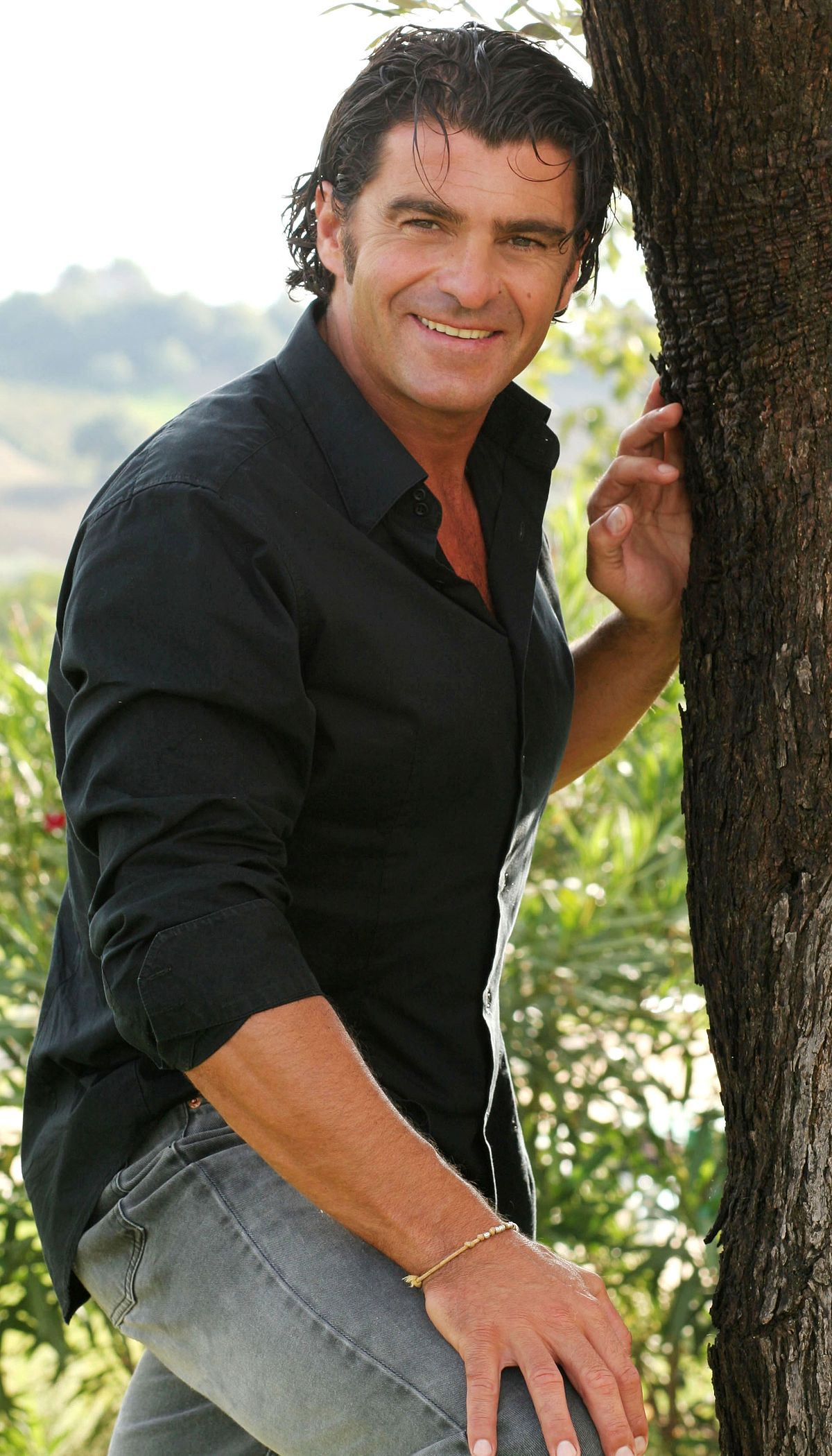
Alberto Tomba, born on December 19, 1966, in San Lazzaro di Savena, Bologna, Italy, is widely regarded as one of the greatest alpine skiers of all time. Known for his flamboyant personality, unmatched skill on the slopes, and a career filled with incredible achievements, Tomba became a global sports icon in the late 20th century. His life and career are a testament to the blend of natural talent, relentless determination, and a flair for showmanship that captivated audiences worldwide.
Early Life and Introduction to Skiing
Alberto Tomba was born far from the snowy peaks that would later define his career, growing up in a region of Italy better known for its rolling hills than its ski resorts. Despite this, Tomba’s connection to skiing was evident from a young age. His father, Franco Tomba, was an avid skier and introduced Alberto to the sport. It wasn’t long before the young Tomba displayed an exceptional natural ability on the slopes, a talent that would eventually lead him to the pinnacle of alpine skiing.
As a child, Tomba was not only athletic but also competitive. He pursued various sports, but skiing quickly became his passion. His early training involved regular trips to the mountains, where he honed his skills under the guidance of his father and local coaches. By the time he was a teenager, it was clear that Tomba had the potential to become a world-class skier.
Rise to Fame: The Early Years of Competition
Tomba’s rise in the competitive skiing world was meteoric. He made his debut in the European Cup at the age of 17 in 1983, competing in Sweden with the Italian C2 team. His performance quickly caught the attention of the skiing community. In the following year, he participated in the Junior World Championships in the United States, where his fourth-place finish in the slalom event earned him a promotion to the Italian B team.
These early years were crucial for Tomba, as he worked tirelessly to prove himself against more experienced and established skiers. His breakthrough came in 1984 at the “Parallelo di Natale” in Milan, a prestigious event where he defeated several members of Italy’s A team. This victory marked the beginning of Tomba’s ascent to the upper echelons of competitive skiing.
By 1985, Tomba had secured a place on the Italian A team and made his World Cup debut in Madonna di Campiglio. The following year, he competed in Kitzbühel, Austria, and later that year in Åre, Sweden, where he finished sixth in a race won by his future rival, Pirmin Zurbriggen. These performances set the stage for what would be a dominant career in alpine skiing.
Dominance in the Slalom and Giant Slalom
Tomba’s career is best remembered for his dominance in the slalom and giant slalom disciplines. His aggressive style of skiing, characterized by powerful, precise turns and an all-out approach to every race, made him a formidable competitor. His first major victory came in 1986 at Alta Badia, where he finished on the podium in a World Cup race for the first time. The following year, he won a bronze medal at the World Championships in Crans-Montana, Switzerland.
The 1987-1988 season was a turning point in Tomba’s career. He won nine World Cup races that season, including his first major victory in the slalom. His success was not just in terms of victories but also in the way he captivated the audience with his charisma and larger-than-life personality. His victory celebrations, often involving waving to the crowd before crossing the finish line, became a trademark of his races.
Tomba’s prowess on the slopes was further solidified at the 1988 Winter Olympics in Calgary, Canada, where he won two gold medals—one in the giant slalom and one in the slalom. His victories were so significant that the Italian national broadcaster, RAI, interrupted the Sanremo Music Festival to broadcast his final race. These Olympic victories catapulted Tomba to international fame, earning him the nickname “Tomba la Bomba” (Tomba the Bomb) for his explosive performances.
The Challenges and Triumphs of a Legendary Career
While Tomba’s career was marked by incredible success, it was not without its challenges. His all-or-nothing approach to racing often led to spectacular victories, but it also resulted in several missed opportunities. Despite his dominance in individual races, Tomba struggled to win the overall World Cup title, often losing valuable points due to missed gates or disqualifications.
The 1989 season was a particularly difficult one for Tomba. After a stellar previous year, he struggled with the fast downhill disciplines, which were not his strength, and eventually decided to focus exclusively on slalom and giant slalom. This decision paid off, as he returned to form in the 1991-1992 season, winning nine World Cup races and securing four second-place finishes and two third-place finishes. His consistency that season was rewarded with another gold medal in the giant slalom and a silver in the slalom at the 1992 Winter Olympics in Albertville, France.
Tomba’s rivalry with other top skiers, particularly Swiss skier Pirmin Zurbriggen and Luxembourg’s Marc Girardelli, was a defining feature of his career. These rivalries not only pushed Tomba to new heights but also added drama and excitement to the sport. Despite the intense competition, Tomba always maintained a charismatic and sometimes brash persona, endearing him to fans worldwide.
The Peak of Glory: World Cup and Olympic Success
The 1994 Winter Olympics in Lillehammer, Norway, saw Tomba adding another silver medal to his collection in the slalom. The same year, the International Olympic Committee (IOC) decided to separate the Winter and Summer Games, leading to a biennial alternation of the Olympics. This change allowed Tomba to continue competing at the highest level, and he responded by winning the overall World Cup title in 1995, becoming the first Italian male skier to achieve this since Gustav Thöni in the 1970s.
Tomba’s victory in the 1995 World Cup was a crowning achievement, underscoring his ability to remain at the top of his sport over an extended period. He won 11 races that season, although he struggled in Japan, a country that seemed to bring him bad luck throughout his career. Despite these challenges, Tomba’s victory was a testament to his determination and skill, solidifying his legacy as one of the greatest skiers of all time.
The 1996 World Championships in Sierra Nevada, Spain, were postponed due to a lack of snow, but when they finally took place, Tomba was in top form. He won two gold medals, further cementing his status as a legend of the sport. After these victories, and after a decade of intense competition, Tomba began contemplating retirement. However, he couldn’t resist the opportunity to compete in the 1997 World Championships in Sestriere, Italy, where he finished third in the slalom despite battling illness and fatigue.
The Final Years and Retirement
By the time the 1998 Winter Olympics in Nagano, Japan, arrived, Tomba’s career was winding down. A serious crash during the giant slalom left him injured, affecting his performance in the slalom. Despite his best efforts, he could not secure another Olympic medal, and it became clear that his time at the top was coming to an end.
Tomba announced his retirement from competitive skiing shortly after the Nagano Olympics. His decision marked the end of an era in alpine skiing, as he had been one of the sport’s most dominant and charismatic figures for over a decade. In his ten-year World Cup career, Tomba won 50 World Cup races, making him one of the most successful skiers in history.
Post-Retirement Life and Legacy
Following his retirement, Tomba remained in the public eye, trying his hand at acting and various media appearances. In 2000, he starred in the film “Alex l’ariete,” a box office flop that did little to enhance his post-skiing career. However, Tomba’s fame and popularity endured, and he continued to be a significant figure in the world of sports.
Tomba also took on various roles as a television personality and sports commentator. In 2006, he served as a spokesperson and ambassador for the Winter Olympics held in Turin, Italy, a role that allowed him to stay connected to the sport he loved. He also became a founding member of the Laureus Sport for Good Foundation, an organization dedicated to using sport as a means to combat social issues.
In 2014, Tomba was named “Athlete of the Century” by the Italian National Olympic Committee (CONI), an honor he shared with high jumper Sara Simeoni. That same year, he served as a commentator for Sky Sport during the Winter Olympics in Sochi, Russia, bringing his expertise and charisma to a new generation of fans.
Conclusion: The Enduring Legacy of Alberto Tomba
Alberto Tomba’s impact on alpine skiing and sports, in general, is immeasurable. He brought a level of excitement and drama to skiing that captivated fans and inspired countless young athletes. His aggressive style, combined with his larger-than-life personality, made him one of the most recognizable and celebrated athletes of his time.
Tomba’s legacy extends beyond his medals and victories. He changed the way the world viewed alpine skiing, turning it into a spectator sport that attracted millions of viewers worldwide. His influence is still felt today, as new generations of skiers strive to emulate the passion, determination, and flair that Tomba brought to the slopes.
In many ways, Alberto Tomba was more than just a skier; he was a cultural icon whose impact transcended the world of sports. His story is one of talent, perseverance, and the relentless pursuit of excellence—a story that continues to inspire and resonate with people around the globe.


