
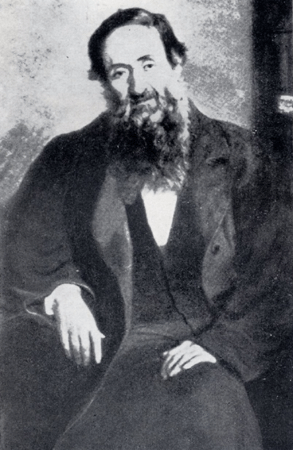
Nicolò Tommaseo, born on October 9, 1802, in Sebenico, Dalmatia (now Šibenik, Croatia), was an Italian linguist, writer, journalist, and patriot who played a significant role in the cultural and political life of Italy during the 19th century. His contributions to the Italian language and literature, as well as his involvement in the political upheavals of his time, have left a lasting legacy. This article delves into the life of Nicolò Tommaseo, exploring his early years, rise to prominence, and the enduring impact of his work.
Early Life and Education
Nicolò Tommaseo was born into a Venetian family in the coastal town of Sebenico. His early life was shaped by the rich cultural heritage of Dalmatia, a region that was a melting pot of Italian, Slavic, and other Mediterranean influences. From a young age, Tommaseo exhibited a keen interest in language and literature, a passion that would guide his future endeavors.
Tommaseo’s formal education began in Sebenico and continued at a seminary in Spalato (now Split, Croatia). However, his thirst for knowledge soon led him to Italy, where he enrolled at the University of Padua. In 1822, at the age of 20, he graduated with a degree in law. During his time in Padua, Tommaseo was deeply influenced by the intellectual and cultural environment of the city. He formed lasting friendships with prominent figures such as Antonio Rosmini, Alessandro Manzoni, and Gino Capponi, which would later play a crucial role in his intellectual development.
Early Career and Literary Contributions
After completing his studies, Tommaseo moved to Milan, where he immersed himself in the vibrant literary and cultural circles of the city. Milan at the time was a hub of intellectual activity, and Tommaseo quickly established himself as a rising star in the world of letters. He began contributing to various publications, including the “Nuovo Ricoglitore,” where he published essays on linguistic issues, such as his work “Il Perticari confutato da Dante” in 1825.
In 1827, Tommaseo relocated to Florence, a city that would become a second home to him. There, he began collaborating with the “Antologia,” a literary magazine founded by Giovan Pietro Vieusseux. His work on the “Antologia” brought him into contact with some of the leading literary figures of the time and solidified his reputation as a scholar and critic.
One of Tommaseo’s most significant contributions during this period was the publication of the “Nuovo Dizionario de’ Sinonimi della Lingua Italiana” in 1830. This work, a dictionary of Italian synonyms, was groundbreaking in its depth and precision and is still considered a seminal text in Italian linguistics. The dictionary not only demonstrated Tommaseo’s mastery of the Italian language but also highlighted his commitment to the preservation and development of Italian culture.
Exile in France and Internal Struggles
Despite his success in Florence, Tommaseo’s outspoken views and sharp critiques did not sit well with the Austrian authorities, who controlled much of northern Italy at the time. In 1834, after publishing an article critical of the Austrian regime, Tommaseo was forced to leave Florence and seek refuge in Paris, where many Italian exiles had gathered.
Paris in the 1830s was a city of contrasts for Tommaseo. On one hand, it offered him the opportunity to engage with the vibrant cultural and intellectual life of the French capital. He frequented literary salons, mingled with prominent French writers and thinkers, and continued to produce a significant body of work. During his time in Paris, he published several important works, including “Dell’Italia” (1835), “Confessioni” (1836), and a “Commento alla Divina Commedia” (1837). These works showcased his deep engagement with Italian literature and his efforts to bridge the cultural gap between Italy and the rest of Europe.
However, Tommaseo’s time in Paris was also marked by inner turmoil. Raised in a devout Catholic family, he struggled with the temptations of Parisian life. The dichotomy between his religious upbringing and the allure of the city’s libertine culture created a profound conflict within him. This internal struggle between his moral convictions and his desires became a recurring theme in his writings and significantly influenced his later works.
Return to Italy and Political Involvement
In 1839, following an amnesty granted by the Austrian authorities, Tommaseo returned to Italy and settled in Venice. The city, with its rich history and cultural heritage, provided a fertile ground for his intellectual pursuits. During this period, Tommaseo published several important works that he had written during his exile, including “Fede e Bellezza” (1840), “Scintille” (1841), and a collection of “Canti Popolari Toscani, Corsi, Illirici, Greci” (1841-1842). These works reflected his deep interest in the cultural traditions of Italy and the broader Mediterranean region.
Tommaseo’s return to Italy also marked the beginning of his active involvement in the political life of the country. The 1840s were a time of great political ferment in Italy, as nationalist movements sought to overthrow foreign rule and unify the various Italian states. Tommaseo, with his strong republican beliefs, became increasingly involved in these movements. In late 1847, he publicly demanded freedom of the press, an act that led to his arrest by the Austrian authorities.
His imprisonment was short-lived, however, as the revolutionary fervor of 1848 swept across Europe. In Venice, the citizens rose up against Austrian rule, and the city briefly became an independent republic known as the Republic of San Marco. Tommaseo was released from prison and took an active role in the new government, where he was entrusted with important responsibilities. However, the republic was short-lived, and by 1849, the Austrians had regained control of the city. Faced with the prospect of renewed persecution, Tommaseo fled to Corfu, where he continued his work despite deteriorating health.
Later Years and Legacy
Tommaseo’s final years were marked by both personal and professional challenges. The effects of a venereal disease contracted earlier in his life had taken a toll on his health, eventually leading to complete blindness. Despite this, Tommaseo remained intellectually active, dictating his works to scribes and continuing to contribute to Italian literature and political thought.
In 1854, Tommaseo returned to Italy, settling in Turin. However, he became increasingly disillusioned with the political direction of the country. As a staunch republican, he opposed the unification of Italy under the monarchy of the House of Savoy, which he saw as a betrayal of the republican ideals he had long championed. His disillusionment was so profound that he refused an offer to be made a senator, a position he saw as incompatible with his principles.
In 1859, Tommaseo moved to Florence, where he would spend the final years of his life. Despite his physical limitations, he continued to write and engage with the intellectual community until his death on May 1, 1874, at the age of 72.
Cultural and Historical Impact
Nicolò Tommaseo’s contributions to Italian culture and literature are vast and multifaceted. As a linguist, his works on the Italian language, particularly his “Dizionario de’ Sinonimi,” remain foundational texts. His efforts to collect and preserve folk traditions from various regions of Italy and the Mediterranean helped to document and celebrate the rich cultural diversity of these areas.
Tommaseo was also a prolific writer and critic, whose works addressed a wide range of topics, from literature and philosophy to politics and religion. His writings often reflected the complex and sometimes contradictory nature of his character—deeply religious yet drawn to the pleasures of the world, a passionate advocate for Italian unity but a critic of the means by which it was achieved.
In addition to his literary and linguistic achievements, Tommaseo’s political activism played a significant role in the broader movement for Italian independence and unification. Although he did not live to see the full realization of a unified Italy, his contributions to the intellectual and cultural foundations of the Risorgimento were considerable.
Conclusion
Nicolò Tommaseo was a towering figure in 19th-century Italian culture, whose influence extended across the fields of literature, linguistics, journalism, and politics. His life was marked by a constant search for truth and beauty, whether through his linguistic studies, his literary works, or his political activism. As we reflect on his life and legacy, it is clear that Tommaseo was not only a product of his time but also a key figure in shaping the cultural and intellectual landscape of Italy.


