
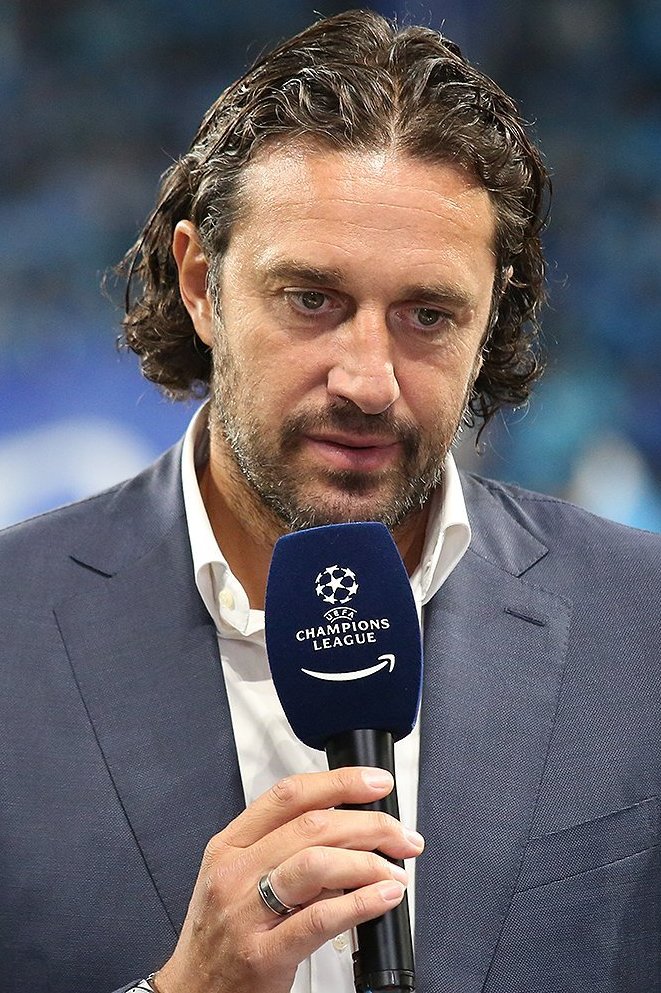
Luca Toni, born Luca Toni Varchetta Delle Cave on May 26, 1977, in Pavullo nel Frignano, a small town in the province of Modena, Italy, is a name that resonates with football fans around the world. His journey from a modest upbringing to becoming one of Italy’s most prolific strikers is a story of perseverance, talent, and unyielding determination. In this article, we will explore the life and career of Luca Toni, delving into his early years, rise to fame, and his lasting legacy in the world of football.
Early Life and Football Beginnings
Luca Toni was born into a working-class family. His father, Gianfranco, was a painter, while his mother, Valeria, worked as a school janitor. Growing up in the small town of Serramazzoni, Toni’s early life was marked by a deep love for football. He began playing for the local team, Serramazzoni, where his talent quickly became apparent. Even as a young boy, Toni’s height and physical presence on the field made him stand out, and it wasn’t long before he was scouted by Modena, a club in Serie C-1.
Toni’s early footballing journey was far from glamorous. He had to juggle school and football, often traveling long distances by bus to attend training sessions and matches. In a reflection on those days, Toni recalled how his daily routine involved taking a bus to school in the morning, returning home just long enough to grab a quick meal, and then heading off again to Modena for training, only to return home late at night. These early experiences instilled in him a strong work ethic and a sense of discipline that would serve him well throughout his career.
Professional Debut and Climb Through the Ranks
Luca Toni’s professional career began in 1994 when he made his debut for Modena in Serie C-1. Despite his young age, Toni quickly established himself as a promising striker, scoring two goals in seven appearances during his debut season. The following year, he scored five goals in 25 appearances, showing consistent improvement and drawing the attention of clubs in higher divisions.
Toni’s performances in Serie C-1 earned him a move to Empoli in Serie B, followed by stints at Fiorenzuola and Lodigiani. It was during his time at Lodigiani that Toni truly began to make a name for himself, scoring 15 goals in 31 matches. His goal-scoring prowess caught the eye of Serie B club Treviso, where he continued his impressive form by netting 15 goals in 35 matches during the 1999-2000 season.
Breakthrough in Serie A
Luca Toni’s consistent performances in Serie B led to his first opportunity in Serie A, Italy’s top football division. He was signed by Vicenza for the 2000-2001 season, and it was here that he made his Serie A debut against AC Milan. Although Vicenza struggled that season, Toni managed to score nine goals in 31 appearances, proving that he could compete at the highest level.
After a season with Vicenza, Toni moved to Brescia, where he would spend the next two years of his career. It was at Brescia that Toni had the opportunity to play alongside one of Italy’s greatest footballers, Roberto Baggio. Playing with Baggio was a transformative experience for Toni, who learned a great deal from the veteran playmaker. During his time at Brescia, Toni scored 15 goals in 44 matches, solidifying his reputation as a reliable goal-scorer.
Rise to Stardom with Palermo
In 2003, Luca Toni made a move to Palermo, a club that was then competing in Serie B. This transfer would prove to be a turning point in his career. Toni was instrumental in Palermo’s promotion to Serie A, finishing the 2003-2004 season as the top scorer in Serie B with an astonishing 30 goals in 45 matches. His goal-scoring exploits made him a fan favorite and established him as one of the most feared strikers in Italy.
Toni’s first season in Serie A with Palermo was equally impressive. He scored 20 goals in 35 matches, helping the club secure a place in the UEFA Cup for the first time in its history. Toni’s performances did not go unnoticed, and he quickly became one of the most sought-after strikers in Italian football.
International Career and World Cup Glory
Luca Toni’s success at the club level earned him a call-up to the Italian national team. He made his debut for Italy on August 18, 2004, in a match against Iceland. Although Italy lost the match 2-0, Toni’s international career was just beginning. He scored his first goal for Italy in a World Cup qualifying match against Norway on November 4, 2004, which Italy won 2-1.
Toni’s international breakthrough came during the 2006 FIFA World Cup in Germany. He played a crucial role in Italy’s victorious campaign, scoring two goals in the quarterfinals against Ukraine, which helped Italy secure a 3-0 victory and a place in the semifinals. Although he only scored two goals in the tournament, Toni’s physical presence and ability to hold up the ball were invaluable to the team’s success.
Italy went on to win the World Cup, defeating France in a dramatic final that was decided by a penalty shootout. Toni’s contributions throughout the tournament were widely recognized, and he returned to Italy as a national hero.
Fiorentina and Record-Breaking Performances
Following his successful stint with Palermo, Luca Toni was signed by Fiorentina in 2005. His time at Fiorentina would be the most prolific of his career. In the 2005-2006 Serie A season, Toni scored an incredible 31 goals in 38 matches, becoming the first player to reach this milestone since Antonio Valentin Angelillo in the 1958-1959 season. His goal-scoring feats earned him the European Golden Shoe, awarded to the top scorer across all European leagues.
Toni’s remarkable form continued into the 2006-2007 season, although injuries limited his appearances. Despite these setbacks, he managed to score 16 goals in 29 matches, further cementing his status as one of the best strikers in the world. His performances at Fiorentina made him a fan favorite, and his signature goal celebration—rotating his hand near his ear as if to say, “Did you get that?”—became iconic.
Move to Bayern Munich and Success Abroad
In 2007, Luca Toni made a high-profile move to Bayern Munich, one of the most successful clubs in Germany. His transfer marked the beginning of a new chapter in his career, and Toni quickly adapted to life in the Bundesliga. In his first season with Bayern, Toni scored 24 goals in 31 matches, finishing as the top scorer in the Bundesliga and helping Bayern win the league title.
Toni’s impact at Bayern Munich extended beyond the domestic league. He played a crucial role in Bayern’s victory in the DFB-Pokal (German Cup), scoring twice in the final against Borussia Dortmund. In total, Toni scored 39 goals in all competitions during his debut season, a remarkable achievement that further enhanced his reputation as one of Europe’s top strikers.
Toni spent two and a half successful seasons at Bayern Munich, during which he won several major honors, including another Bundesliga title and the DFB-Pokal. However, by the 2009-2010 season, injuries and a change in management led to reduced playing time, and Toni eventually decided to return to Italy.
Return to Italy and Late Career
In January 2010, Luca Toni returned to Italy, joining AS Roma on loan from Bayern Munich. Although his time at Roma was short, Toni made a significant impact, scoring five goals in 15 matches and helping the club finish second in Serie A.
After leaving Bayern Munich, Toni signed with Genoa in the summer of 2010, but his stay was brief. In January 2011, he joined Juventus, where he played until the end of the 2011-2012 season. Although Toni was no longer the prolific goal-scorer of his earlier years, his experience and leadership were valuable assets to the teams he played for.
Toni’s career took an unexpected turn in 2012 when he signed with Al Nasr, a club in Dubai managed by former Italian goalkeeper Walter Zenga. His time in Dubai was short-lived, and he returned to Italy to play for Fiorentina in the 2012-2013 season. Despite being in the twilight of his career, Toni continued to find the back of the net, proving that his goal-scoring instincts had not diminished.
In 2013, Luca Toni signed with Hellas Verona, where he would enjoy a remarkable late-career renaissance. Over the next three seasons, Toni scored 48 goals in 95 matches, including a season in which he won the Serie A Capocannoniere (top scorer) award with 22 goals at the age of 38. This achievement made him the oldest player to ever win the award, capping off a truly extraordinary career.
Legacy and Personal Life
Luca Toni’s career is a testament to his enduring talent and determination. Over the course of two decades, he established himself as one of Italy’s greatest strikers, scoring over 300 goals in professional football. His ability to score with both feet, his strength in the air, and his impeccable positioning made him a nightmare for defenders, while his professionalism and dedication earned him the respect of teammates and opponents alike.
Off the field, Toni’s life has been marked by stability and happiness. He has been in a long-term relationship with model Marta Cecchetto, with whom he has two children, Bianca and Leonardo. After two decades together, the couple married on September 9, 2017, in a ceremony that was attended by family, friends, and many of Toni’s former teammates.
Conclusion
Luca Toni’s journey from the small town of Pavullo nel Frignano to the heights of international football is an inspiring story of perseverance, talent, and passion. His impact on the game, particularly in Italian football, is undeniable, and his legacy as one of the great strikers of his generation is secure. As we look back on Luca Toni’s remarkable career, we are reminded of the power of determination and the importance of never giving up on one’s dreams.


