
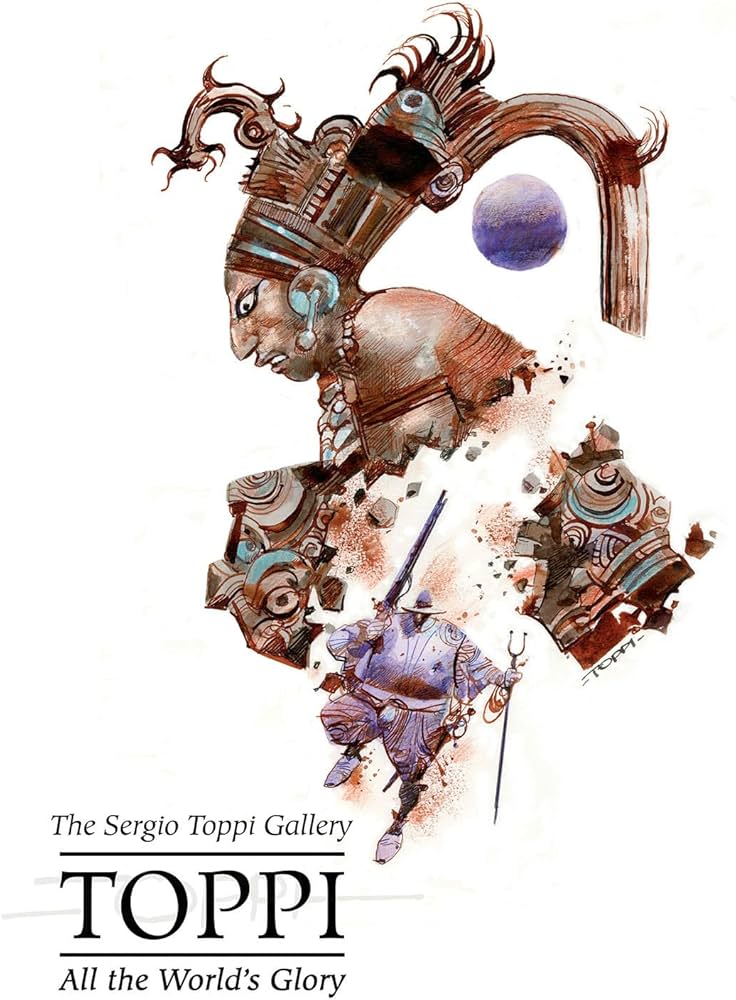
Sergio Toppi, born on October 11, 1932, in Milan, Italy, is a name that reverberates through the corridors of comic art and illustration. Often referred to as a genius in his field, Toppi’s work transcends the conventional boundaries of comic strips, merging visual storytelling with high art. His career, which spanned over five decades, was marked by an innovative approach that redefined the aesthetics of comic art, making him a legendary figure in both Italian and international circles. This article delves into the life, career, and lasting impact of Sergio Toppi, offering detailed insights into his journey and the nuances that shaped his legacy.
Early Life and Artistic Beginnings
Born in the culturally rich city of Milan, Toppi’s early years were steeped in the vibrant artistic atmosphere of post-war Italy. Despite being a young prodigy, his talent in the comic arts would take time to flourish fully. The 1940s and 1950s in Italy were a period of reconstruction, both physically and culturally, and Milan was at the heart of this rebirth. Toppi, like many young artists of his time, was influenced by the explosion of creativity that followed the war.
Toppi’s early forays into the world of art began in the realm of illustration. In the 1950s, he started working with UTET, a prestigious publishing house, where he honed his skills in visual storytelling. His work for UTET allowed him to explore various themes and styles, laying the groundwork for his later innovations in comic art. His collaboration with Pagot animation studios on several advertising campaigns further expanded his repertoire, blending commercial art with narrative depth.
The Breakthrough in Comics: Corriere dei Piccoli
Sergio Toppi’s official entry into the world of comics came in 1966 when he began contributing to Il Corriere dei Piccoli, the first-ever Italian magazine dedicated to children’s comics. This publication was a cornerstone of Italian popular culture, having introduced generations of young readers to the world of comics. Toppi’s work for Il Corriere dei Piccoli included the creation of iconic stories like those featuring the character Mago Zurlì, written by Carlo Triberti. These stories were characterized by their blend of fantasy and moral lessons, a hallmark of the magazine.
Toppi’s contribution to Il Corriere dei Piccoli was not just limited to whimsical tales for children. He also worked on numerous stories with historical and war themes, further demonstrating his versatility. These narratives allowed Toppi to experiment with different styles and formats, gradually developing a unique approach that would later become his signature.
Artistic Innovation and Style
As Toppi continued to work in the comic industry, his style began to evolve, becoming increasingly distinctive. By the 1970s, Toppi had developed a personal style that broke away from the conventional norms of comic art. One of the most significant aspects of his work was his innovative use of panel structure. Unlike the rigid, grid-like layouts that dominated the comics of his time, Toppi’s panels were fluid, often breaking free from traditional boundaries. This approach allowed for more dynamic storytelling, where the art itself played a critical role in conveying the narrative.
Toppi’s work was characterized by intricate line work, detailed textures, and a profound use of chiaroscuro, which added depth and dimension to his illustrations. His style was heavily influenced by his interest in history, mythology, and different cultures. Each of Toppi’s works is a visual journey, with every line and shadow contributing to the overall mood and message of the story.
A prime example of Toppi’s innovation is his creation of “Il Collezionista” (The Collector), a character introduced in 1984 as part of the series I Protagonisti. This character, unlike typical comic book heroes, was an eccentric figure driven by a passion for rare and unusual artifacts. The stories of Il Collezionista were marked by Toppi’s distinct style, where the narrative unfolded through a series of visually stunning, almost surreal illustrations. This series exemplified Toppi’s ability to blend narrative and art seamlessly, making the visuals as important as the storyline.
Contributions to Italian and International Comics
Throughout his career, Sergio Toppi contributed to numerous Italian and international comic publications, leaving an indelible mark on the industry. His work appeared in major Italian magazines such as Linus, Sgt. Kirk, Corto Maltese, and Il Giornalino. Each of these publications had its own audience and style, yet Toppi’s work consistently stood out for its artistic brilliance and narrative depth.
In addition to his work in Italy, Toppi also collaborated on international projects. Notably, he contributed to the Histoire de France en bandes dessinées and La Découverte du Monde, both published by Larousse. These projects allowed Toppi to reach a broader audience and showcase his talent on an international stage. Unfortunately, many of these works remain unpublished in Italy, depriving his native audience of some of his finest contributions.
One of the most significant collaborations of Toppi’s career was with the renowned Italian journalist and author Enzo Biagi. Together, they worked on the chapter “Americani” for the series Storia dei popoli a fumetti published by Mondadori. This collaboration brought together Toppi’s artistic prowess and Biagi’s narrative skill, resulting in a compelling visual history that was both educational and artistically enriching.
Recognition and Awards
Sergio Toppi’s contributions to the world of comics did not go unnoticed. Over the years, he received numerous awards and accolades, recognizing his impact on the industry. In 1975, Toppi was awarded the prestigious Yellow Kid Award, one of the highest honors in the world of comics, named after the first comic strip character in history. This award was a testament to Toppi’s influence and his role in elevating comic art to new heights.
In 1992, Toppi received the Caran d’Ache and A.N.A.F.I. awards, further solidifying his status as a master of the medium. These awards celebrated his unique style and his ability to push the boundaries of what comic art could achieve. In 2006, Toppi was honored with the Romics d’Oro, an award that recognized his lifelong contributions to the world of comics and his lasting influence on the industry.
Legacy and Influence
Sergio Toppi’s legacy extends far beyond his lifetime. His work continues to inspire new generations of comic artists and illustrators who seek to break free from conventional storytelling techniques. Toppi’s approach to comic art, where the visual narrative is as crucial as the written word, has influenced countless artists who view comics as a legitimate form of artistic expression.
Toppi’s influence can be seen in the work of contemporary comic artists who experiment with panel layouts, visual storytelling, and the integration of historical and cultural themes into their narratives. His ability to convey complex stories through visual art has set a standard for what comics can achieve as a medium.
In addition to his influence on artists, Toppi’s work has also been the subject of academic study. Scholars and critics have explored his contributions to the medium, analyzing how his unique style and narrative techniques have shaped the evolution of comics as an art form. Toppi’s work is often cited in discussions about the intersection of art and storytelling, highlighting his role in elevating comics to a respected artistic discipline.
Final Years and Posthumous Recognition
Sergio Toppi continued to create and contribute to the world of comics until his death on August 21, 2012, in Milan, at the age of 79. Even in his final years, Toppi remained dedicated to his craft, constantly pushing the boundaries of what could be achieved through comic art.
Since his passing, Toppi’s work has been celebrated through various retrospectives, exhibitions, and reprints. These posthumous recognitions have ensured that his contributions to the world of comics continue to be appreciated by new audiences. His work has been featured in major exhibitions across Europe, where his innovative approach to comic art has been highlighted as a defining moment in the history of the medium.
Conclusion
Sergio Toppi’s life and career were a testament to the power of artistic innovation and the impact that a single individual can have on an entire industry. From his early days as an illustrator in Milan to his groundbreaking work in comics, Toppi consistently pushed the boundaries of what could be achieved through visual storytelling. His unique style, characterized by intricate line work, dynamic panel layouts, and a deep engagement with history and culture, has left an indelible mark on the world of comics.
As we look back on Toppi’s life and contributions, it is clear that his legacy will continue to influence and inspire for years to come. His work stands as a reminder that comics are not just a form of entertainment but a legitimate and powerful medium for artistic expression. Sergio Toppi’s name will forever be associated with the highest echelons of comic art, and his influence will undoubtedly continue to shape the future of the medium.


