
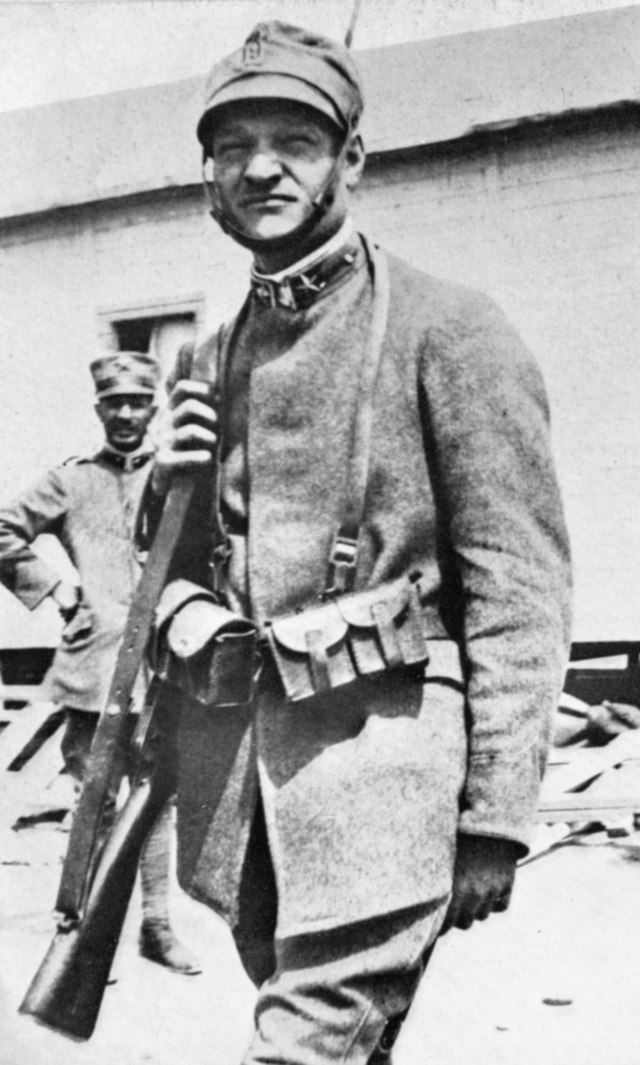
Giuseppe Ungaretti, born on February 8, 1888, in Alexandria, Egypt, stands as a towering figure in 20th-century Italian poetry. His life, marked by profound experiences and influences, shaped the trajectory of his literary career, leading him to become a central figure in the Hermetic movement. Ungaretti’s poetry, characterized by its brevity and depth, reflects the complexities of his life, from his early years in Egypt to his final days in Italy.
Early Life and Education
Giuseppe Ungaretti was born to Italian parents, Antonio Ungaretti and Maria Lunardini, who had moved to Egypt for work. His father, a laborer involved in the construction of the Suez Canal, tragically died in an accident, leaving his mother to support the family. Despite the hardships, Ungaretti’s childhood in Alexandria was rich with cultural influences. He was nurtured not only by his mother but also by a Sudanese nanny and an elderly Croatian woman named Anna, who filled his early years with stories and fables.
Ungaretti’s formal education began at the Ecole Suisse Jacot in Alexandria, where he was first exposed to European literature. This early exposure laid the foundation for his lifelong love of literature, particularly French and Italian works. He frequented the “Baracca Rossa,” a hub for anarchists led by Enrico Pea, a significant figure in his early intellectual development. It was during this period that Ungaretti began reading the works of French poets like Arthur Rimbaud, Stéphane Mallarmé, and Charles Baudelaire, as well as Italian literary giants such as Giacomo Leopardi and Friedrich Nietzsche.
The Move to Paris and Early Literary Career
In his early twenties, Ungaretti moved to Paris with the intention of studying law, but his passion for literature soon took precedence. He enrolled in the Faculty of Letters at the Sorbonne and immersed himself in the vibrant literary scene of Paris. It was here that he forged close friendships with influential figures such as Guillaume Apollinaire, who had a profound impact on his poetic style.
Despite being far from Italy, Ungaretti maintained connections with the Italian literary community, particularly with the group associated with the magazine “Lacerba.” His first poems were published in “Lacerba” in 1915, just as World War I broke out. Ungaretti enlisted in the Italian army and was sent to the front lines, experiences that deeply influenced his writing. His time in the trenches of the Carso and Champagne regions of France produced some of his most poignant poetry, including the famous poem “Veglia,” written on December 23, 1915.
World War I and the Emergence of Hermeticism
Ungaretti’s experiences during World War I were transformative, both personally and artistically. The horrors of war led him to develop a unique poetic style characterized by its brevity and intensity. His poems from this period, later collected in “Il porto sepolto” (The Buried Port), are considered revolutionary for their time. Ungaretti’s work during this period laid the groundwork for the Hermetic movement in Italian literature, a style marked by its elusive and obscure language, focusing on the expression of profound emotions and experiences in the most concise form possible.
His poetry from the war years reflects a deep sense of loss and existential questioning, themes that would continue to resonate throughout his later works. The influence of French Symbolist poets and his interactions with contemporary writers like Apollinaire are evident in his writing, yet Ungaretti’s voice remained distinctly his own, shaped by the trauma of war and his longing for a sense of belonging.
Post-War Life and the Rise to Fame
After the war, Ungaretti returned to Italy, where he initially struggled to make a living. He worked for the Ministry of Foreign Affairs and contributed to various literary magazines, including “La Ronda,” “Tribuna,” and “Commerce.” His wife, Jeanne Dupoix, supported the family by teaching French, but their financial situation remained precarious. The family moved to Marino, a small town near Rome, in search of a more affordable living situation.
In 1932, Ungaretti received his first major literary recognition with the Gondoliere Prize in Venice. This award opened doors to major publishing houses, and in the following years, he published several significant works, including “Sentimento del Tempo” (The Feeling of Time) and “Quaderno di traduzioni” (Notebook of Translations), which included translations of works by Góngora, William Blake, T.S. Eliot, Rainer Maria Rilke, and Sergei Yesenin.
The 1930s also marked a period of personal tragedy for Ungaretti. In 1937, his brother Costantino died, prompting him to write the poignant poems “Se tu mio fratello” and “Tutto ho perduto.” Shortly after, his son Antonietto died in Brazil from a poorly treated appendicitis at the age of nine. These losses deepened the melancholic tone of his poetry, further cementing his reputation as a poet of profound emotional depth.
Academic Career and Later Life
In the late 1930s, Ungaretti was invited by the PEN Club to give a series of lectures in South America. During his time in Brazil, he was offered a professorship in Italian Literature at the University of São Paulo, a position he held until 1942. This period abroad allowed Ungaretti to broaden his influence and share his poetic vision with an international audience.
Upon his return to Italy in 1942, Ungaretti was appointed to the prestigious role of Accademico d’Italia, a testament to his growing prominence in Italian cultural life. He began teaching at the University of Rome, and in 1947, Mondadori began publishing his collected works under the title “Vita d’un uomo” (The Life of a Man). This collection, which spanned his entire career, solidified his status as one of Italy’s most important poets.
Despite his success, Ungaretti’s later years were marked by continued personal and national turmoil. The aftermath of World War II and the changing political landscape in Italy influenced his work, as did his experiences traveling and teaching abroad. In 1968, on the occasion of his 80th birthday, he was honored by the Italian government in a ceremony at Palazzo Chigi, attended by prominent figures such as Aldo Moro, Eugenio Montale, and Salvatore Quasimodo.
Final Years and Legacy
The final years of Ungaretti’s life were marked by a flurry of activity and continued recognition. He served as the president of the European Community of Writers and held a visiting professorship at Columbia University in New York. During his time in the United States, he formed friendships with prominent writers and artists of the Beat Generation, further broadening his cultural impact.
Ungaretti continued to write and publish new works until his death. His last poem, “L’impietrito e il velluto” (The Petrified and the Velvet), was written on New Year’s Eve in 1969. He passed away on June 1, 1970, in Milan, leaving behind a body of work that continues to be celebrated for its emotional depth, innovative style, and profound exploration of the human condition.
Conclusion
Giuseppe Ungaretti’s life and work represent a unique intersection of personal experience, historical context, and literary innovation. From his early years in Egypt to his final days in Italy, Ungaretti’s journey was one of constant exploration, both of the world around him and the inner landscapes of the human soul. His contributions to Italian literature, particularly through his development of the Hermetic style, have left an indelible mark on the literary world. Ungaretti’s legacy continues to inspire readers and writers alike, offering a timeless exploration of the human experience through the lens of one of the 20th century’s most profound poets.


