
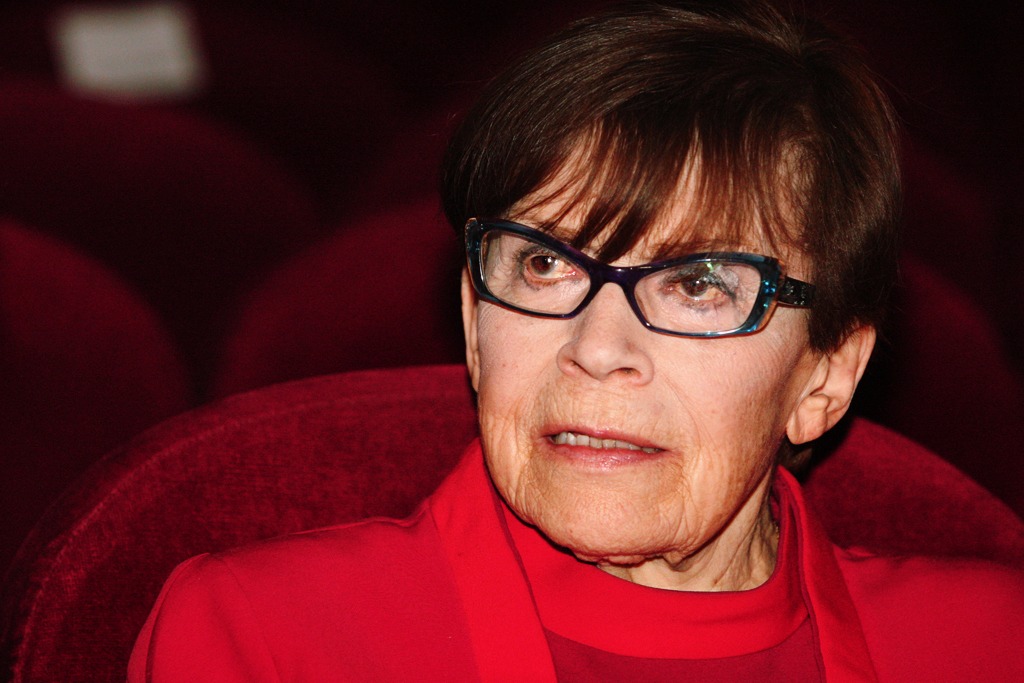
Franca Valeri, born Franca Maria Norsa on July 31, 1920, in Milan, Italy, was a towering figure in Italian theater, cinema, and television. Known for her sharp wit, sophisticated humor, and the unforgettable characters she created, Valeri carved out a unique space in the world of entertainment. Her career spanned over seven decades, during which she excelled as an actress, screenwriter, director, and author. This article provides a deep dive into the life of Franca Valeri, her rise to fame, and the significant moments that defined her remarkable journey.
Early Life and the Path to Acting
Franca Valeri was born into a well-off family in Milan. Her father, Luigi Norsa, was Jewish, while her mother, Cecilia Valagussa, came from a Catholic background. Growing up in a culturally rich environment, Franca was exposed to literature, music, and theater from an early age. Her early love for the arts, particularly the influence of French literature, played a significant role in shaping her career. She was especially inspired by the French poet Paul Valéry, from whom she later derived her stage name.
The political climate of the time, particularly the rise of Fascism and the implementation of anti-Semitic laws in Italy, had a profound impact on Franca’s early life. Her family faced persecution due to her father’s Jewish heritage, forcing them into hiding during World War II. Despite these challenges, Franca’s passion for the arts remained undimmed, and she found solace in the world of theater and literature.
Franca’s first foray into the world of performance was somewhat serendipitous. After a failed theatrical debut in the tragedy Caterina di Dio, she began to frequent the intellectual and social circles of Milan. It was in these circles that she discovered her talent for satire and comedy. Her ability to mimic and exaggerate the idiosyncrasies of Milanese society led to the creation of characters that would later become iconic in Italian culture.
The Birth of Franca Valeri: A New Identity
In the early 1950s, Franca decided to change her surname to Valeri, partly as a tribute to her admiration for Paul Valéry and partly to create a new identity that distanced her from her early struggles and failures. This new identity marked the beginning of a prolific and successful career in entertainment.
Franca Valeri’s entry into the world of professional theater was almost accidental. She co-founded the “Teatro dei Gobbi” (The Hunchback Theater) with Alberto Bonucci and Vittorio Caprioli, who would later become her husband. The trio’s performances were characterized by a minimalist approach, with little reliance on elaborate sets or costumes. Instead, they focused on sharp, satirical sketches that lampooned the pretensions and absurdities of contemporary society.
Valeri’s theatrical debut came in 1951 with Carnet de notes n.1 and Carnet de notes n.2, performances that showcased her keen observational skills and her ability to bring to life characters that were both humorous and incisive. Her work with the Teatro dei Gobbi laid the foundation for her future success and established her as a unique voice in Italian theater.
Breakthrough in Cinema and Television
Franca Valeri’s transition from theater to cinema was marked by her role in the 1951 film Luci del varietà (Variety Lights), co-directed by Alberto Lattuada and a young Federico Fellini. The film was Fellini’s directorial debut and featured Valeri in a role that highlighted her comedic talents. This film marked the beginning of a long and fruitful career in Italian cinema.
Throughout the 1950s and 1960s, Franca Valeri became a prominent figure in the Italian film industry, appearing in several memorable films. Her performances were often marked by her ability to blend humor with a deep understanding of human nature. Some of her most notable films from this period include Il segno di Venere (1955), directed by Dino Risi, where she starred alongside Sophia Loren, and Il vedovo (1959), another collaboration with Risi, where she played opposite Alberto Sordi.
Valeri’s film career was complemented by her work in television, a medium in which she also excelled. She became a household name in Italy through her appearances on various television shows, where she introduced some of her most beloved characters. One of her most iconic characters was the “Signorina Snob,” a neurotic, upper-class Milanese woman who was a biting satire of the bourgeoisie. This character, originally introduced in the radio program Il rosso e il nero, became even more popular when Valeri brought her to television.
Another character that gained immense popularity was “La Sora Cecioni,” a Roman woman perpetually engaged in long telephone conversations with her mother. La Sora Cecioni, characterized by her oversized curlers and humorous dialogues, became a beloved figure in Italian popular culture. These characters not only showcased Valeri’s versatility as an actress but also her deep understanding of Italian society and its many quirks.
A Multifaceted Career: Writing, Directing, and Opera
In addition to her work as an actress, Franca Valeri was a talented writer and director. She wrote numerous plays, screenplays, and television scripts, many of which were based on the characters she had created. Her writing was characterized by its sharp wit, keen social commentary, and an underlying humanity that made her characters relatable and memorable.
Valeri’s contributions to the world of opera are also noteworthy. A passionate lover of opera, she often incorporated elements of the art form into her work. Her directorial debut in the world of opera came in the 1980s, when she directed several productions at La Scala, the renowned opera house in Milan. Her work in opera further demonstrated her versatility and her deep understanding of different artistic forms.
Some of Valeri’s most successful plays include Lina e il cavaliere, Meno storie, Tosca e le altre due, and Le Catacombe. These works not only showcased her talent as a playwright but also her ability to create characters that resonated with audiences.
Later Career and Legacy
Franca Valeri’s later career was marked by a continued presence on Italian television and stage. Despite her advancing age, she remained active and continued to bring her unique brand of humor to new audiences. In the 1990s, she starred alongside Gino Bramieri in the popular sitcom Norma e Felice on Canale 5, and later appeared in the television series Caro maestro.
In the early 2000s, Valeri continued to work in television, starring in the successful Raiuno series Linda, il brigadiere e…, alongside Nino Manfredi, and the television film Come quando fuori piove, directed by Mario Monicelli. Her enduring popularity was a testament to her talent and the deep connection she had forged with audiences over the decades.
Valeri’s contributions to Italian culture were widely recognized, and she received numerous accolades throughout her career. Her work has had a lasting impact on Italian comedy, and she is often credited with paving the way for future generations of female comedians and writers. Her ability to blend humor with social commentary and her creation of unforgettable characters have left an indelible mark on Italian entertainment.
Personal Life and Reflections
Franca Valeri’s personal life was as rich and varied as her professional career. She was married to Vittorio Caprioli, her collaborator at the Teatro dei Gobbi, but the marriage ended in divorce. Despite this, the two remained close friends and continued to work together throughout their careers.
Valeri’s love for animals, particularly dogs, was well-known, and she was an advocate for animal rights. She often spoke about her affection for her pets and the joy they brought to her life. This love for animals was reflected in her personal philosophy, which emphasized kindness, empathy, and a deep respect for all living beings.
Throughout her life, Valeri maintained a close connection with her Jewish heritage, which was an integral part of her identity. Her experiences during the war and her reflections on the challenges faced by the Jewish community in Italy influenced her work and her worldview.
In interviews, Valeri often spoke about the importance of humor in navigating life’s challenges. She believed that laughter was a powerful tool for coping with difficult situations and for bringing people together. This philosophy was evident in her work, which often addressed serious themes with a lightness and grace that made them accessible to a wide audience.
Franca Valeri’s Impact on Italian Culture
Franca Valeri’s impact on Italian culture cannot be overstated. She was a trailblazer for women in comedy, breaking through the male-dominated world of Italian entertainment with her sharp wit and unique perspective. Her characters, from the snobbish Milanese lady to the down-to-earth Roman woman, reflected the diversity and complexity of Italian society.
Valeri’s ability to capture the essence of Italian life, with all its contradictions and nuances, made her work resonate with audiences across generations. Her characters were not just caricatures; they were reflections of the real people she observed in her everyday life. This authenticity, combined with her talent for satire, made her a beloved figure in Italian entertainment.
Her work has inspired countless comedians, writers, and performers, both in Italy and beyond. Franca Valeri’s legacy is one of laughter, insight, and a deep understanding of the human condition. Her contributions to theater, film, and television have left a lasting mark on Italian culture, and her influence continues to be felt today.
Conclusion
Franca Valeri’s life and career are a testament to the power of humor, creativity, and resilience. From her early days in Milan to her rise as a cultural icon, Valeri consistently pushed the boundaries of what was possible for women in the entertainment industry. Her ability to create characters that were both humorous and deeply human made her a unique and enduring figure in Italian culture.
As we look back on her legacy, it is clear that Franca Valeri was more than just an actress or a comedian; she was a pioneer who used her talents to challenge social norms and to bring joy to countless people. Her work remains a source of inspiration and a reminder of the enduring power of laughter and storytelling.
Franca Valeri passed away on August 9, 2020, just days after her 100th birthday. Her death marked the end of an era, but her legacy lives on in the countless lives she touched through her work. Franca Valeri will forever be remembered as a true icon of Italian culture, a woman whose wit, intelligence, and creativity changed the landscape of entertainment forever.


