
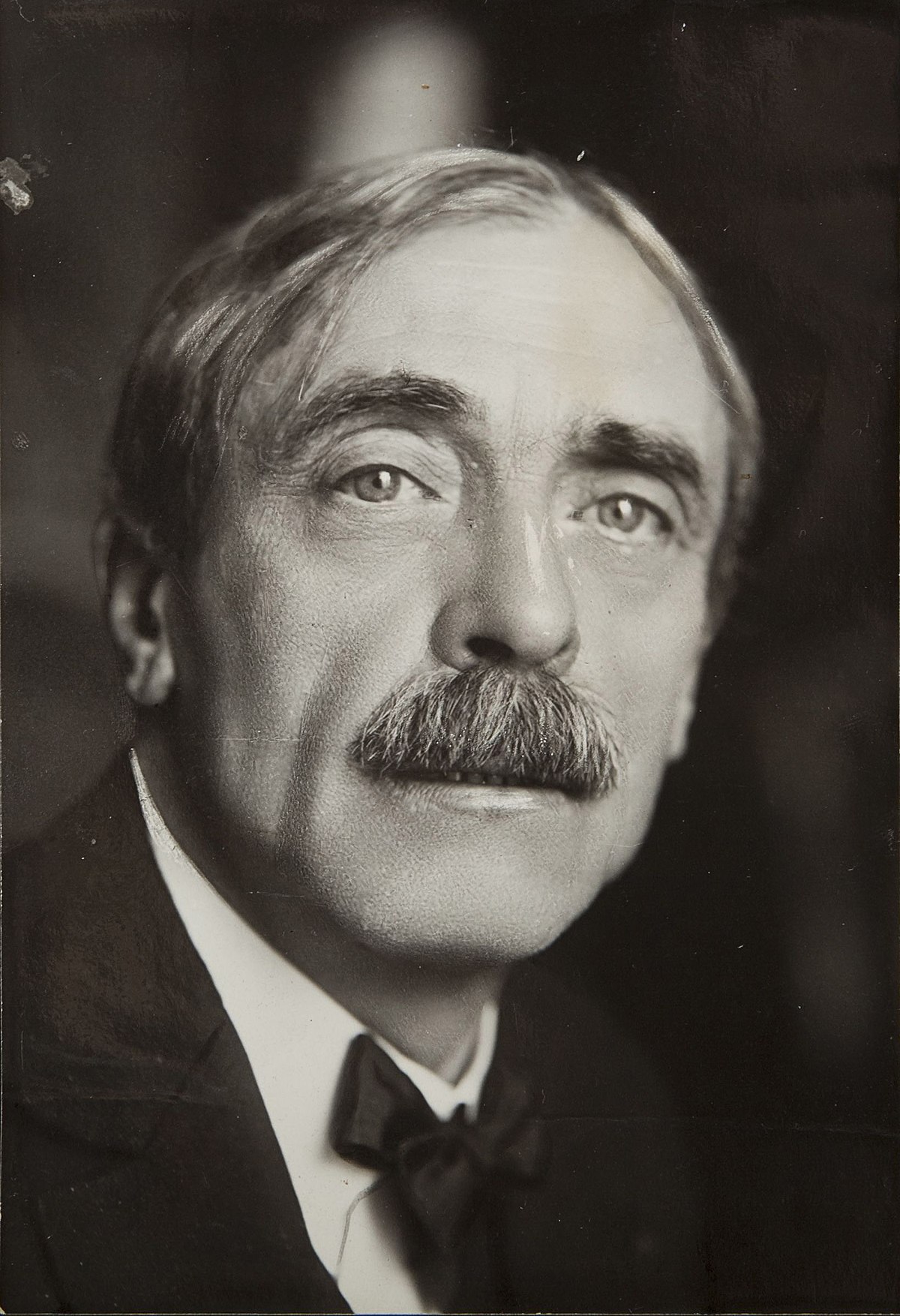
Paul Valéry, born Ambroise Paul Toussaint Jules Valéry on October 30, 1871, in Sète, France, was a renowned French poet, essayist, and philosopher. His work is often characterized by its intellectual depth, exploring themes such as consciousness, creativity, and the nature of human experience. Valéry’s contributions to literature and philosophy have left an indelible mark on the intellectual landscape of the 20th century. This article provides a comprehensive look at the life of Paul Valéry, his rise to fame, and the significant moments that defined his career.
Early Life and Intellectual Awakening
Paul Valéry was born into a culturally rich environment, with his mother being of Genoese descent and his father of Corsican origin. Growing up in Sète, a picturesque port town in the south of France, Valéry was exposed to the natural beauty of the Mediterranean, which would later influence his poetic imagery. His early education took place in Montpellier, where he attended the local lycée. Valéry was a diligent student, showing an early interest in literature and the arts.
In 1889, Valéry enrolled in the Faculty of Law at the University of Montpellier. However, his passion for literature soon overshadowed his legal studies. During his university years, Valéry became acquainted with several key figures in the French literary scene, including Pierre Louÿs, Stéphane Mallarmé, and André Gide. These relationships played a crucial role in shaping his literary career. Valéry was particularly influenced by Mallarmé, whose symbolist poetry and ideas about the power of language resonated deeply with him. Edgar Allan Poe, another literary figure Valéry admired, also had a significant impact on his early work.
The Crisis of 1892 and Its Impact
Valéry’s early literary endeavors were promising, with some of his poems being published in symbolist magazines. However, in 1892, he experienced a profound personal and intellectual crisis that would shape the rest of his life. This crisis was triggered by unrequited love for a young Spanish woman and a deep existential questioning of his purpose and the value of artistic creation. On the night of October 4-5, 1892, while in Genoa, Valéry underwent what he later described as “la crise de l’esprit” or “the crisis of the spirit.”
This crisis led Valéry to renounce poetry and literature for nearly two decades. He turned away from what he perceived as the vanity of creative expression, seeking instead a path that would lead to greater self-knowledge and intellectual discipline. Valéry began to meticulously document his thoughts and reflections in notebooks, a practice he continued throughout his life. These notebooks, which would later be published posthumously, contain over 26,600 pages of insights into philosophy, aesthetics, psychology, and other subjects. They are considered a monumental work in their own right, offering a window into the mind of one of the 20th century’s most profound thinkers.
The Return to Poetry: “Le Jeune Parque” and Literary Recognition
Despite his self-imposed exile from poetry, Valéry never entirely abandoned his creative impulses. In the early 20th century, he gradually returned to writing, encouraged by his friend André Gide. In 1917, after years of intellectual preparation, Valéry published Le Jeune Parque (The Young Fate), a long, complex poem that marked his reentry into the literary world. The poem, which took four years to complete, is considered a masterpiece of modernist literature. It explores themes of self-awareness, the passage of time, and the conflict between reason and emotion.
Le Jeune Parque was well-received by both critics and the public, establishing Valéry as a significant literary figure. The success of the poem led to the publication of other major works, including Le Cimetière marin (The Graveyard by the Sea) in 1920 and Charmes (1922), a collection of his most celebrated poems. Le Cimetière marin is particularly notable for its meditation on mortality and the eternal struggle between life and death, set against the backdrop of the Mediterranean Sea, which had been a constant presence in Valéry’s life since childhood.
Philosophical Writings and the “Monsieur Teste” Persona
Valéry’s return to poetry did not diminish his interest in philosophy and intellectual inquiry. Throughout his career, he wrote extensively on topics ranging from epistemology to aesthetics. One of his most famous philosophical works is Introduction à la méthode de Léonard de Vinci (Introduction to the Method of Leonardo da Vinci), written between 1895 and 1896. In this work, Valéry explores the idea of genius and the methods of creative minds, using Leonardo da Vinci as a model.
Another significant work from this period is La Soirée avec Monsieur Teste (Evening with Monsieur Teste), a collection of writings centered around the fictional character Monsieur Teste. This character embodies Valéry’s ideal of a person who lives according to pure intellect, detached from the emotions and passions that typically govern human behavior. Through Monsieur Teste, Valéry explores the limits of human reason and the potential for intellectual self-mastery.
Personal Life and the Balance Between Work and Family
In 1900, Valéry married Jeannine Gobillard, with whom he had three children. The marriage brought stability to Valéry’s life, allowing him to balance his intellectual pursuits with his responsibilities as a husband and father. Despite his growing reputation as a writer, Valéry also maintained a career in the civil service. He worked as a personal secretary to Edouard Lebey, the administrator of the Havas news agency (the precursor to Agence France-Presse), a position that provided him with financial security and the freedom to write.
Valéry’s ability to balance his public and private lives is reflected in his work. His writings often explore the tension between the demands of the external world and the inner life of the mind. This theme is particularly evident in his essays and lectures, where he frequently addressed the relationship between intellectual pursuits and the practical realities of daily life.
Recognition and Influence: A Life of Honors
Paul Valéry’s contributions to literature and thought were widely recognized during his lifetime. In 1925, he was elected to the Académie Française, one of the highest honors for a French writer. His election to the Académie marked the culmination of his literary career, affirming his status as one of France’s leading intellectuals.
Valéry’s influence extended beyond the world of literature. He was a sought-after speaker and lecturer, and his essays were widely read and respected. In 1936, he was appointed president of the commission overseeing the organization of the Exposition Universelle in Paris, a testament to his standing in French society. Additionally, a chair of poetics was created specifically for him at the Collège de France, where he delivered a series of lectures on a wide range of topics.
World War II and Intellectual Resistance
The outbreak of World War II and the subsequent occupation of France by Nazi Germany posed significant challenges for Paul Valéry. Although he continued to write and work, Valéry found himself increasingly at odds with the Vichy regime and the German occupiers. His refusal to collaborate with the Nazis led to his removal from his position at the University of Nice, where he had been serving as an administrator.
Despite these difficulties, Valéry remained committed to intellectual resistance. He continued to correspond with other thinkers, including the philosopher Henri Bergson, with whom he shared a deep respect and intellectual camaraderie. Valéry’s relationship with Bergson, who was Jewish, is particularly noteworthy, as it highlights Valéry’s moral and intellectual independence during a time of widespread collaboration and compromise in France.
As the war drew to a close, Valéry returned to public life, delivering speeches and lectures that reflected his unwavering commitment to humanism and intellectual freedom. One of his final public appearances was a speech commemorating the anniversary of the birth of Voltaire, a figure whom Valéry admired for his advocacy of reason and tolerance.
Legacy and Death
Paul Valéry’s death on July 20, 1945, just weeks after the end of World War II, marked the passing of one of France’s greatest intellectuals. He was 73 years old. Valéry was buried in the cemetery of his hometown, Sète, the same cemetery that inspired one of his most famous poems, Le Cimetière marin.
Valéry’s legacy continues to resonate in the fields of literature, philosophy, and the arts. His exploration of the mind, creativity, and the limits of human knowledge has influenced countless writers, philosophers, and artists. His notebooks, published posthumously, provide a rich resource for understanding the development of his thought and the breadth of his intellectual pursuits.
Valéry’s work remains a subject of study and admiration, reflecting the enduring relevance of his ideas in the modern world. His ability to blend poetic sensibility with rigorous intellectual inquiry makes him a unique figure in the history of literature and philosophy.
Conclusion
Paul Valéry’s life and work represent a profound engagement with the complexities of the human experience. From his early days as a poet influenced by the symbolists to his later years as a respected philosopher and intellectual, Valéry consistently sought to understand the nature of thought, creativity, and existence. His legacy is one of intellectual rigor, poetic beauty, and a commitment to exploring the depths of the human mind.
Valéry’s contributions to literature and philosophy continue to inspire and challenge readers and thinkers today. His exploration of the interplay between reason and emotion, his reflections on the creative process, and his dedication to intellectual independence make him a timeless figure in the history of ideas. As we reflect on his life and work, Paul Valéry stands as a testament to the power of the human intellect and the enduring value of thoughtful inquiry.


