
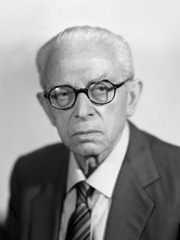
Leo Valiani, born Leo Weiczen on February 9, 1909, in Fiume (now Rijeka, Croatia), was an Italian politician, historian, journalist, and a key figure in the Italian Resistance during World War II. His life was marked by a deep commitment to civil rights, democracy, and intellectual freedom. Valiani’s contributions to the birth of the Italian Republic, his role in the Resistance, and his extensive work as a historian and journalist make him a significant figure in 20th-century Italian history. His legacy is a testament to the enduring struggle for liberty and justice in the face of tyranny.
Early Life and Background
Leo Valiani was born in Fiume, a city that was then part of the Kingdom of Hungary within the Austro-Hungarian Empire. His family was of Jewish descent, and they spoke German as their mother tongue. The cultural and political environment of the time was complex, with Fiume being a melting pot of different ethnicities and nationalities. This diverse background influenced Valiani’s worldview and his later political engagements.
In 1919, after World War I, Valiani and his family moved to Budapest, where they witnessed significant political upheaval. The experience of living through these turbulent times, including witnessing the occupation of Fiume by Gabriele D’Annunzio’s forces in 1919, left a lasting impression on the young Valiani. This period of his life was formative, instilling in him a deep sense of social justice and a desire to fight against oppression.
Political Awakening and Early Activism
Valiani’s political consciousness was awakened during his teenage years, particularly as he witnessed the rise of fascism in Italy. He was drawn to socialist ideals and became involved in anti-fascist activities. By the age of 17, Valiani had already joined the Italian Socialist Party, where he became increasingly active in the resistance against Benito Mussolini’s regime.
In 1926, Valiani moved to Milan, where he met prominent anti-fascist leaders Carlo Rosselli and Pietro Nenni. These encounters solidified his commitment to the anti-fascist cause. Valiani’s activism soon attracted the attention of the fascist authorities, leading to his arrest in March 1928 for crimes against the state. He was sentenced to prison and subsequently sent into internal exile on the island of Ponza, where he became involved with the clandestine Communist Party.
Imprisonment and Exile
Valiani’s time in prison and exile did little to dampen his resolve. After a year on Ponza, he returned to Fiume, only to be arrested again in 1931 for distributing anti-fascist leaflets. This time, he was sentenced to 12 years in prison and was held at the infamous Civitavecchia prison until 1936. These years in confinement were grueling, but they also served to deepen Valiani’s political convictions and his commitment to the cause of freedom.
Upon his release in 1936, Valiani was expelled from Italy and moved to Paris. In France, he became a prominent figure in the anti-fascist community, contributing to various publications and working closely with other exiled Italian intellectuals and activists. It was during this period that Valiani began to distance himself from the Communist Party, disillusioned by the Soviet Union’s actions, particularly the signing of the Molotov-Ribbentrop Pact in 1939, which he saw as a betrayal of socialist ideals.
The Spanish Civil War and Break with Communism
Valiani’s political journey took a significant turn during the Spanish Civil War, where he served both as a journalist and as a combatant on the Republican side. The brutal realities of the conflict, combined with his growing disenchantment with Soviet communism, led Valiani to break away from the Communist Party. He became increasingly critical of totalitarian regimes, whether fascist or communist, and sought a political path that combined socialist ideals with a commitment to democratic principles.
This ideological shift led Valiani to join the Giustizia e Libertà movement, a group founded by Italian anti-fascists that sought to promote a form of socialism that was independent of Soviet influence. The movement played a crucial role in the Italian Resistance, advocating for a democratic and republican Italy.
Role in the Italian Resistance
With the fall of Mussolini’s regime and the German occupation of Italy in 1943, Valiani returned to his homeland to join the Resistance. He quickly became a leading figure in the partisan movement in northern Italy, particularly in Milan. Valiani’s leadership was instrumental in the organization of anti-fascist forces, and he worked closely with other key figures such as Sandro Pertini, Luigi Longo, and Emilio Sereni.
Valiani’s contributions to the Resistance were not limited to military actions. He was also deeply involved in the political strategy of the movement, advocating for the establishment of a republic that would replace the monarchy and ensure civil liberties for all citizens. His efforts culminated in his participation in the historic decision to execute Mussolini, a controversial but pivotal moment in Italian history that symbolized the definitive end of fascism in the country.
Post-War Politics and the Birth of the Italian Republic
Following the end of World War II, Valiani played a significant role in the establishment of the Italian Republic. He was a founding member of the Partito d’Azione (Action Party), a political group that emerged from the Giustizia e Libertà movement. The Action Party was one of the most intellectually vibrant political organizations of the time, advocating for a synthesis of socialist and liberal ideas and pushing for deep structural reforms in Italy.
Valiani was elected to the Constituent Assembly in 1946, where he was involved in drafting the new Italian constitution. However, despite the intellectual influence of the Action Party, it struggled to gain mass support, particularly among the working class, and eventually dissolved. Many of its members, including Valiani, found themselves politically homeless, leading him to withdraw from active political life for a time.
Journalism and Historical Writing
After the dissolution of the Action Party, Valiani shifted his focus to journalism and historical writing. He became a prominent journalist, contributing to major Italian newspapers and periodicals. His work was characterized by a commitment to intellectual rigor and a deep sense of moral responsibility. Valiani wrote extensively on the history of the Resistance, the political evolution of post-war Italy, and the broader historical currents of the 20th century.
Valiani’s historical writings are considered some of the most insightful analyses of Italy’s political and social transformation during the 20th century. His books and essays provide a nuanced understanding of the complex forces that shaped modern Italy, from the rise of fascism to the challenges of building a democratic republic. Valiani’s work as a historian was recognized for its depth of research, clarity of thought, and unwavering commitment to truth.
Later Life and Legacy
In 1980, Valiani was appointed a Senator for Life, an honor that reflected his significant contributions to the Italian Republic. As a senator, he continued to advocate for the values he had championed throughout his life: democracy, justice, and intellectual freedom. He was an independent voice in the Italian Senate, often aligning with the Republican group but maintaining his political independence.
In the early 1990s, Valiani aligned himself with the Democratic Left, a political group that emerged from the dissolution of the Italian Communist Party. His decision to support the Democratic Left was consistent with his lifelong commitment to democratic socialism and his belief in the need for a progressive, yet democratic, political force in Italy.
Leo Valiani passed away on September 18, 1999, in Milan, just months after celebrating his 90th birthday. His death marked the end of an era, as Valiani was one of the last surviving leaders of the Italian Resistance and a key figure in the birth of the Italian Republic.
Conclusion
Leo Valiani’s life was a testament to the power of conviction, courage, and intellectual integrity. From his early days as a young socialist fighting against fascism to his role as a leader in the Italian Resistance, Valiani’s commitment to freedom and justice never wavered. His contributions to the establishment of the Italian Republic, his work as a journalist and historian, and his legacy as a moral and intellectual leader continue to resonate in Italy and beyond.
Valiani’s story is a reminder of the importance of standing up for one’s beliefs, even in the face of overwhelming adversity. His life’s work serves as an inspiration to future generations of Italians and to all those who value democracy, human rights, and the rule of law. In a world where the forces of extremism and authoritarianism continue to threaten democratic institutions, Leo Valiani’s legacy remains as relevant today as it was during the darkest days of the 20th century.


