
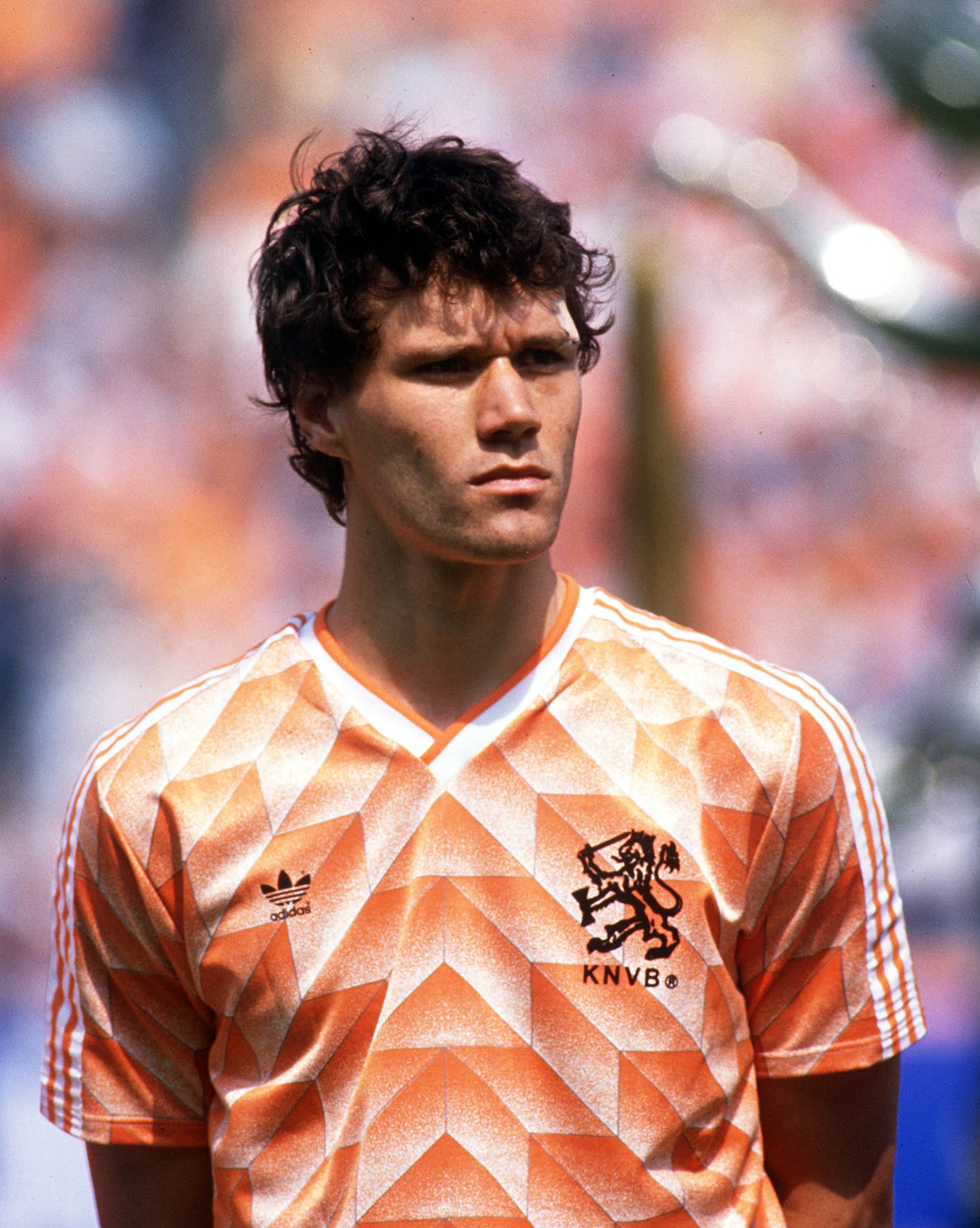
Marco Van Basten is a name that resonates with football fans around the world. Born Marcel Van Basten on October 31, 1964, in Utrecht, Netherlands, he is widely regarded as one of the greatest footballers of all time. His career, though marred by injuries, was a testament to his unparalleled talent, elegance, and sheer brilliance on the football pitch. This article delves into the life of Marco Van Basten, exploring his early years, rise to fame, and the indelible mark he left on the world of football.
Early Life and Beginnings in Football
Marco Van Basten’s journey into the world of football began at a tender age. Growing up in Utrecht, he was drawn to the sport and quickly made a name for himself in local football clubs. Between 1970 and 1981, he honed his skills at various Dutch clubs, including Edo, UVV, and Elinkwijk. These formative years were crucial in shaping Van Basten’s future, as he developed the technical skills and tactical understanding that would later make him a footballing legend.
In 1981, at just 17 years old, Van Basten made his debut for AFC Ajax, one of the most prestigious clubs in the Netherlands. His debut was symbolic, as he replaced Johan Cruyff, a footballing icon, during a match. Cruyff, a legend in his own right, saw the potential in Van Basten and endorsed him as his natural successor. Van Basten did not disappoint, marking his debut with a goal that would set the tone for the rest of his career.
Rise to Stardom at Ajax
Marco Van Basten’s time at Ajax was nothing short of extraordinary. He quickly became a regular starter and showcased his goal-scoring prowess. In the 1982-1983 season, he scored 9 goals in 20 appearances, a commendable feat for a young player. However, it was the following season that truly established him as a force to be reckoned with. Van Basten scored an astonishing 28 goals in 26 appearances, a performance that left fans and pundits alike in awe.
Over the next few seasons, Van Basten continued to dazzle with his performances. He became the top scorer in the Dutch Eredivisie four times consecutively from 1984 to 1987. His remarkable ability to find the back of the net, coupled with his elegant playing style, earned him the nickname “The Swan of Utrecht.” In 1985-1986, Van Basten won the European Golden Shoe, an award given to the top goal scorer in European leagues.
Van Basten’s exploits were not limited to domestic competitions. In 1987, he played a crucial role in Ajax’s victory in the UEFA Cup Winners’ Cup. His header in the final secured a 1-0 win for Ajax, further cementing his status as one of the best forwards in Europe. By the time he left Ajax in 1987, Van Basten had scored 128 goals in 133 appearances, a staggering achievement that highlighted his goal-scoring prowess.
The Move to AC Milan and Global Fame
In 1987, Marco Van Basten made a high-profile move to AC Milan, one of Italy’s most storied football clubs. The move was seen as a coup for Milan, who managed to secure his signature despite interest from several other top European clubs. Standing at 188 centimeters and weighing 80 kilograms, Van Basten’s physical presence, combined with his technical ability, made him a perfect fit for the Serie A, known for its tactical and physical demands.
Van Basten’s impact at Milan was immediate. In his first season, he scored five goals in four Coppa Italia matches, endearing himself to the Milan faithful. However, his early years in Italy were plagued by injuries, particularly a troublesome ankle that required surgery and kept him out of action for six months. Despite these setbacks, Van Basten made a triumphant return in the spring of 1988, scoring crucial goals that helped Milan win the Scudetto, Italy’s top footballing honor.
The 1988-1989 season marked the beginning of an era of dominance for both Van Basten and AC Milan. Under the guidance of coach Arrigo Sacchi and the leadership of club president Silvio Berlusconi, Milan became a powerhouse in European football. Van Basten, alongside fellow Dutchmen Ruud Gullit and Frank Rijkaard, formed a formidable trio that led Milan to multiple domestic and international titles.
During his time at Milan, Van Basten won numerous accolades, including four Serie A titles (1988, 1992, 1993, 1994), three UEFA Champions League titles (1989, 1990, 1994), and multiple domestic and international cup competitions. Individually, he was named the European Footballer of the Year three times (1988, 1989, 1992) and was also recognized as the FIFA World Player of the Year in 1992. His performances in the 1988 UEFA European Championship, where he scored five goals, including a stunning volley in the final against the Soviet Union, are still remembered as one of the greatest individual displays in the history of the tournament.
Challenges and Triumphs with the Dutch National Team
While Marco Van Basten enjoyed immense success at the club level, his international career with the Dutch national team was a mix of triumphs and disappointments. He made his debut for the Netherlands in 1983 and quickly became a key player for the national team. However, the Dutch team struggled to replicate the success of their club counterparts on the international stage.
The pinnacle of Van Basten’s international career came in 1988 when he led the Netherlands to victory in the UEFA European Championship. His performances throughout the tournament were nothing short of spectacular. Van Basten scored a memorable hat-trick against England in the group stage and followed it up with the iconic volley in the final against the Soviet Union, a goal that is still regarded as one of the greatest in football history. The Netherlands’ victory in 1988 remains the only major international title the country has won to date.
Despite this success, Van Basten’s international career was plagued by injuries and missed opportunities. The Dutch team failed to qualify for the 1986 FIFA World Cup and was knocked out in the round of 16 in the 1990 World Cup. Van Basten’s last major tournament was the 1992 European Championship, where the Netherlands were eliminated in the semi-finals by Denmark, with Van Basten missing a crucial penalty in the shootout.
The Tragic End of a Glorious Career
Marco Van Basten’s career was cut short by a series of debilitating ankle injuries. Despite undergoing multiple surgeries, the pain in his ankle persisted, forcing him to retire prematurely at the age of 30. His last match came in 1993, and after two years of trying to recover, Van Basten officially announced his retirement in 1995.
Van Basten’s early retirement was a great loss to the footballing world. Many believe that had he stayed injury-free, he could have gone on to achieve even greater heights. Nevertheless, his impact on the game during his relatively short career was immense, and he remains a beloved figure in the history of football.
Post-Retirement: Coaching and Beyond
After retiring from playing, Marco Van Basten transitioned into coaching. In 2004, he was appointed as the head coach of the Dutch national team, a role he held until 2008. During his tenure, he led the Netherlands to the 2006 FIFA World Cup and the 2008 UEFA European Championship. While the Dutch team under his guidance showed promise, they were unable to secure any major titles.
Van Basten also had stints as the head coach of Ajax, one of his former clubs, and Heerenveen. However, his coaching career was not as illustrious as his playing days. In 2014, he briefly took charge of AZ Alkmaar but stepped down due to health issues. In 2015, Van Basten joined FIFA as a Chief Officer for Technical Development, where he played a role in shaping the future of football through various technical innovations and rule changes.
Legacy and Influence on Modern Football
Marco Van Basten’s influence on football extends far beyond his playing days. His style of play, characterized by elegance, precision, and an innate ability to score goals, has inspired countless players and coaches. Van Basten was known for his exceptional ball control, powerful shots, and intelligent movement on the pitch. He was not just a goal scorer but a complete forward who could create opportunities for his teammates and dictate the flow of the game.
Van Basten’s legacy is also evident in the numerous awards and honors he received throughout his career. He was inducted into the FIFA 100, a list of the greatest living players selected by Pelé, and has been honored by various footballing bodies for his contributions to the sport. His name is often mentioned alongside other footballing greats like Pelé, Maradona, and Cruyff, highlighting his status as one of the all-time greats.
Conclusion
Marco Van Basten’s life and career are a testament to the highs and lows that professional athletes often experience. From his meteoric rise at Ajax to his legendary status at AC Milan, and the heartbreak of early retirement, Van Basten’s story is one of triumph, resilience, and a lasting impact on the world of football. While injuries may have cut his career short, the legacy he left behind continues to inspire footballers and fans alike. Marco Van Basten will forever be remembered as one of the greatest footballers to have ever graced the pitch.


