
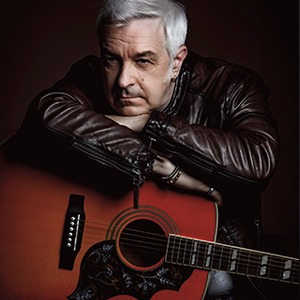
Davide Van De Sfroos, born Davide Bernasconi on May 11, 1965, in Monza, Italy, is a celebrated Italian singer-songwriter known for his unique style of music that blends traditional folk with contemporary influences. His work, often characterized by lyrics in the “laghée” dialect spoken around Lake Como, has earned him a dedicated following and numerous accolades. This article explores his life, career, and the cultural impact of his music, providing a comprehensive look at one of Italy’s most distinctive musical voices.
Early Life and Musical Beginnings
Davide Bernasconi, better known by his stage name Davide Van De Sfroos, grew up in the small village of Mezzegra, nestled on the shores of Lake Como. The name “Van De Sfroos” translates to “they go smuggling,” a nod to the historical contraband activities in the region and a reflection of his music’s deep roots in local culture and folklore.
His early musical experiences were shaped by his surroundings. Growing up in a region with a rich history and a strong sense of community, Davide was drawn to the stories and traditions of the people around him. His music often reflects the life and spirit of the towns along Lake Como, while also acknowledging the influence of larger cities.
The Formation of De Sfroos and the Rise to Fame
In the mid-1980s, Davide began his musical career in a punk-inspired band called “Potage.” However, it was in 1990 that he truly began to carve out his niche in the music world with the formation of the band “De Sfroos.” This group allowed him to explore and develop his unique style, blending folk, rock, and traditional Italian music with lyrics in the “laghée” dialect.
The band’s first albums, “Ciulandàri!” and “Viif,” laid the foundation for what would become a successful and influential career. However, it was the release of their 1995 album “Manicomi” that truly put De Sfroos on the map. The album included some of Davide’s most iconic songs, such as “La Curiera,” which became an anthem for his fans.
Despite their success, De Sfroos disbanded in 1998. This could have marked the end of Davide’s musical journey, but instead, it was the beginning of a new chapter.
The Van De Sfroos Band and Critical Acclaim
After the breakup of De Sfroos, Davide re-emerged with a new band, aptly named the “Van De Sfroos Band.” This new iteration allowed him to continue exploring his musical roots while reaching a broader audience. In 1999, he released the album “Breva & Tivan,” which was met with critical acclaim. The album earned Davide the prestigious Premio Tenco for “Best Emerging Author,” solidifying his place as a significant figure in Italian music.
Following the success of “Breva & Tivan,” Davide continued to build on his momentum with the release of a mini-album, “Per una poma,” which featured three songs that tackled biblical themes with a touch of humor. His ability to blend serious subject matter with lightheartedness became one of his trademarks.
Storytelling Through Music: The 2000s
The turn of the millennium marked a period of prolific creativity for Davide Van De Sfroos. In 2000, he published his first book of poetry, “Perdonato dalle lucertole,” followed by the release of his second album, “…E Semm partii,” in 2001. This album was a commercial success, selling 50,000 copies and earning a gold record. It also won the Targa Tenco in 2002 for Best Dialect Album, further cementing Davide’s reputation as a masterful storyteller.
Davide’s storytelling abilities were not confined to music alone. In 2003, he published the book “Le parole sognate dai pesci,” a collection of short stories that further showcased his talent for capturing the essence of life in his native region. That same year, he released “Laiv,” a live double album that brought the energy of his performances to a wider audience. The album sold 35,000 copies in just three weeks, demonstrating his growing popularity.
In 2005, Davide released “Akuaduulza,” an album featuring 14 new songs that continued his exploration of the themes and sounds that had defined his career. The accompanying tour took him to some of the most prestigious festivals in Europe, and in November of that year, he published his first novel, “Il mio nome è Herbert Fanucci.” The novel was a commercial success, selling 20,000 copies in less than a month.
International Recognition and Continued Success
Davide’s music began to reach audiences beyond Italy’s borders. He performed in New York at the Marriott Hall Center and at the French Quarter Festival in New Orleans, bringing his unique blend of Italian folk and rock to international stages. In 2006, he released his first live DVD, “Ventanas – Suoni Luoghi Estate 2006,” which captured the essence of his summer tour.
In 2008, Davide released the album “Pica!” which featured 15 tracks, three of which had lyrics in Italian. The album was an immediate success, reaching the fourth spot on the official FIMI chart of the best-selling albums in Italy just a week after its release.
Mainstream Recognition: The 2010s
The 2010s brought mainstream recognition to Davide Van De Sfroos, starting with his participation in the 2011 Sanremo Music Festival. Invited by the festival’s artistic director, Gianni Morandi, Davide performed the song “Yanez,” which told the story of the sea at Cesenatico, a departure from his usual focus on Lake Como. The song resonated with audiences, showcasing Davide’s ability to connect with listeners on a personal level.
Following this success, his song “El carnevaal de Schignan,” from the album “Yanez,” was featured as the theme for the film “Benvenuti al Nord,” released in 2012. That same year, Davide returned to the Sanremo stage, this time as the songwriter for Irene Fornaciari’s entry, “Grande mistero.”
Throughout the decade, Davide continued to explore new creative avenues. In 2013, he launched the project “Terra&Acqua,” which included both music and video clips, in collaboration with director Dario Tognocchi. This project further expanded his artistic reach and demonstrated his ongoing commitment to innovation.
In addition to his music and video projects, Davide also began writing a column about mountain life for the magazine “Orobie” in 2015, further highlighting his deep connection to the land and culture of his home region.
Performing at San Siro and Collaborations with Icons
One of the highlights of Davide’s career came on June 9, 2017, when he performed for the first time at Milan’s San Siro Stadium, one of Italy’s most iconic venues. This concert was a testament to his enduring popularity and the deep connection he has with his fans.
In 2019, Davide collaborated with the legendary Italian musician Zucchero Fornaciari on the song “Testa o croce,” featured on Zucchero’s album “D.O.C.” This collaboration marked another milestone in Davide’s career, aligning him with one of Italy’s most successful international artists.
The 2020s and the Return of De Sfroos
The 2020s began with a significant milestone in Davide’s career: the reunion of De Sfroos after 25 years. In September 2020, the band re-released their first album, “Manicomi,” remastered at the RSI Radiotelevisione studios in Switzerland. This reunion was a nostalgic moment for longtime fans and introduced the band’s early work to a new generation.
In addition to the reunion, Davide continued to collaborate with other artists, including the recording of the song “Oh Lord, vaarda gio” with Zucchero and the participation of Mauro Corona. His continued relevance in the Italian music scene was further underscored by his appearance on Francesco Guccini’s album “Canzoni da intorto,” where he played the character of the commissioner in the song “Ma mi” and contributed to the chorus of “Addio Lugano.”
Legacy and Influence
Davide Van De Sfroos’ influence on Italian music is profound and multifaceted. His ability to weave together the traditional and the modern, the local and the universal, has made him a unique voice in the music industry. His dedication to preserving and promoting the “laghée” dialect, while also pushing the boundaries of what Italian folk music can be, has earned him a special place in the hearts of fans and critics alike.
Davide’s career is a testament to the power of storytelling in music. Through his songs, books, and performances, he has captured the essence of life in the region around Lake Como, creating a rich tapestry of stories that resonate with listeners both in Italy and beyond.
As Davide Van De Sfroos continues to create and perform, his legacy will undoubtedly grow, inspiring future generations of musicians to explore their cultural roots and tell their own stories through music.


