
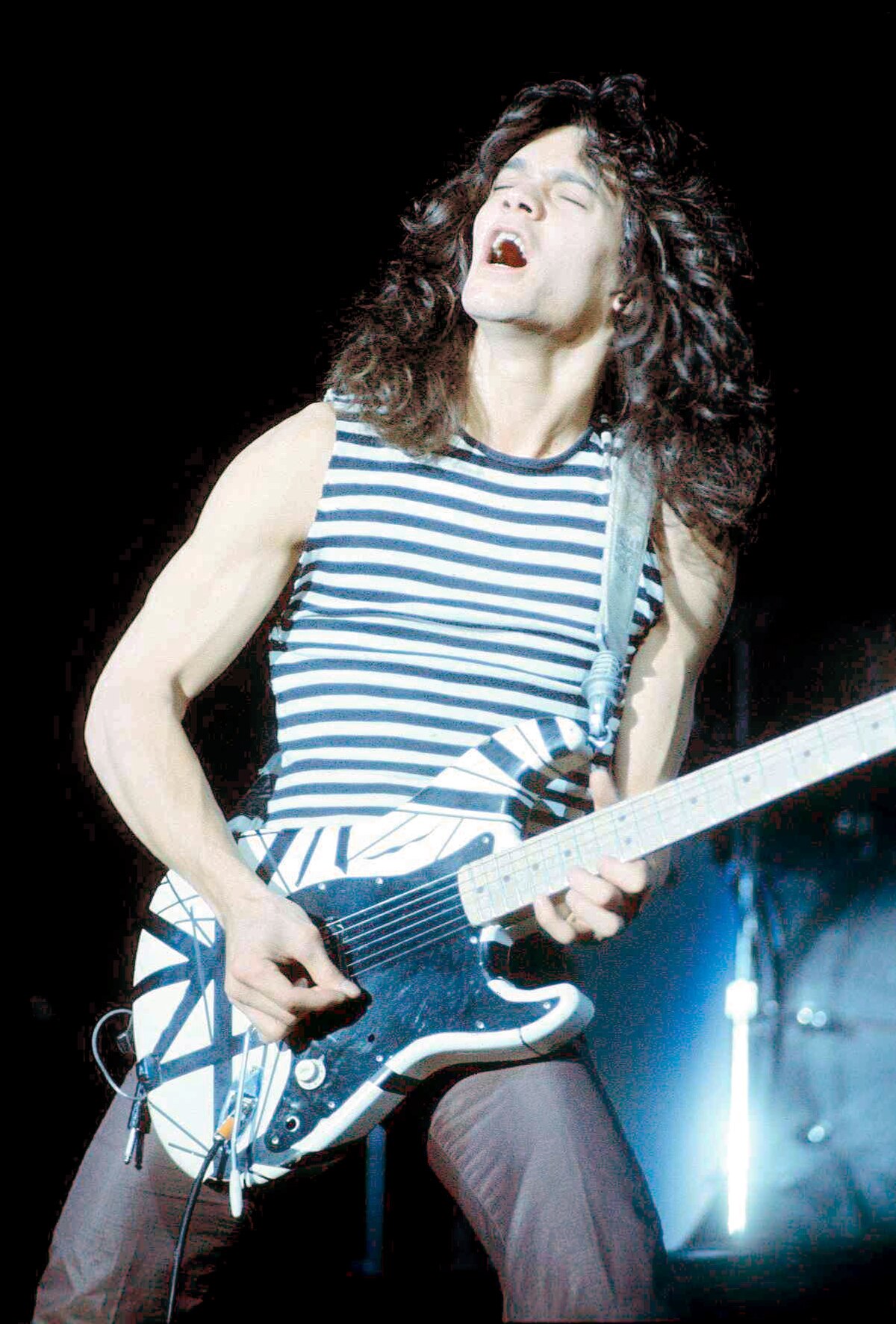
Eddie Van Halen, born Edward Lodewijk Van Halen on January 26, 1955, in Amsterdam, Netherlands, was a pioneering guitarist whose innovative techniques and electrifying performances redefined rock music. Widely regarded as one of the greatest guitarists of all time, Van Halen’s influence transcends generations. His journey from a young immigrant in the United States to a rock legend encapsulates the story of hard work, creativity, and a relentless pursuit of excellence. This article explores Eddie Van Halen’s life, his rise to fame, and the significant milestones that shaped his career.
Early Life and Musical Beginnings
Eddie Van Halen was born into a musical family. His father, Jan Van Halen, was a skilled jazz saxophonist and clarinetist, which deeply influenced Eddie and his older brother Alex. In 1962, when Eddie was seven years old, the Van Halen family emigrated from the Netherlands to Pasadena, California, in search of better opportunities. The move marked the beginning of Eddie’s lifelong journey in music.
Initially, Eddie and Alex were both trained on the piano. Eddie showed early promise, winning several piano competitions despite not being able to read sheet music. However, the piano did not captivate him as much as the guitar did. When Alex began playing the guitar, Eddie took up the drums. But soon, Alex became more interested in the drums, prompting Eddie to switch to the guitar—a decision that would change the course of rock music history.
Eddie Van Halen’s dedication to mastering the guitar was extraordinary. He practiced for hours daily, often locking himself in his room to perfect his technique. Influenced by guitarists like Eric Clapton and Jimmy Page, Eddie began experimenting with new sounds and techniques. It was during this period that he developed his signature tapping technique, which would later become a hallmark of his playing style.
Formation of Van Halen and Early Success
In the early 1970s, Eddie and Alex formed their first band, which would eventually evolve into Van Halen. The band initially performed under the name “Mammoth,” playing gigs around Los Angeles. They quickly gained a reputation for their energetic live performances, with Eddie’s guitar solos becoming the highlight of their shows. In 1974, the band changed its name to Van Halen and added bassist Michael Anthony and singer David Lee Roth to the lineup, solidifying the classic Van Halen lineup.
Van Halen’s big break came in 1977 when Gene Simmons of KISS discovered the band and financed their first demo. This led to a record deal with Warner Bros., and in 1978, Van Halen released their self-titled debut album. The album was an instant success, driven by Eddie’s innovative guitar work on tracks like “Eruption,” a solo piece that showcased his tapping technique and set a new standard for rock guitarists.
The success of Van Halen marked the beginning of the band’s rise to rock stardom. The album went platinum within six months and established Van Halen as one of the most exciting new acts in rock music. Eddie Van Halen, with his groundbreaking guitar solos and charismatic stage presence, quickly became a household name.
The Rise to Fame: Chart-Topping Albums and Iconic Songs
Following the success of their debut album, Van Halen continued to release a string of successful albums throughout the late 1970s and early 1980s. Van Halen II (1979) included the hit single “Dance the Night Away,” while Women and Children First (1980) featured the popular track “And the Cradle Will Rock.” Each album further cemented Van Halen’s status as one of the leading bands in rock music.
The band’s 1984 album, aptly titled 1984, marked the peak of their commercial success. The album’s lead single, “Jump,” featured Eddie Van Halen on keyboards, showcasing his versatility as a musician. “Jump” became Van Halen’s first and only number-one hit on the Billboard Hot 100, and 1984 went on to sell over 10 million copies in the United States alone.
However, the success of 1984 also marked a turning point for the band. Tensions between Eddie Van Halen and David Lee Roth, who had long clashed over the direction of the band, came to a head. In 1985, Roth left Van Halen to pursue a solo career, and the band brought in Sammy Hagar as their new lead singer. Despite the lineup change, Van Halen continued to enjoy success with albums like 5150 (1986) and OU812 (1988), both of which topped the charts and produced hit singles like “Why Can’t This Be Love” and “When It’s Love.”
Innovations and Influence on Guitar Playing
Eddie Van Halen’s impact on the world of guitar playing cannot be overstated. His pioneering use of the tapping technique revolutionized the instrument, influencing countless guitarists across various genres. Tapping involves using both hands on the guitar’s fretboard to produce fast, intricate passages, and Eddie’s mastery of this technique set him apart from his peers.
Beyond tapping, Eddie was known for his creative use of equipment. He famously modified his guitars, combining different parts to create his “Frankenstrat,” a guitar that became synonymous with his sound. Eddie also popularized the use of the Floyd Rose locking tremolo system, which allowed him to execute dive bombs and other extreme pitch bends without knocking the guitar out of tune.
Eddie’s influence extended beyond his technical prowess. He brought a sense of fun and showmanship to rock guitar, making it not just about skill but also about personality and stage presence. His solos were not just displays of technical ability but also expressions of joy and excitement, resonating with audiences around the world.
Personal Life and Challenges
Eddie Van Halen’s personal life was as eventful as his musical career. In 1981, he married actress Valerie Bertinelli, and in 1991, they welcomed their son Wolfgang, named after the composer Wolfgang Amadeus Mozart. Wolfgang would later join Van Halen as the band’s bassist, continuing the family legacy.
However, Eddie’s life was also marked by struggles, particularly with substance abuse. His battles with alcohol and drugs were well-documented, and they took a toll on his health and personal relationships. In the mid-2000s, Eddie entered rehab to address his addiction issues, and he made significant efforts to get sober.
Eddie’s health challenges extended beyond addiction. In 2000, he was diagnosed with tongue cancer, which led to the partial removal of his tongue. Despite being declared cancer-free in 2002, Eddie’s health continued to be a concern, and in the later years of his life, he battled throat cancer.
The Legacy of Van Halen and Final Years
Despite the challenges, Van Halen’s legacy endured. The band was inducted into the Rock and Roll Hall of Fame in 2007, solidifying their place in rock history. That same year, Eddie’s son Wolfgang replaced Michael Anthony as the band’s bassist, and David Lee Roth rejoined the band for a highly successful reunion tour.
In 2012, Van Halen released A Different Kind of Truth, their first album of new material with Roth since 1984. The album was well-received, and the band embarked on a world tour to support it. However, Eddie’s health issues continued to affect the band’s activities, and after 2015, Van Halen ceased touring and recording.
Eddie Van Halen passed away on October 6, 2020, at the age of 65, after a long battle with throat cancer. His death marked the end of an era for rock music, but his influence continues to be felt. Tributes poured in from musicians and fans around the world, all of whom recognized Eddie’s immense contributions to music.
Nuances and Historical Context
Eddie Van Halen’s career spanned a period of significant change in the music industry. When Van Halen first emerged in the late 1970s, rock music was undergoing a transformation. The punk and new wave movements were challenging the dominance of traditional rock, but Van Halen’s success demonstrated that there was still a massive audience for guitar-driven rock music.
Eddie’s approach to the guitar reflected the broader cultural trends of the time. The 1980s were a decade of excess and flamboyance, and Van Halen’s music, with its flashy solos and high-energy performances, captured the spirit of the era. At the same time, Eddie’s technical innovations pushed the boundaries of what was possible on the guitar, setting new standards for musicianship.
Eddie Van Halen’s influence can also be seen in the rise of the guitar hero phenomenon in the 1980s. Guitarists like Steve Vai, Joe Satriani, and Yngwie Malmsteen, who emerged in the wake of Van Halen’s success, took inspiration from Eddie’s playing and helped to popularize the idea of the virtuoso guitarist.
Conclusion: The Enduring Influence of Eddie Van Halen
Eddie Van Halen’s life and career represent a unique blend of innovation, talent, and perseverance. As a guitarist, he broke new ground with his techniques and sounds, inspiring generations of musicians. As a performer, he brought joy and excitement to audiences around the world, making him one of the most beloved figures in rock music.
Eddie’s influence extends far beyond his recordings. He changed the way the guitar is played, and his legacy can be heard in the work of countless guitarists who followed in his footsteps. His music continues to be celebrated, and his impact on rock music remains as powerful as ever.
Even after his passing, Eddie Van Halen’s contributions to music continue to resonate. His work with Van Halen remains a benchmark for rock bands, and his innovations on the guitar continue to inspire new generations of musicians. Eddie Van Halen was not just a guitarist; he was a pioneer, a trailblazer, and a true icon of rock music.


