
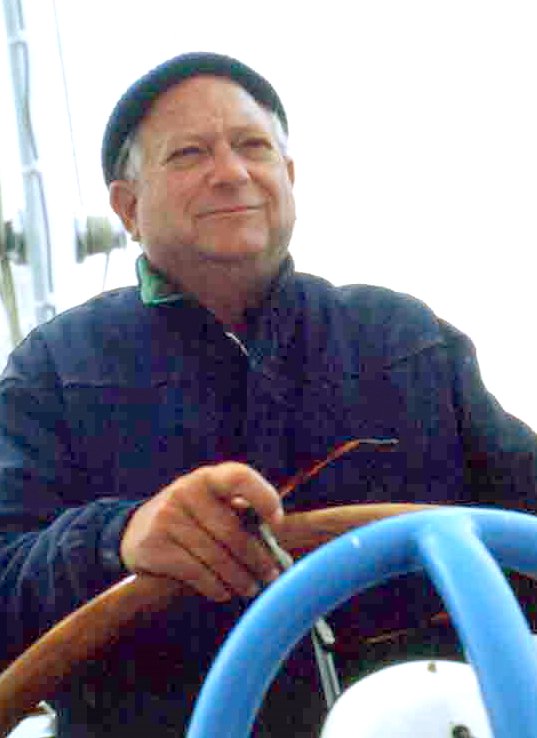
Jack Vance, born John Holbrook Vance on August 28, 1916, in San Francisco, California, was a prolific American author whose work in the genres of fantasy and science fiction left an indelible mark on literature. Over the course of his life, Vance wrote hundreds of stories, novels, and essays, earning a reputation as a master of speculative fiction. His distinctive voice, rich world-building, and imaginative storytelling continue to influence generations of writers and readers alike. This article provides an in-depth look at the life, career, and legacy of Jack Vance, exploring his contributions to literature and the cultural impact of his work.
Early Life and Influences
Jack Vance’s early life was steeped in the natural beauty of California, a setting that would later influence the rich, detailed worlds he created in his writing. Vance’s childhood was marked by the separation of his parents, after which he moved with his mother to live on his maternal grandparents’ ranch in Oakley, near the Sacramento River Delta. The bucolic surroundings of the ranch played a significant role in shaping Vance’s imagination, providing a backdrop of adventure and exploration that would later permeate his stories.
From a young age, Vance was an avid reader, devouring the pulp magazines of the time, such as Weird Tales and Amazing Stories. These publications, which featured tales of the strange and the fantastic, sparked his interest in science fiction and fantasy. Authors like Edgar Rice Burroughs, Jules Verne, Lord Dunsany, and P.G. Wodehouse were among his early influences, and their works provided the foundation upon which Vance would build his own literary career.
Vance’s love for reading was complemented by a natural talent for writing. Even as a teenager, he penned poetry and short stories, although the demands of life during the Great Depression meant that he had to postpone any serious pursuit of a literary career. After finishing high school, Vance’s economic circumstances did not allow for immediate university education. Instead, he embarked on a series of odd jobs, ranging from fruit picker to factory worker, all the while nurturing his dream of becoming a writer.
Academic Pursuits and Military Service
Despite financial challenges, Vance eventually enrolled at the University of California, Berkeley, where he studied a variety of subjects, including geology, engineering, physics, and journalism. These diverse fields of study contributed to the depth and breadth of knowledge evident in his writing. Although Vance never completed his degree, the skills and insights he gained at Berkeley would serve him well in his future endeavors.
With the outbreak of World War II, Vance joined the U.S. Merchant Marine, a choice that would profoundly influence his life and writing. His time at sea exposed him to different cultures and environments, experiences that he later wove into the intricate settings of his stories. The isolation and vastness of the ocean mirrored the expansive worlds he created in his fiction, where characters often found themselves navigating uncharted territories and confronting the unknown.
During his military service, Vance began writing in earnest. His first published story, The World-Thinker, appeared in Thrilling Wonder Stories in 1945, while the war was still ongoing. This story marked the beginning of Vance’s long and illustrious career as a writer of speculative fiction. It also introduced the themes of exploration, discovery, and the clash of cultures that would become hallmarks of his work.
The Rise of a Literary Giant
After the war, Vance returned to the United States and continued to pursue writing while working various jobs, including as a jazz musician and an electrician. His marriage to Norma Ingold in 1946 provided him with stability and support, allowing him to focus more intently on his writing. The couple had one son, and they lived in a series of unique homes, including a houseboat in Kashmir and a self-built home in California, reflecting Vance’s adventurous spirit and love for unconventional living.
Vance’s breakthrough came with the publication of The Dying Earth in 1950. This novel, composed of six interconnected stories, introduced readers to a world in the distant future, where the sun is dying, and magic and science coexist. The book’s lush prose, imaginative landscapes, and complex characters captivated readers and critics alike, establishing Vance as a major figure in the fantasy genre. The Dying Earth would later be expanded into a series, with sequels such as The Eyes of the Overworld (1966), Cugel’s Saga (1983), and Rhialto the Marvellous (1984), further cementing its place as one of the most influential fantasy series of the 20th century.
Throughout the 1950s and 1960s, Vance’s literary output was prolific. He wrote for various magazines and published a steady stream of novels and short stories. His work during this period included the Magnus Ridolph series, which followed the adventures of a futuristic detective, and The Languages of Pao (1958), a novel exploring the relationship between language and power. Vance’s ability to blend philosophical concepts with engaging narratives set him apart from his contemporaries and earned him a devoted following.
Hollywood and Beyond
In addition to his work as a novelist, Jack Vance also dabbled in screenwriting. In the early 1950s, he was hired by 20th Century Fox as a screenwriter, a role that brought him into the world of Hollywood. Although his film and television projects were not as successful as his literary work, Vance’s experiences in the entertainment industry provided him with new storytelling techniques and a deeper understanding of narrative structure.
One of Vance’s notable contributions to television was his work on the Captain Video series, a popular science fiction show of the time. His involvement in the series, although brief, demonstrated his versatility as a writer and his ability to adapt his storytelling style to different media.
Despite his forays into screenwriting, Vance’s primary focus remained on his novels and short stories. The 1960s saw the publication of some of his most celebrated works, including The Dragon Masters (1963), which won the Hugo Award, and The Last Castle (1966), which earned both the Hugo and Nebula Awards. These stories showcased Vance’s mastery of world-building and his talent for creating complex, morally ambiguous characters.
The Creation of Iconic Series
The 1970s and 1980s were particularly fruitful decades for Vance, during which he created several iconic series that would define his legacy. The Demon Princes series, beginning with The Star King (1964), followed the quest of Kirth Gersen to avenge the destruction of his home planet by five notorious criminals. This series, with its blend of space opera and revenge narrative, became one of Vance’s most popular works, beloved for its intricate plotting and richly imagined universe.
Another major achievement of this period was the Alastor series, set in a vast star cluster governed by a single ruler known as the Connatic. The series, comprising Trullion: Alastor 2262 (1973), Marune: Alastor 933 (1975), and Wyst: Alastor 1716 (1978), explored themes of political power, social structures, and individual freedom, all wrapped in Vance’s signature style of vivid description and sharp dialogue.
In the 1980s, Vance turned his attention to the Lyonesse trilogy, a reimagining of Arthurian and Celtic mythology set in the mythical Elder Isles. The series, which includes Suldrun’s Garden (1983), The Green Pearl (1985), and Madouc (1990), is considered by many to be Vance’s magnum opus. The Lyonesse books are notable for their rich language, complex characters, and a blend of fantasy and historical fiction that evokes a sense of timelessness.
Later Years and Legacy
As Vance entered the later years of his life, his pace of writing slowed, but his creativity remained undiminished. He continued to publish new works, including the Cadwal Chronicles trilogy, which began with Araminta Station (1987), and his final novels, Night Lamp (1996) and Lurulu (2004). These works maintained the high standards of storytelling and world-building that had become Vance’s trademark.
Vance’s contributions to literature were widely recognized during his lifetime. He received numerous awards, including the prestigious Gandalf Grand Master Award in 1997, which honored his lifetime achievement in fantasy literature. His work has been translated into multiple languages, and his influence can be seen in the works of countless authors who followed in his footsteps.
Jack Vance passed away on May 26, 2013, at the age of 96, leaving behind a legacy that continues to inspire readers and writers around the world. His body of work, spanning more than five decades, is a testament to his imagination, creativity, and dedication to the craft of writing. Vance’s stories, with their rich tapestries of worlds, cultures, and characters, remain as vibrant and relevant today as they were when they were first published.
Conclusion: The Enduring Legacy of Jack Vance
Jack Vance’s life and career are a testament to the power of imagination and the enduring appeal of speculative fiction. His ability to create intricate worlds, populated by memorable characters and driven by compelling narratives, set him apart as one of the giants of the genre. Vance’s work is not only a celebration of the fantastical but also a deep exploration of the human condition, examining themes of power, identity, and morality through the lens of science fiction and fantasy.
As we look back on the life of Jack Vance, we see a writer who was not afraid to push the boundaries of genre, who infused his stories with a unique blend of wit, wisdom, and wonder. His legacy is one of innovation and inspiration, and his stories will continue to captivate and challenge readers for generations to come.
In summary, Jack Vance was more than just a writer; he was a visionary, a storyteller who expanded the horizons of literature and opened up new worlds of possibility. His work remains a cornerstone of science fiction and fantasy, a rich treasure trove of stories that will endure as long as there are readers to discover them.


