
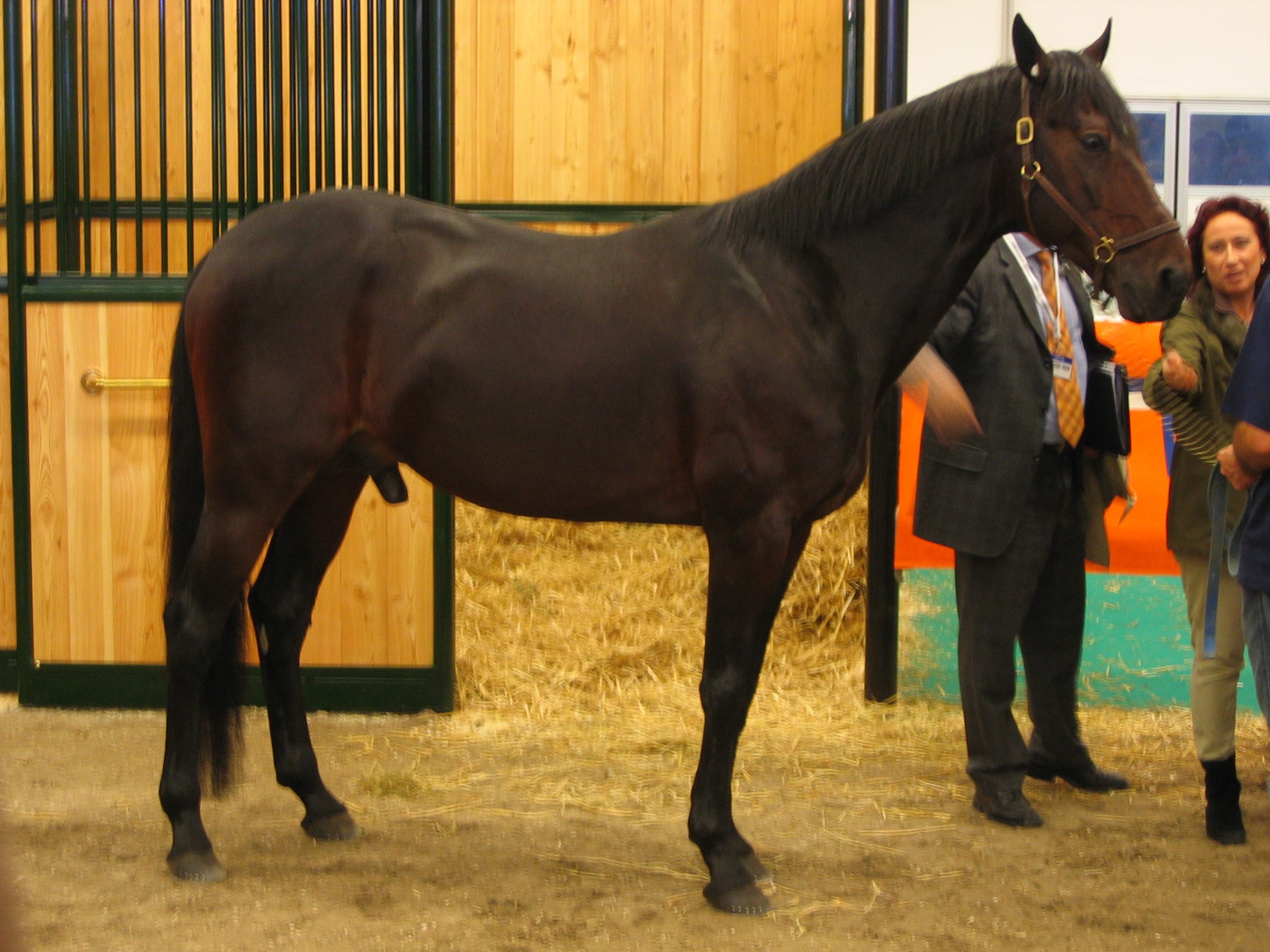
Varenne, often referred to as “The Captain,” is not just a horse but a legend in the world of harness racing. Born on May 19, 1995, Varenne’s journey from an ordinary colt to an international icon is a testament to the extraordinary potential that can be harnessed through dedication, training, and a bit of serendipity. His life story is one of remarkable achievements, making him a name synonymous with excellence in the sport of trotting.
Early Life and Origins
Varenne was born in the Zenzalino breeding farm located in the province of Ferrara, Italy. His lineage was promising but not exceptional. His sire, Waikiki Beach, was an American stallion known for producing a moderate number of foals annually, none of which had yet reached the heights Varenne would soon achieve. His dam, Ialmaz, although of good stock, did not possess any particularly outstanding traits. The decision to name him Varenne came from a Parisian street where the Italian Embassy is located, a name that would soon become known far beyond the boundaries of Italy and France.
Initially owned by his breeder, Viani, Varenne’s fate took a turn when Jean Pierre Dubois, a prominent figure in the world of horse racing, purchased a 50% stake in him. Dubois took Varenne to Normandy, France, for further training. However, after a year, Dubois returned Varenne to Italy, bringing him to Bolgheri in Tuscany. This decision marked the beginning of Varenne’s ascent in the world of harness racing.
The Rise to Fame
Varenne’s potential was evident from the start. His qualifying trial was considered average, but during his first race, it became clear that Varenne was not just another horse. His performance caught the eye of a renowned trainer who was willing to pay a hefty sum, recognizing the untapped potential within Varenne.
In the years that followed, Varenne’s career soared. His talent was undeniable, earning him the nickname “The Captain.” Under the ownership of Enzo Giordano, a passionate horse racing enthusiast from Naples, Varenne began dominating international competitions. Within just one year, he won 14 consecutive races, a streak that included the prestigious Gran Premio Nazionale in Milan, where he bested Viking Kronos, a horse previously considered unbeatable.
By May 2000, Varenne’s value had skyrocketed. The Italian National Horse Racing Syndicate (Snai) purchased a 50% share in him, valuing him at 7 billion lire. Given his immense value, Varenne was insured for 6 million lire monthly, a figure that was entirely justified by the massive earnings he was generating. For instance, in 1998, Varenne won 859 million lire, followed by 1.146 billion lire in 1999, and nearly 2 billion lire in 2000.
The Pinnacle of Success: 2001
The year 2001 was undoubtedly the most significant in Varenne’s career, marking his transition from a successful racehorse to a symbol of excellence in the sport. His first major victory of the year came at San Siro, where he won the Encat race. However, it was his performance in the Grand Prix d’Amerique in Paris that truly solidified his place in history. Varenne dominated the race from start to finish, becoming the first Italian horse to win the Amerique since Mistero in 1946. His victory was met with widespread acclaim, earning him the title of the most famous trotter in the world.
But Varenne was far from done. On May 6, 2001, he won the Mario Locatelli Prize in Milan and the Renzo Orlandi in Modena. He then claimed his second consecutive Gran Premio Lotteria di Agnano, defeating formidable opponents like Zambesi B and the French trotter Fan Idole. Later that month, Varenne extended his winning streak by triumphing in the Elitloppet 2001 in Sweden, a race often referred to as the Swedish Lotteria. His victory in the Elitloppet, where he bested horses like Solar Effe and Victory Tilly, crowned him the World Champion.
In July 2001, Varenne continued his dominance by winning the second round of the World Cup in Gelsenkirchen, Germany. His next destination was New York, where he competed in the Breeders Crown on July 28. Once again, Varenne outclassed the competition, becoming the fastest trotter in history.
Retirement and Legacy
Varenne’s career statistics are nothing short of extraordinary. Out of 58 races, he won 45, amassing nearly 9 billion lire in prize money. His accomplishments earned him a place among the all-time greats of the sport, drawing comparisons to other legendary horses like Ribot.
On September 28, 2002, Varenne was retired from racing, marking the end of an era. His retirement was not just the conclusion of a remarkable career but also the beginning of a new chapter in which his legacy would continue through his progeny. The world of harness racing now watches with bated breath to see if Varenne’s offspring will live up to his legendary status.
Historical Context and Significance
To fully appreciate Varenne’s impact, it’s essential to understand the historical context of harness racing. This sport, which involves horses pulling a two-wheeled cart called a sulky, has deep roots, particularly in Europe and North America. Over the years, it has evolved into a highly competitive and popular sport, with a rich history of legendary horses that have left an indelible mark.
Varenne’s rise to fame came at a time when the sport was in need of a new hero. The late 1990s and early 2000s were a period of transition in harness racing, with the sport striving to maintain its relevance in a rapidly changing world. Varenne’s dominance provided a much-needed boost, capturing the imagination of fans worldwide and elevating the profile of harness racing to new heights.
His victories in prestigious international races, particularly the Grand Prix d’Amerique and the Elitloppet, brought unprecedented attention to the sport. Varenne’s success transcended national boundaries, making him a global ambassador for harness racing. His story is a reminder of the timeless appeal of the sport and the enduring allure of a champion who defies the odds to achieve greatness.
Varenne’s Influence on Modern Harness Racing
Varenne’s influence extends beyond his own achievements. His success has had a lasting impact on the breeding and training practices in the sport. Breeders around the world have sought to replicate Varenne’s qualities in his offspring, hoping to produce the next great trotter. His bloodline is highly sought after, and many of his descendants have gone on to have successful racing careers, although none have yet matched the extraordinary heights reached by Varenne himself.
Moreover, Varenne’s career has set a new standard for what is possible in harness racing. His combination of speed, stamina, and competitive spirit has become the benchmark against which all future champions are measured. The strategies employed in his training and racing are studied and emulated by trainers worldwide, influencing the way horses are prepared for competition.
Conclusion: The Legacy of a Legend
Varenne’s story is one of exceptional talent, strategic management, and an unwavering competitive spirit. His achievements on the track have earned him a place in the annals of sports history, not just as a champion but as an icon whose legacy will endure for generations. As the world of harness racing continues to evolve, Varenne’s name will remain synonymous with excellence, serving as a source of inspiration for future generations of horses, trainers, and fans alike.
His retirement may have marked the end of his racing days, but Varenne’s influence on the sport is far from over. As his progeny take to the tracks, the legend of Varenne will continue to grow, cementing his place as one of the greatest trotters of all time.


