
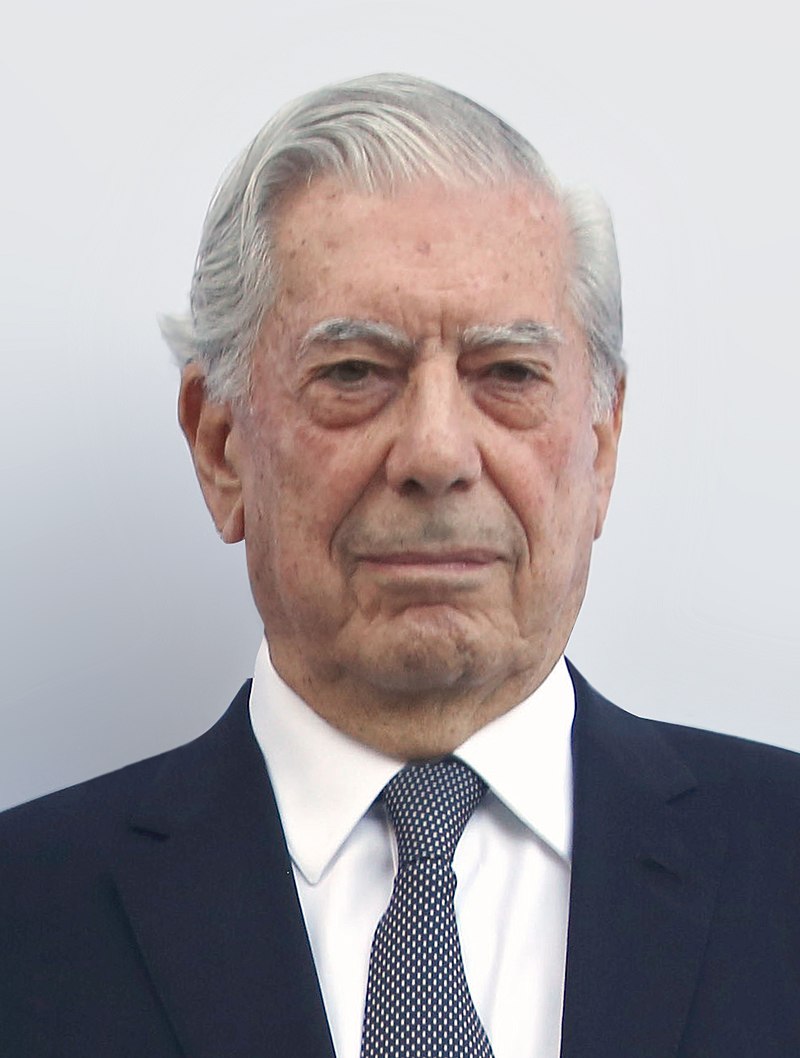
Early Life and Education
Mario Vargas Llosa, born on March 28, 1936, in Arequipa, Peru, is one of the most distinguished literary figures of the 20th and 21st centuries. His full name is Jorge Mario Pedro Vargas Llosa, and he has been a prolific writer, journalist, and political figure whose works have left an indelible mark on both Latin American literature and global intellectual discourse. Vargas Llosa’s early life was marked by significant upheaval. Shortly after his birth, his parents separated, and he spent the first ten years of his life in Bolivia, where his mother took him to live with her family. This period of his life, away from his native Peru, exposed him to different cultures and environments, which would later influence his literary works.
In 1946, following his parents’ reconciliation, Vargas Llosa returned to Peru, where he enrolled in a military academy. This experience would later serve as the inspiration for his first major novel, “La ciudad y los perros” (The Time of the Hero), which critically examines the harsh realities of life in a military academy. The novel, published in 1963, caused a scandal in Peru, where it was seen as a direct attack on the military establishment.
Literary Beginnings and Parisian Influence
After completing his education in Peru, Vargas Llosa moved to Europe, first to Madrid, where he completed his university studies, and later to Paris. The move to Paris in the late 1950s was particularly significant for his development as a writer. Paris, at the time, was the epicenter of intellectual and artistic activity, attracting writers, philosophers, and artists from all over the world. In Paris, Vargas Llosa immersed himself in the literary culture of the city, befriending prominent intellectuals like Jean-Paul Sartre and Simone de Beauvoir. The influence of existentialism and French literature is evident in his early works, which often explore themes of alienation, identity, and the struggle for freedom.
In Paris, Vargas Llosa also began to distance himself from the more traditional, magical realist style that had come to dominate Latin American literature, particularly through the works of Gabriel García Márquez. Instead, he sought to develop a style that was more grounded in the realities of contemporary life, combining elements of social realism with a keen psychological insight into his characters.
Major Works and Literary Achievements
Vargas Llosa’s literary career took off with the publication of “La ciudad y los perros” (The Time of the Hero) in 1963. The novel was an instant success in Europe but was met with controversy in Peru, where it was publicly burned by military authorities who saw it as a defamation of the Peruvian military academy. Despite the backlash in his homeland, the novel established Vargas Llosa as one of the leading voices in Latin American literature.
His next major work, “La casa verde” (The Green House), published in 1965, further solidified his reputation. The novel, which weaves together multiple storylines and characters, explores the complexities of life in a remote Peruvian town. The success of “La casa verde” was followed by a string of critically acclaimed novels, including “Conversación en la Catedral” (Conversation in the Cathedral), “Pantaleón y las visitadoras” (Pantaleon and the Visitors), and “La tía Julia y el escribidor” (Aunt Julia and the Scriptwriter).
Throughout his career, Vargas Llosa has shown a remarkable ability to blend social commentary with compelling narratives, often drawing on his own experiences and observations of Peruvian society. His works frequently explore themes of power, corruption, and the individual’s struggle against oppressive systems. This thematic focus is perhaps most evident in his 1981 novel, “La guerra del fin del mundo” (The War of the End of the World), which is set during a real historical conflict in 19th-century Brazil.
Political Involvement and Presidential Candidacy
In addition to his literary accomplishments, Vargas Llosa has also been an active participant in the political life of his home country, Peru. His political views have evolved significantly over the years. Early in his career, he was a supporter of the Cuban Revolution and its promise of social change in Latin America. However, as he became disillusioned with the authoritarian tendencies of Fidel Castro’s regime, Vargas Llosa began to embrace more liberal, pro-democratic ideas.
This shift in his political ideology culminated in his decision to run for the presidency of Peru in 1990. Vargas Llosa ran as the candidate for the Democratic Front, a center-right coalition that advocated for free-market reforms and the strengthening of democratic institutions. His candidacy was marked by a fierce opposition to the populist policies of his rival, Alberto Fujimori, who ultimately won the election. Vargas Llosa’s loss in the presidential race marked the end of his direct involvement in Peruvian politics, but he continued to be an influential voice in public discourse, both in Peru and internationally.
Later Works and the Nobel Prize
After his foray into politics, Vargas Llosa returned to his literary career with renewed vigor. In the years following his presidential bid, he published several more novels, including “La fiesta del Chivo” (The Feast of the Goat), a powerful examination of the Trujillo dictatorship in the Dominican Republic, and “El sueño del celta” (The Dream of the Celt), which explores the life of Irish nationalist Roger Casement.
In 2010, Vargas Llosa was awarded the Nobel Prize in Literature, a recognition of his extensive contributions to world literature. The Nobel Committee praised him for his “cartography of structures of power” and for his “trenchant images of the individual’s resistance, revolt, and defeat.” The award was a fitting acknowledgment of Vargas Llosa’s ability to capture the complexities of human nature and society in his works.
Personal Life and Legacy
Mario Vargas Llosa’s personal life has been as eventful as his literary and political careers. He was married twice, first to his aunt by marriage, Julia Urquidi, and later to Patricia Llosa, with whom he had three children. His marriages, particularly the unconventional relationship with his aunt, have been the subject of much public interest and have influenced some of his works, most notably “La tía Julia y el escribidor” (Aunt Julia and the Scriptwriter).
Vargas Llosa’s legacy as a writer is secure, with his works continuing to be studied and celebrated worldwide. His influence extends beyond the realm of literature; as a public intellectual, he has been an outspoken advocate for democracy, human rights, and freedom of expression. His critiques of authoritarianism and his defense of liberal values have made him a significant figure not only in Latin American culture but also in global debates about democracy and governance.
Historical Context and Literary Contributions
To fully appreciate the impact of Mario Vargas Llosa, one must consider the broader context of Latin American literature and politics in the 20th century. The period known as the “Latin American Boom,” which began in the 1960s, was marked by a surge in the production of literature that addressed the social and political upheavals occurring throughout the continent. Vargas Llosa was one of the key figures in this movement, alongside writers like Gabriel García Márquez, Julio Cortázar, and Carlos Fuentes.
Unlike many of his contemporaries, however, Vargas Llosa often eschewed the magical realism that came to define the Boom. Instead, his works are characterized by a more realist approach, focusing on the gritty realities of life in Peru and other parts of Latin America. His commitment to depicting the complexities of power and politics, combined with his skillful storytelling, has earned him a place among the greats of world literature.
Conclusion
Mario Vargas Llosa is a towering figure in the world of literature and beyond. His works, which span over six decades, have explored the human condition in all its complexity, addressing themes of power, corruption, love, and identity. His contributions to literature have been recognized with numerous awards, including the Nobel Prize in Literature, and his influence continues to be felt around the world.
Beyond his literary achievements, Vargas Llosa’s involvement in politics and his advocacy for democracy have made him a significant public figure. His life and work serve as a testament to the power of literature to both reflect and shape the world around us. As we look back on his career, it is clear that Mario Vargas Llosa’s legacy will endure, both in the pages of his novels and in the hearts and minds of readers around the globe.


