
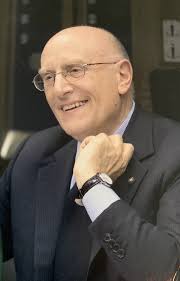
Umberto Vattani, born on December 5, 1938, in Skopje, Macedonia, is a distinguished figure in Italian diplomacy, known for his remarkable career and extensive contributions to international relations. Vattani’s life story is not just about his diplomatic achievements but also about his intellectual prowess, cultural involvement, and leadership in various international institutions. This article delves into the life and career of Umberto Vattani, offering detailed insights, historical context, and an exploration of his significant achievements.
Early Life and Education
Born in the heart of the Balkans, Vattani’s early life was shaped by a multicultural environment, which undoubtedly influenced his later diplomatic career. His family background, though not extensively documented, likely played a role in his decision to pursue a career in international relations. The post-war period in which Vattani was raised was marked by geopolitical shifts, which may have further ignited his interest in diplomacy.
Vattani’s academic journey began in Italy, where he displayed extraordinary intellectual abilities. He pursued higher education with a focus on law and political science, fields that would provide the foundation for his future career. Vattani graduated from the prestigious University of La Sapienza in Rome, earning degrees in both Law and Political Science, each with the highest honors, “110 e lode,” a testament to his academic excellence.
Entrance into Diplomacy
In 1962, Umberto Vattani entered the Italian diplomatic service, marking the beginning of a career that would span several decades and take him to some of the most influential political hubs of the world. His early assignments included roles at the Italian Representation at the United Nations in New York and the Italian Embassy in London. These postings were crucial in shaping Vattani’s diplomatic skills, providing him with firsthand experience in international relations at a time when the world was grappling with the complexities of the Cold War.
Vattani’s linguistic abilities—he is fluent in Italian, English, French, German, and Spanish—were a significant asset in his diplomatic career. His multilingual proficiency allowed him to navigate complex negotiations and build strong international relationships. This skill set was particularly valuable during his tenure in Paris at the Italian Representation to the OECD, where Vattani engaged with various economic and development issues.
Climbing the Diplomatic Ladder
Vattani’s rise within the Italian diplomatic corps was swift and marked by several key appointments. One of his most notable roles was as the diplomatic advisor to several Italian Prime Ministers, including Giulio Andreotti, Giuliano Amato, and Ciriaco De Mita. Serving in this capacity, Vattani was at the heart of Italy’s foreign policy decision-making process, advising on critical issues during a period of significant change in Europe and beyond.
In 1996, Vattani was appointed as the Secretary-General of the Italian Ministry of Foreign Affairs, the highest position within the Italian diplomatic service. This role placed him at the helm of Italy’s foreign relations, overseeing a vast array of diplomatic initiatives and international partnerships. His tenure was characterized by a focus on strengthening Italy’s role within the European Union and enhancing its relationships with both established and emerging global powers.
Cultural Contributions and Leadership
One of Vattani’s most enduring legacies at the Ministry of Foreign Affairs was his role in the creation of the Contemporary Art Collection at the Farnesina, the headquarters of the ministry. This collection, which includes over 250 works by Italian artists from the 20th and 21st centuries, reflects Vattani’s deep appreciation for culture and his understanding of its role in diplomacy. The collection is not just an artistic endeavor but a diplomatic tool, showcasing Italy’s rich cultural heritage to visiting dignitaries and international guests.
In addition to his contributions to cultural diplomacy, Vattani has been a prominent figure in several international institutions. From 2005, he served as the President of the Italian Trade Agency (ICE), where he played a pivotal role in promoting Italian exports and strengthening Italy’s economic ties with the rest of the world. His leadership at ICE was marked by a strategic focus on expanding Italy’s presence in emerging markets and fostering innovation within Italian industries.
Vattani’s influence extended beyond economics and culture. Since 2001, he has been the President of the Venice International University (VIU), an institution that brings together universities and research centers from around the globe to foster academic collaboration and intercultural dialogue. Located on the island of San Servolo in Venice, VIU is a unique institution that reflects Vattani’s commitment to education and his belief in the power of international cooperation.
Moreover, Vattani has held significant roles in other foundations and organizations that bridge Italy with other countries. He is the President of the Italy-Japan Foundation and serves as a General Advisor to the Italy-USA Foundation, positions that highlight his ongoing commitment to strengthening Italy’s relationships with key global partners.
The Road Not Taken: Potential as Foreign Minister
In 2001, during the formation of Silvio Berlusconi’s government, Umberto Vattani was widely considered a leading candidate for the position of Minister of Foreign Affairs. His vast experience, deep understanding of international relations, and impeccable credentials made him an ideal choice. However, despite the strong support he received from the media and political circles, the position ultimately went to someone else. This episode remains a significant “what if” in Italian political history, as Vattani’s appointment could have further elevated Italy’s standing on the global stage.
Retirement and Legacy
After retiring from active diplomatic service, Umberto Vattani did not step away from public life. Instead, he continued to contribute to the field of international relations through his leadership roles in various foundations and educational institutions. His work at the Venice International University and his involvement in the Italy-Japan and Italy-USA Foundations are just a few examples of how Vattani has continued to influence global affairs even after his official retirement.
Vattani’s legacy is multifaceted. He is remembered not only for his diplomatic achievements but also for his contributions to culture, education, and international cooperation. His efforts in promoting Italian art and culture, his leadership in trade and economic development, and his commitment to fostering international dialogue have left a lasting impact on Italy and the world.
Conclusion: The Man Behind the Diplomacy
Umberto Vattani’s life and career offer a rich tapestry of achievements that go beyond the confines of traditional diplomacy. His work has touched upon various aspects of international relations, from cultural diplomacy to economic development, education, and beyond. Vattani embodies the ideal diplomat: intellectually sharp, culturally aware, and deeply committed to serving his country’s interests while fostering global cooperation.
As of now, at the age of 85, Vattani’s influence remains strong in the circles of international diplomacy and academia. His story is one of dedication, excellence, and a relentless pursuit of knowledge and understanding in a complex and ever-changing world. For those looking to understand the nuances of Italian diplomacy and the role of culture in international relations, the life of Umberto Vattani provides an exemplary case study.
In summary, Umberto Vattani is not just a diplomat; he is a statesman, a cultural ambassador, and a leader who has made significant contributions to the global community. His life’s work continues to inspire and influence, making him a figure of enduring relevance in the history of Italian and international diplomacy.


